

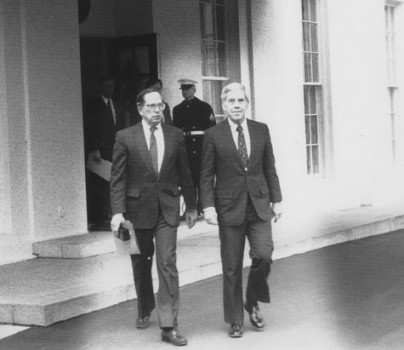
“Today we come together as a community to thank some of the forward-thinking statesmen and public servants who helped make that historic moment of change far less dangerous,” he said, “and to learn from their work as we work to shape another era of profound global change.”
He called the situation with Russia and its nukes and chemical weapons “a brand new problem in those days – brand new to history, really, requiring new thought,” Carter said.
For one thing, he said, It was the first disintegration of a nuclear nation. For another thing, there was that Evil Empire problem.
“We had spent half a century bringing the Soviet Union to its knees. To help them, even fund them, to control the vast nuclear legacy of the USSR seemed paradoxical to many, and it was controversial,” he said.
But the program’s success is unequivocal.
The program has evolved, the secretary added. “It has extended its focus to terrorism, not just disintegrated states,” he added. “It has extended its work to chemical and biological weapons. And it has gone global, far beyond the borders of the former Soviet Union.”
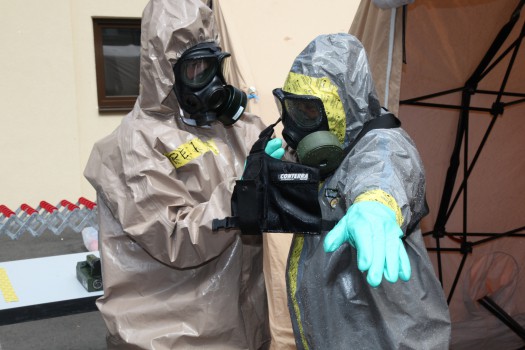
And you’ll recognize some of the dangerous situations that CTR has helped control.
In 2013 CTR helped the government of Libya secure and destroy chemical weapons discovered after the fall of Moammar Gadhafi. A comprehensive program of support eliminated the country’s greatest proliferation risk and helped Libya meet its Chemical Weapons Convention treaty obligations for the most dangerous parts of its stockpiles.
In 2014, CTR provided the centerpiece of the U.S. contribution to the international effort to eliminate the most dangerous chemicals from the Syrian regime’s chemical weapons arsenals. The program enabled the safe removal of more than 1,000 metric tons of chemical agents and related materials from Syria, and helped destroy nearly 600 metric tons of chemical weapon precursor materials aboard the Motor Vessel Cape Ray in the first at-sea chemical agent destruction mission.
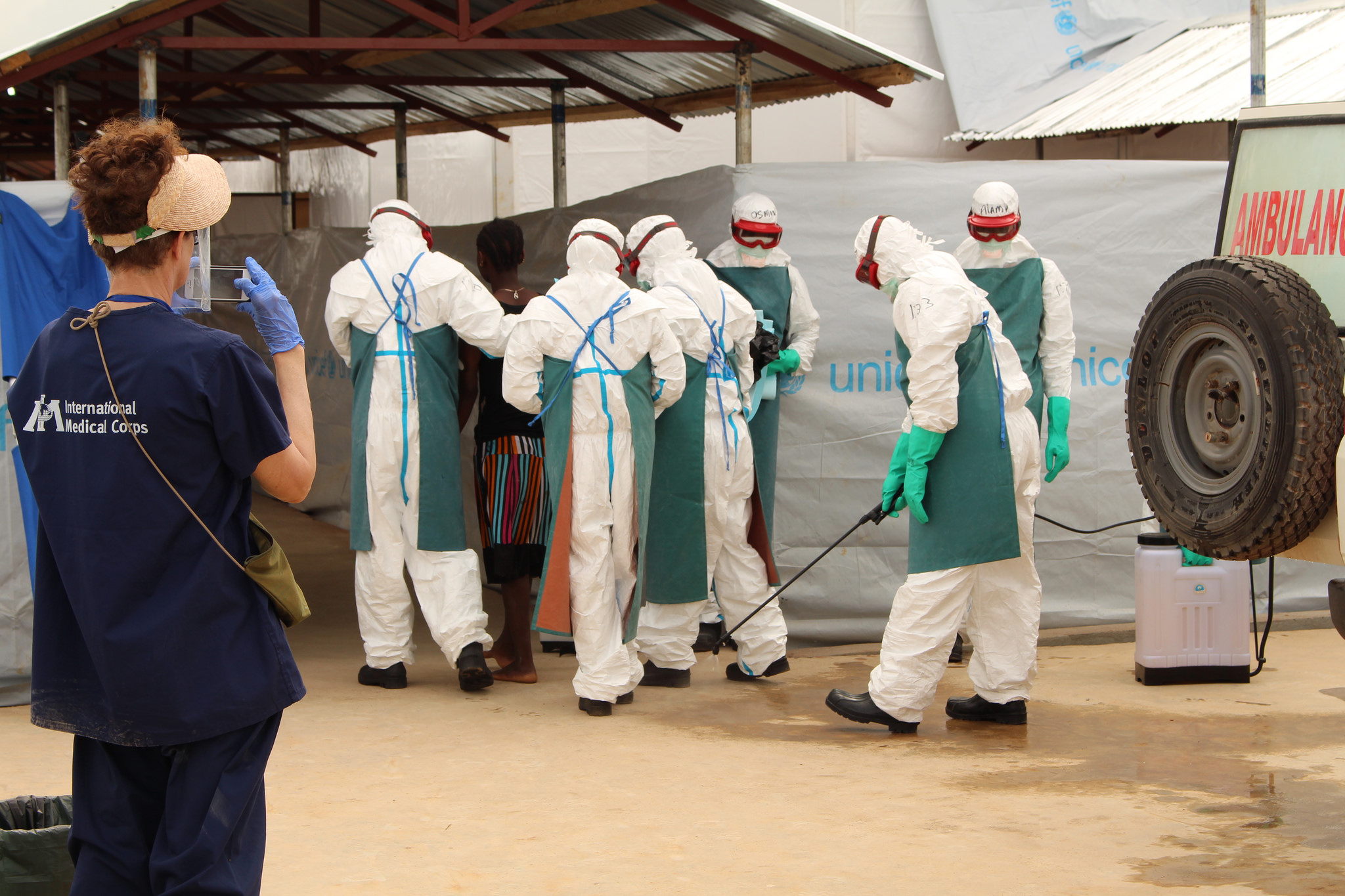
In 2015, in response to the West African Ebola outbreak, CTR provided critical laboratory diagnosis support to Liberia, Guinea and Sierra Leone, including expediting diagnostic tests on thousands of samples and providing experts, personal protection equipment, and lab and testing equipment. Some of these efforts continue today.
And this year, CTR’s Global Nuclear Security program is supporting the U.S. government effort to help China develop a nuclear security Center of Excellence to provide nuclear security training. The program contributed equipment and expertise critical to the new program’s design and development.
Also this year, to address the threat of the development or use of weapons of mass destruction by the Daesh (ISIS), CTR supported the design, installation, integration, testing and training for border security systems along 256 kilometers of the Jordan-Syria border and on the 115-mile Jordan-Iraq border.
Just before the May 9 ceremony at the Pentagon ended, Nunn noted that the department and the nation are at another historical junction.
“We have all sorts of problems with Russia,” he said. “We have the Ukrainian problem, we have the Middle East, we have a lot of differences, but we still have 90 percent of the nuclear weapons, 90 percent of the nuclear materials and the know how to try to prevent catastrophe.”
The former senator added, “The danger is still out there, particularly … with radiological dirty-bomb weapons as well as chemical [and] biological. So we’ve got to build a bridge to work with the Russians on this subject, even when we’re disagreeing with them profoundly on other things.”
Featured Content and Media – DoD
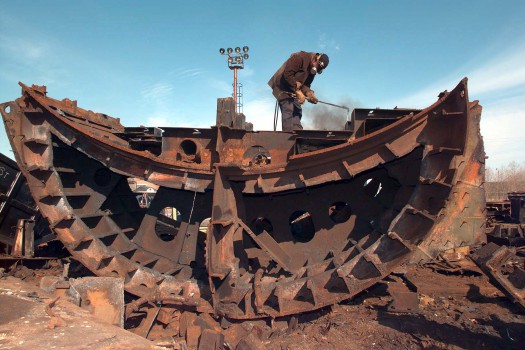
Featured Image- A shipyard worker uses a cutting torch to break down a large bulge section of a Russian Oscar-class submarine at the “Zvezdochka” shipyard in Severodvinsk, Russia. This Russian cruise missile submarine was being dismantled as part of the Nunn-Lugar/Cooperative Threat Reduction Program. U.S. Navy photo by Todd P. Cichonowicz








COMMENTS