

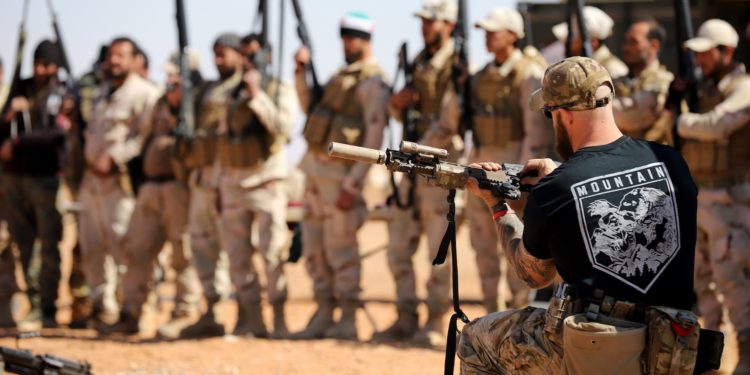
“I won’t name any names, but a certain controversial individual is known to post pictures of him and of PF [partner force] members on social media. I don’t know why he’s doing that, but my best guess would be for clout. That’s disgusting in a community that takes great pride in its ‘Quiet Professionals’ nature,” the former Green Beret said.
Such behavior is rare, but it happens and has to be approved by higher commanders, which may mean it’s part of a recruiting effort, the Green Beret added.
“It’s one thing pushing YouTube videos with guys jumping out of planes, shooting machine guns, or doing dives and another having a well-known individual — a celebrity — posting actual pics from downrange,” the former Green Beret said. “Although I don’t agree, I can definitely see the allure behind such a recruitment tactic.”
Although operational security (OPSEC) is a frequent victim of sloppy digital and electronic discipline, it’s not the only thing at stake.
The Danger at Home
As lone-wolf terrorist attacks become one of the few effective ways to strike Western societies, an association with the military can be dangerous not only to a special operator but to their family as well.
Social media and professional networking sites, such as LinkedIn, make it fairly easy to spot and target conventional troops and commandos.
From 2015 onward, ISIS, which was fairly competent in cyberwarfare, posted names, photos, and residential addresses of thousands of U.S. troops and called on its supporters in the U.S. to attack them. In total, ISIS published the information of close to 20,000 U.S. servicemembers.
Even with the danger of a domestic terrorist attack, which remains relatively low in most Western countries, personal security (PERSEC) isn’t a major consideration for most service members, including troops in several special operations units.
But now that the main threat doesn’t come from small terrorist groups but rather from near-peer competitors, such as China, Russia, or even Iran, personal security and signature management becomes a real consideration for thus far unaffected military demographics.
“It’s very easy to map out the network of an individual just by using Facebook. Instagram is harder because of the private account option,” a former Delta Force operator told Insider. “Sometimes you can find more about him and his activities not from his account but from those of his family members and friends.”
“Generally, guys know to be careful, but it’s hard to police others who aren’t familiar or accustomed with personal or operational security. Some of the worst offenders are tagged pictures, family photos, and check-ins,” the former operator added.
Digital security is more important at higher tiers in the special operations community. The “best bet” for members of some units would be just to avoid social media and other technology that can reveal their whereabouts, the former Delta operator told Insider.
“Although these are the guys who know what not to do, it occasionally happens, as it happened with those Brits in Syria,” the former operator said.
Users may skimp on digital security because they believe they have nothing to hide or that they can remain nameless in a very big pool of data. These special operators’ cases show that a knowledgeable person could use that data to pinpoint not only you, but your friends and family too.
This article was written by Stavros Atlamazoglou and originally published on the Insider.








COMMENTS