

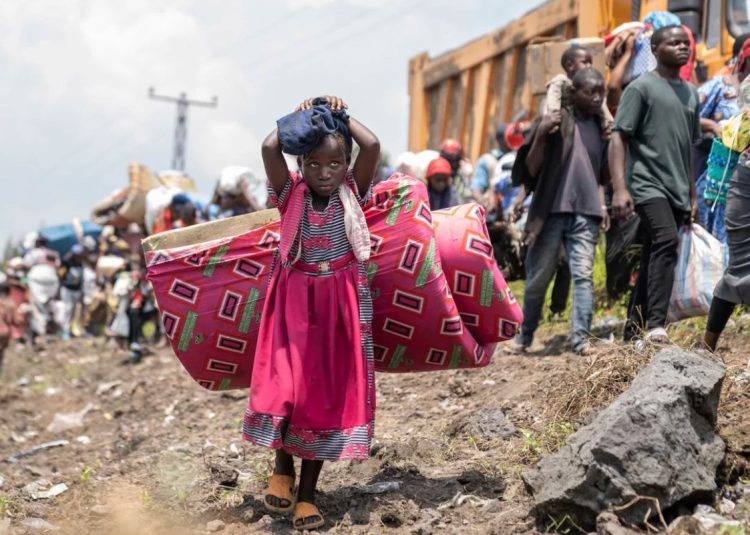
Basic Necessities in Short Supply
Large parts of Goma have been without electricity and running water since January 26, 2025. The city’s water system relies on fuel to operate, but with supplies running out, many families have no access to safe drinking water or sanitation. Food shortages are worsening, and many families struggle to find basic necessities, increasing the risk of malnutrition and starvation.
Growing Health Risks
The deteriorating conditions in displacement camps and overcrowded shelters have raised serious health concerns. The risk of a cholera outbreak and other waterborne diseases is growing as people are forced to live in unsanitary conditions with little access to clean water. Hospitals are overwhelmed with thousands of wounded civilians and are struggling to provide care due to a lack of medical supplies and staff. Adding to the crisis, DRC is the epicenter of the global Mpox epidemic, further straining the already fragile healthcare system.
Children at Risk
The conflict has had a devastating impact on children, with over 1.5 million in Goma now in urgent need of protection. Many children have been separated from their families in the chaos, and humanitarian groups report a growing number of unaccompanied children who are vulnerable to exploitation and violence.
Challenges for Humanitarian Aid
Efforts to provide relief have been severely hampered by insecurity and the difficulty of locating displaced people. Organizations like the International Rescue Committee (IRC) have been forced to evacuate international staff and suspend some operations due to the ongoing fighting. The 2025 Humanitarian Needs and Response Plan for the DRC is calling for $2.5 billion in aid, with at least $50 million urgently needed to address the latest wave of displacement.
A Desperate Need for Action
The situation in eastern Congo remains extremely volatile, with ongoing clashes and fears of further escalation. Humanitarian organizations are calling for an immediate ceasefire and unrestricted humanitarian access to help those in desperate need. Without urgent intervention, millions of lives remain at risk in one of the worst humanitarian crises in recent history.
The World Food Programme has raised alarms about dwindling supplies of food, clean water, and medical resources. “People are really running out of food, clean water, medical supplies, and that’s a big concern,” said spokeswoman Shelley Thakral.
Regional Implications and International Response
The ongoing conflict in the Democratic Republic of Congo (DRC) is more than a national crisis—it has serious regional consequences and has drawn international attention, though the global response remains limited.
Risk of a Larger Regional War
The fighting in eastern DRC has the potential to escalate into a broader regional conflict, much like the devastating Congo Wars of the late 1990s and early 2000s. With multiple countries accused of backing different factions, tensions are rising, and the possibility of a full-scale regional war cannot be ignored.
Neighboring Countries Get Involved
Several countries in the region are already involved in the conflict, either directly or indirectly:
- Rwanda is accused of supporting M23 rebels, with reports suggesting that 3,000 to 4,000 Rwandan troops are fighting alongside them.
- Burundi has deployed thousands of soldiers to support DRC forces against M23.
- Uganda is allegedly providing support to M23, further complicating the already tense situation.
The shifting alliances among these neighboring nations make the situation even more unpredictable, with each country pursuing its own strategic interests.
The Human and Economic Toll
The conflict has forced thousands of refugees to flee from North Kivu into neighboring countries, raising concerns about cross-border instability. As the fighting continues, more families will be displaced, putting additional pressure on already strained resources in the region.
The economic impact is also significant. Eastern DRC is rich in valuable minerals. The trade in these resources allegedly benefits Rwanda, fueling accusations that economic interests are driving the violence while further destabilizing the DRC.
International Response: A Call for More Action
The United Nations (UN) has warned that the conflict could spiral into a wider regional crisis, but its response has been limited. While sanctions have been imposed on some M23 leaders, there has been little direct action to stop foreign interference.
On the humanitarian front, the 2025 Humanitarian Needs and Response Plan for the DRC is appealing for $2.5 billion in aid, with $50 million urgently needed to address the new wave of displacement. However, global engagement remains muted, leaving African nations to bear the burden of the crisis with little outside support.
The Role of Regional Diplomacy
Diplomatic efforts have been slow, but the East African Community (EAC), currently chaired by Kenyan President William Ruto, may need to step up to mediate the crisis. Humanitarian organizations continue to call for an immediate ceasefire and full humanitarian access to reach those in desperate need.
Despite these efforts, many criticize the international response as insufficient, given the scale of the crisis and the potential for an even larger regional war. Without stronger global intervention, the DRC and its neighbors may be left to face the devastating consequences of one of Africa’s deadliest conflicts on their own.
A Bleak Outlook for the DRC
The recent events in Goma underscore the fragility of peace in the DRC. The resurgence of M23 and the alleged involvement of neighboring countries threaten to plunge the region into prolonged conflict. The humanitarian toll is staggering, with countless lives lost, families displaced, and communities torn apart.
Without decisive action from both regional actors and the international community, the DRC faces a future marred by instability and suffering. The need for comprehensive peace initiatives, robust humanitarian support, and accountability for human rights violations has never been more urgent.








COMMENTS