

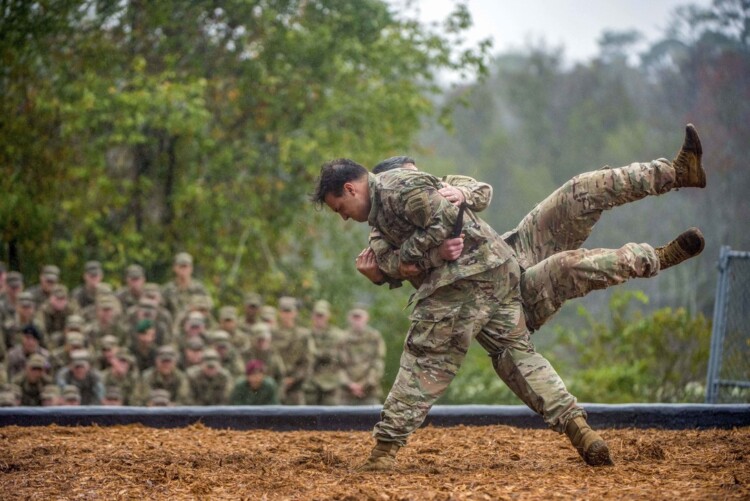
Combinations are key to effective palm strikes. Sure, you can land knockout blows with just one shot. But realistically, you will have to use a two or three-strike combination for maximum efficiency. Practice it on a heavy bag or on good old Bob.
Teep/push kicks
Someone’s aggressively making a beeline toward your direction. You don’t know if they have a weapon, but you expect a knife or an ice pick to come into play, eventually. And you don’t have a weapon on you.
The next course of action: a teep kick (otherwise known as a push kick). It’s taught in month one of Thai kickboxing, and it will take the wind out of anyone upon impact. Lowering the trajectory of the kick would incapacitate any individual with a pair of testicles.
You’re mainly targeting the abdomen area, but there is a good chance for broken ribs. If you’re left with no choice but to engage in unarmed combat, keep this technique in your back pocket.
Similar to a palm strike, the power of a teep kick comes from the hips. But with this one, you’re doing a pushing motion.
Round kicks to the side of the body are well and good, but you’re opening yourself to a compromising position if that kick is caught. If you’re after more effective kicks, it’s best to stick to teeps to the body.
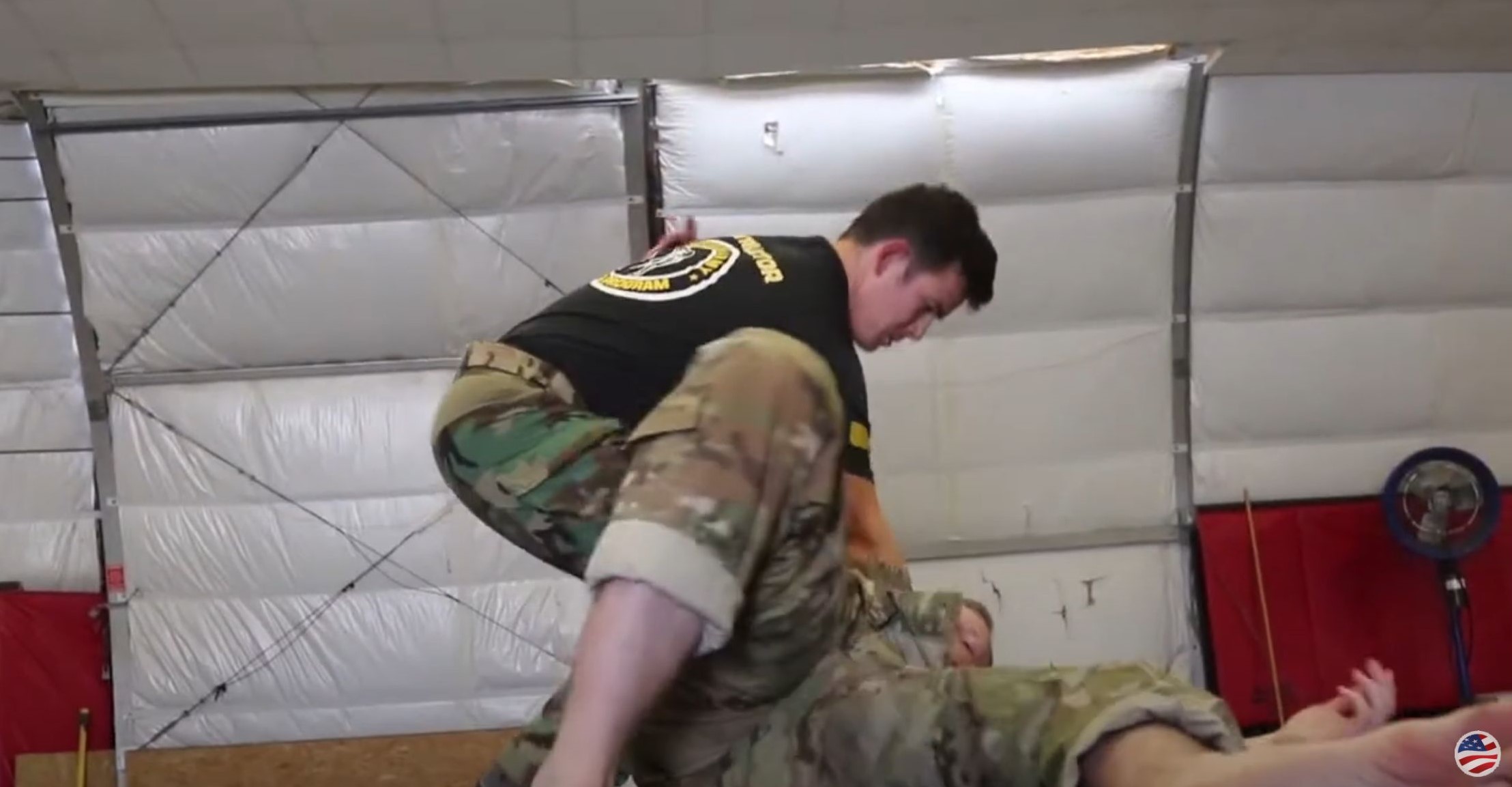
Muay Thai clinch
Where the head goes, the body automatically follows. And if you have both hands at the back of their head while your elbows are stuck to their shoulder, it will be only a matter of time before that structure crumbles.
Snapping the head down can work, but if you find yourself in a fiery exchange of shots, mix in some knee strikes up the middle. Those are likewise rib crushers.
But if you want to stir some panic into your attacker, an elbow strike to the nose bridge works best. More often than not, a person’s flight response will be triggered upon the sight of their own blood and the sound of facial bones crushing.
The Mount
Any fight – whether or not sanctioned by an unarmed combat sports commission – will eventually lead to a grappling scenario. Two people will eventually tie up after an exchange of punches that’ll either remain a stalemate wrestling match or turn into a full-blown ground fight. And when someone has you mounted, you’re not going anywhere.
Two sport jiu-jitsu and submission grappling mounts that work well in a military unarmed combat setting are full mount and back mount. The former is when you’re sitting heavily on another person’s chest. The latter involves controlling the opponent by being a human backpack.
Whether in a sport or military combat setting, the mount is a dominant controlling position. It allows you the perfect leverage for damaging attacks or at the very least, to hold them down in a neutral position. But if you choose to mount an attack (pun intended), you’re very welcome to do so, as long as you know the corresponding dangers.
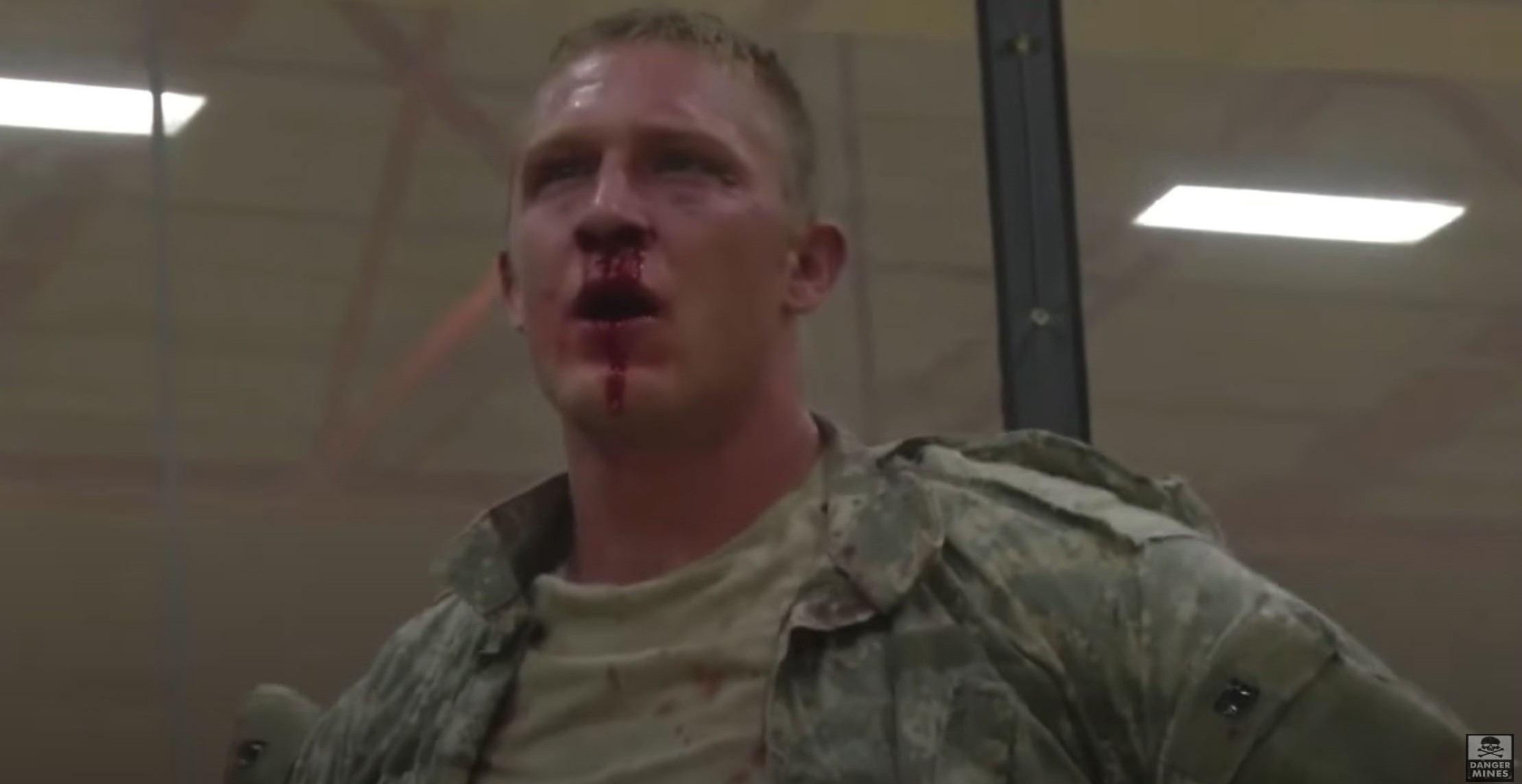
Knee-on-stomach
Otherwise known as knee-on-belly. The name is self-explanatory: you pin your knee diagonally across a person’s abdomen, bringing down your full weight onto them.
Like the aforementioned mount position, knee-on-stomach is more for establishing control in an unarmed combat situation. You do this to hold a person flat on their back, effectively rendering them useless and unable to move. From here, you can apply the necessary disarming tactics, as well.
Here’s a caveat: when applied effectively, knee-on-stomach can likewise cause severe impairment, particularly on the ribs. Proceed with an ample amount of caution.
(Un) Arm Yourself
Practice makes precision. The more you drill these techniques, the quicker they become part of your second nature. And the beautiful thing about unarmed combat is you can practice it at your own time, pace, and space. All you need is the proper equipment.
Boxing gloves, mouthguards, and grappling gear: these are all you need for your starter training kit. You can then add on some extras eventually if you decide to train more seriously and regularly.
The best part: they are incredibly affordable, thanks to certain brands and merchants. All it takes is one click.








COMMENTS