Mexico After El Mencho: The Cartel War Just Entered Its Most Dangerous Phase
Mexico finally got its man. Now comes the part no one likes to talk about.
Nemesio “El Mencho” Oseguera Cervantes, longtime leader of the Jalisco New Generation Cartel, was killed during a Mexican military operation in Jalisco. The man who built one of the most violent criminal enterprises in the Western Hemisphere is gone. Reuters reports U.S. intelligence support helped Mexican forces locate him after years of pressure and failed attempts.
The retaliation was immediate.
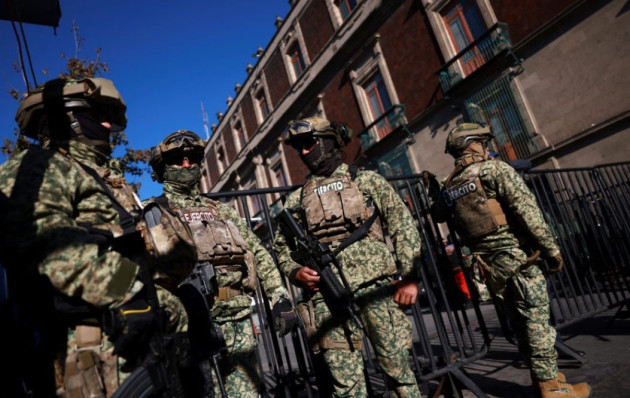
Within hours, cartel gunmen rolled out a familiar playbook. Highways were blocked. Tractor-trailers were hijacked and set on fire. Businesses were torched. Armed men clashed with security forces in coordinated bursts meant to send a message that CJNG still controls ground and can still mobilize quickly. Mexican security forces took significant casualties in the follow-on attacks, underscoring the scale and discipline of the response.
The regular press is framing this as a decisive victory. It is a tactical success. Removing the head of a network like CJNG is not insignificant. But history suggests decapitation strikes rarely end cartel wars. They reorganize them.
CJNG is not a street gang built around one charismatic boss. It is a distributed enterprise with regional commanders, paramilitary enforcement arms, and international drug routes that move fentanyl and methamphetamine north into the United States and precursor chemicals south through Pacific ports. El Mencho provided strategic direction and symbolic authority. The machine beneath him remains.
The immediate question is succession. With no publicly declared heir apparent and key family members either captured or extradited, the risk is not collapse but competition. Competition inside a cartel ecosystem often means localized power grabs, rival factions probing territory, and an uptick in violence before a new equilibrium forms.
There are direct U.S. implications. CJNG has been a central player in the fentanyl pipeline feeding the American overdose crisis. Any disruption, fragmentation, or internal struggle could temporarily destabilize trafficking routes, then harden them under new leadership. Washington is watching closely because instability in western Mexico does not stay contained for long.
Mexico landed a major blow. The coming weeks will determine whether it broke the cartel’s spine or simply triggered the next, more chaotic phase of the fight.
China Tests the Line in the South China Sea
China is not trying to start a war with the Philippines. China is trying to make the Philippines accept a new normal, one where Chinese ships decide who moves, who fishes, and who resupplies outposts in waters Manila considers its own. Then it waits to see how far it can go before Washington feels compelled to respond.
That pressure campaign is playing out in the South China Sea with a steady rhythm. Chinese coast guard cutters and maritime militia vessels crowd Philippine boats near disputed features, cut across their bows, and blast them with high-pressure water cannons during resupply missions. Each encounter is calibrated. Aggressive enough to intimidate. Careful enough to stay below the threshold that would force an immediate military response.
Already have an account? Sign In
Two ways to continue to read this article.
Subscribe
$1.99
every 4 weeks
- Unlimited access to all articles
- Support independent journalism
- Ad-free reading experience
Subscribe Now
Recurring Monthly. Cancel Anytime.
This is gray-zone coercion done in broad daylight. No missiles. No formal blockade. Just constant friction designed to wear down the other side and make the Chinese presence feel permanent. Beijing’s goal is not a single dramatic clash. It is normalization through repetition.
The Philippines has answered with exposure. Manila has taken to documenting confrontations on camera and releasing footage quickly, forcing incidents into the public eye before they can be spun into something else. That transparency campaign has changed the optics, even if it has not stopped the pressure. Every close pass and every blast of water now travels far beyond the reef where it happened.
Washington is watching closely and signaling in its own way. The United States has expanded cooperation with the Philippines through joint exercises, increased access agreements, and a steady naval presence in the region. American officials have repeatedly stated that treaty obligations extend to Philippine public vessels and armed forces in the South China Sea. That language is deliberate. It is meant to remove ambiguity without inviting escalation.
This is a contest of patience and positioning. China is testing how far it can push without triggering a direct response. The Philippines is pushing back just enough to avoid being edged out. The United States is reinforcing the alliance while trying to keep the temperature below boiling.
The risk is not a planned battle. The risk is miscalculation. In crowded waters, with steel hulls maneuvering at close range and national pride riding high on all sides, it does not take much for a shove to turn into something larger than anyone intended.
America’s Submarine Problem
If you want to understand the U.S. Navy’s readiness problem, don’t look at what’s sailing. Look at what’s stuck in dry dock.
America’s attack submarines remain the quiet backbone of deterrence against China. They track adversary fleets, gather intelligence, and sit in places where nobody else can operate. But an uncomfortable percentage of those subs are not at sea. They’re waiting for repairs, upgrades, or shipyard space. At one point, roughly a third of the attack-submarine force was unavailable for operations due to maintenance backlogs and crew shortages.
The problem is not just one delayed overhaul or one aging hull. It’s structural. Shipyards are overloaded. Skilled labor is short. Supply chains are thin. Some submarines have waited years for major maintenance because the facilities capable of working on nuclear-powered vessels simply don’t have the capacity. One well-known attack submarine sat idle for years awaiting repairs, a situation Navy leaders themselves called unacceptable.
This is happening while China is building ships at a faster pace and expanding its undersea fleet. Recent analysis found China launched more submarines between 2021 and 2025 than the United States did over the same period. That doesn’t mean China has surpassed the U.S. undersea force in capability, but it does mean the margin for delay is shrinking.
Taxpayers should care because submarines are not cheap and they are not optional. The Columbia-class ballistic-missile submarine program, the replacement for the aging Ohio-class boats that carry the sea-based nuclear deterrent, is projected to cost hundreds of billions over its lifecycle. Shipyard delays and workforce gaps threaten the schedule that keeps the deterrent continuous.
The industrial base is the choke point. The Navy and its contractors need tens of thousands of additional skilled workers over the next decade to keep up with demand for shipbuilding and maintenance. Dry docks need modernization. Supply chains need depth. None of that happens overnight.
Deterrence is often described in terms of numbers: how many submarines exist, how many are planned. The more relevant number is how many are actually ready to deploy. When maintenance periods run long and construction schedules slip, the fleet on paper and the fleet at sea begin to diverge.
The United States still holds the advantage underwater. But advantages erode quietly. A submarine delayed in a shipyard doesn’t make headlines. It just leaves a gap somewhere else.










COMMENTS