

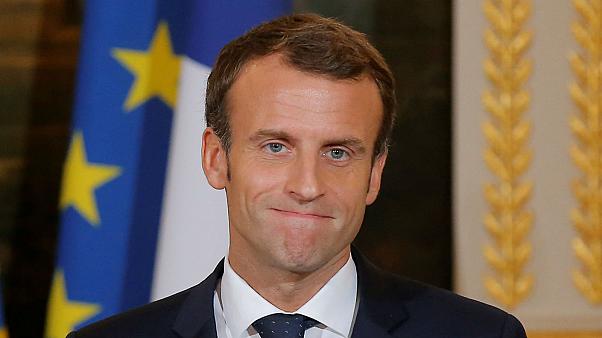
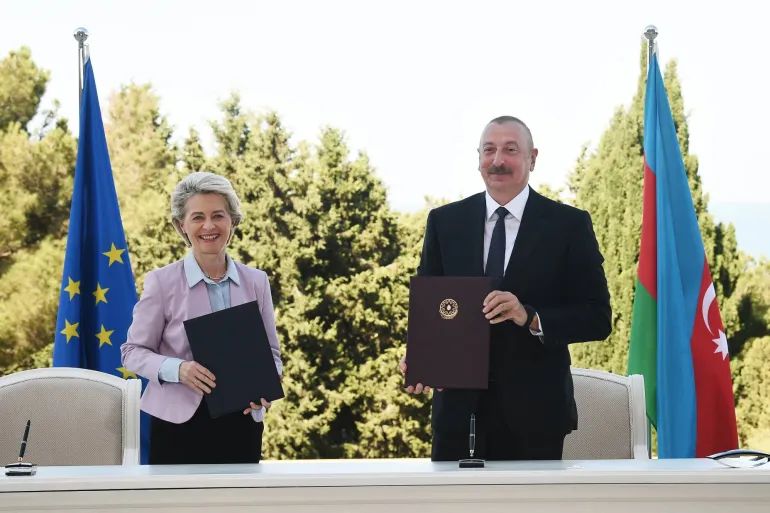
Likewise, the Russian government, which has cozied up to Azerbaijan, also criticized the French weapons transfer, even though the Kremlin left their “ally” in Armenia out to dry. Russia sees Azerbaijan as a potential conduit to evade sanctions, and therefore, the growing diplomatic conflict between Baku and Paris is also intertwining with Moscow.
Azerbaijan Steps up Hybrid Warfare in Overseas French Territories
Growing worried that Armenia is becoming integrated into the international fold thanks to French soft power, Azerbaijan stepped up hybrid warfare against France. In May of this year, in New Caledonia, an overseas French Protectorate, major protests ensued by Kanak nationalists, but with striking hallmarks of hybrid and informational warfare.
The protests sparked by Kanak nationalists openly included Azerbaijani flags and t-shirts. Azerbaijan’s state media openly amplified the New Caledonia protests.
The French government took extensive measures in New Caledonia, such as banning TikTok, the Chinese government-linked spyware social media company. Despite claiming they had no link to the protests, Baku invited leaders of various separatist movements in French territories in July 2023.
Creating the ‘Baku Initiative Group,’ Azerbaijan looks to flame separatism and internal conflicts in French territories due to France’s growing military and diplomatic support for Armenia.
Involvement of Russia and Turkey Further Complicates Things
Alongside Azerbaijan, Russia and Turkey also have geopolitical disputes with France, as French military aid has increased in Eastern Europe and the Mediterranean—and Moscow’s and Ankara’s disputes with Paris are quickly aligning with Baku’s.
In the Eastern Mediterranean, France is ramping up military support for Greece due to heightened tensions with Turkey as Ankara ramps up belligerent actions towards Cyprus and the Greek Aegean Isles. Turkey is reciprocating by also interfering in French domestic policies and former overseas colonies—particularly in Niger.
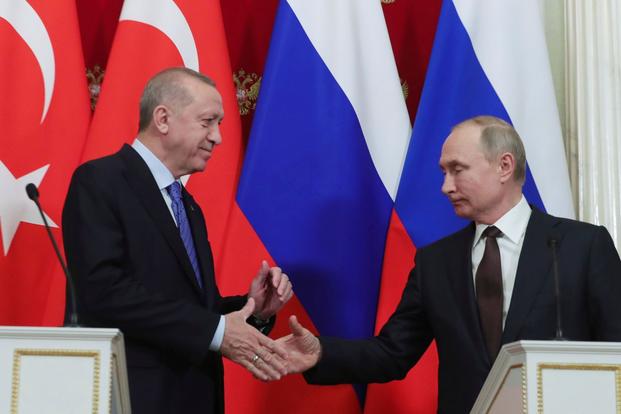
Turkey currently has a mutual defense pact with Azerbaijan, and Turkish President Tayyip Erdogan recently admitted Turkish military involvement in the Second Karabakh War. With Azerbaijan growingly under diplomatic pressure from France, Baku’s top defense partner in Ankara will look to keep Paris on its heels.
Initially taking a more diplomatic role with discrete defense packages to Ukraine, French President Macron has dramatically increased support to the war-battered nation, and his defense cabinet has gone as far as presenting a potential Western intervention against Russia.
The change in the French government’s posture towards the Kremlin came against the backdrop of the Russian-backed coups in the African ‘coup belt.’ The Russian-funded Wagner Group has helped to prop up various military juntas in former French colonies along the Sahel and Central Africa.
The Russian-backed juntas have not only forced French-led military coalitions to leave their countries but also started the process of removing the French language and increasing trade and resources with Moscow, which Paris takes as a major slight.
Russia’s increased partnership with Azerbaijan became a factor in growing French-Armenian ties, and France looks to insert its authority against Russian ambitions in Eastern Europe and the South Caucasus. Simultaneously, Turkey and Russia will look to give Azerbaijan as much support as possible in the ongoing geopolitical conflict against France.
France and Azerbaijan are now waging a shadow conflict, not only in the South Caucasus but also in various regions across the globe. The geopolitical implications against the backdrop of the Second Karabakh War are a major reminder that the ‘smaller wars’ of the world can eventually grow into a global domino effect.








COMMENTS