


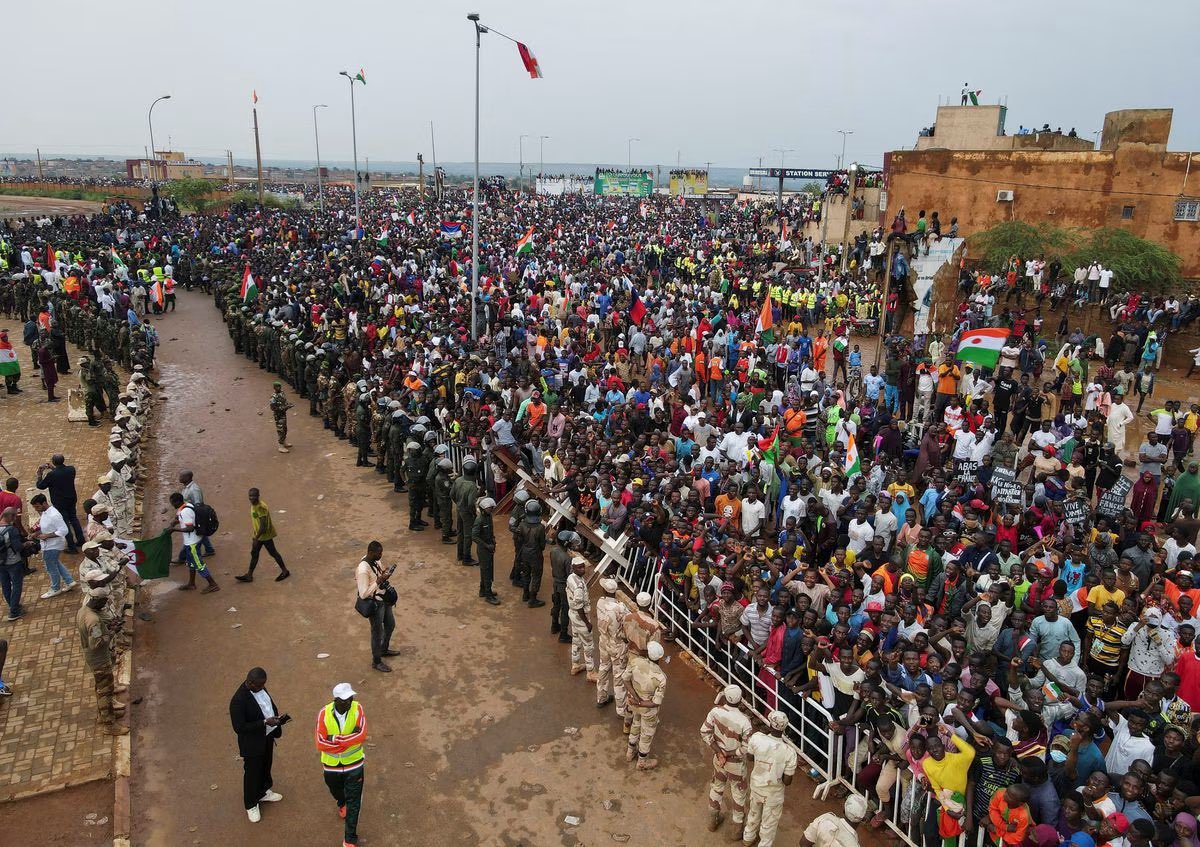
Foreign Minister Catherine Colonna reaffirmed France’s recognition of President Bazoum and his government as the legitimate authorities in Niger. She emphasized that French troops were initially deployed at their request to engage in anti-terror operations. However, with the suspension of anti-terrorist cooperation in the wake of the coup, this mission has become untenable.
Colonna underscored that the Economic Community of West African States (ECOWAS), not France, now takes the lead in the region. President Macron’s assertion that the concept of “Francafrique” – denoting France’s neo-colonial influence – is no longer applicable was echoed by Colonna.
“The approach of France is to listen to Africans, not to decide for them. ‘Francafrique’ has been dead for a long time,” she stated.
A Quick Overview of the History of France-Niger Relations
Looking back in history, the France-Niger relations are deeply rooted in colonial ties and post-independence cooperation. Niger, a former French colony, gained its independence in 1960.
During the colonial era, Niger, like many other African territories, served as a source of valuable resources and labor for France. The legacy of this colonial history is still palpable in Niger, from its official language (French) to its legal and administrative systems. This shared historical heritage has left an indelible imprint on the country’s culture and institutions.
In the post-independence era, France and Niger continued to maintain diplomatic ties, with France playing a prominent role in supporting Niamey’s development efforts. Economic aid, technical assistance, and cultural exchanges have been vital components of this relationship. France has also provided military assistance to Niger, especially in counterterrorism efforts.
The security situation in the Sahel region, characterized by the presence of jihadist groups and various forms of instability, has further deepened the collaboration between France and Niger. Niamey’s strategic location and its porous borders with neighboring countries have made it a critical partner in the fight against terrorism in the Sahel. French military forces have been stationed in Niger as part of the larger regional counterterrorism efforts.
However, the history of France-Niger relations has not been without its challenges. Recent events, such as the coup in July 2023, have strained the relationship. France’s decision to recognize the legitimacy of President Mohamed Bazoum following his election and its subsequent condemnation of the post-coup regime has led to a significant diplomatic fallout. The coup leaders’ renunciation of key military cooperation agreements with France further underscored the evolving dynamics in this relationship.
~
In this evolving geopolitical landscape, the fate of France’s military presence in Niger remains uncertain, with negotiations between the French army and Niger’s military shaping the trajectory of their engagement in the Sahel region.








COMMENTS