

These individuals, including some convicted of high-profile attacks, were met with jubilant crowds waving Palestinian flags in Ramallah.
Seventy of the prisoners were deported to Egypt, with some likely heading to other countries such as Turkey or Qatar. Another 16 returned to Gaza, while the rest reunited with their families in the West Bank.
Challenges to the Ceasefire
Despite the celebratory scenes, the exchange revealed cracks in the ceasefire agreement.
The failure of Hamas to release a fifth hostage, 29-year-old Arbel Yehud, led Israel to halt plans to allow displaced Gazans to return to northern Gaza, the area most ravaged by the war.
Israeli officials labeled the delay a breach of the truce, while Hamas called it a technical issue, assuring mediators that Yehud would be released the following week.
The suspension of the Palestinian movement northward has intensified frustration among the hundreds of thousands of displaced Gazans eager to return home.
Witnesses reported that Israeli troops fired warning shots near crowds attempting to cross back into northern Gaza, causing panic and further highlighting the fragility of the ceasefire.
What the Exchange Means for the Ceasefire
The current ceasefire, brokered by Egypt and Qatar with backing from the United States, is the first substantial pause in hostilities in over a year.
It stipulates a phased exchange of hostages for prisoners over six weeks.
For every civilian hostage released by Hamas, Israel agrees to free 30 Palestinian prisoners; for every soldier, 50 prisoners are exchanged.
While this truce has temporarily halted airstrikes and allowed humanitarian aid to flow into Gaza, it remains precarious.
Many families of hostages fear the ceasefire could collapse before all captives are released.
Israel’s insistence on holding Hamas accountable for every detail of the agreement—including the delayed release of Yehud—illustrates the high stakes involved.
Broader Implications for the War
The prisoner exchange has become a symbolic and strategic tool for both sides.
For Hamas, the release of long-imprisoned militants bolsters its standing among Palestinians, particularly as many of the freed individuals are regarded as heroes.
For Israel, bringing hostages home reinforces the government’s commitment to its citizens and strengthens morale in the face of ongoing conflict.
However, the exchange also underscores the enduring challenges of this war.
Crowds of displaced Palestinian families are seen at al-Rashid coast road in Wadi Gaza waiting to be allowed to cross into #GazaCity, one day after Hamas released four Israeli hostages in exchange for 200 Palestinian prisoners. pic.twitter.com/qDP4WdOwUT
— Al Arabiya English (@AlArabiya_Eng) January 26, 2025
Since the October 7 attack that killed 1,200 Israelis and saw more than 250 hostages taken to Gaza, Israel’s military campaign has claimed the lives of over 47,000 Palestinians, according to local health officials.
The sheer scale of devastation in Gaza has displaced the majority of its population, leaving many at risk of famine.
Hamas’s “civil-military fusion” and Israel’s relentless campaign to prevent its resurgence create a volatile backdrop for these negotiations.
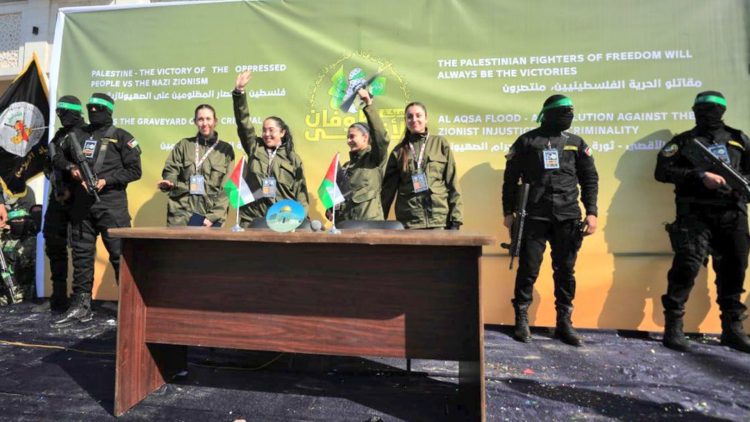
Both sides are acutely aware of the propaganda value of each exchange, with Hamas’s public staging of released hostages and Israel’s emotional reunions drawing intense global attention.
What’s Next?
The initial six-week phase of the truce will be critical in determining whether it can pave the way for a broader resolution.
Key questions remain: Will Hamas release the remaining 90 hostages in its custody? Can Israel and Hamas reach a compromise that addresses the root causes of the conflict?
For now, the war’s devastating toll continues to weigh heavily.
In Gaza, the displaced yearn for stability and the chance to rebuild their lives. In Israel, families of hostages hold their breath, hoping for the safe return of their loved ones.
As celebrations and frustrations collide, the path to lasting peace remains uncertain, with both sides walking a tightrope between diplomacy and renewed violence.








COMMENTS