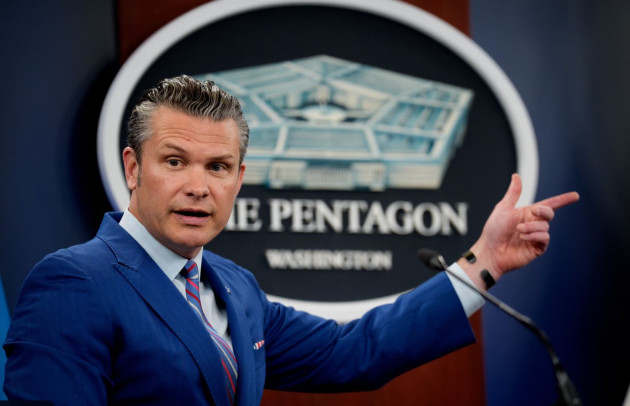
Multiple outlets reported on February 17 that Secretary of Defense Pete Hegseth directed Army Secretary Dan Driscoll to remove Col. David Butler, a senior Army public affairs officer who served as a spokesman and media strategist for both Driscoll and Army Chief of Staff Gen. Randy George.
The Washington Post reported that Hegseth raised the issue with Driscoll at least twice and ultimately directed Butler’s removal during a Pentagon discussion last week. Fox News reported that Hegseth ordered the move after months of tension. Both outlets cited officials familiar with the matter.
Butler submitted retirement paperwork following the directive rather than remain in place while his continued presence risked delaying a slate of promotions affecting other officers, according to officials cited by the Post. Army Secretary Driscoll confirmed Butler’s retirement and praised his service, but did not provide a reason for the departure. Butler declined to comment.
As of this writing, no replacement for Butler had been identified in the public reporting reviewed for this article.
Why Butler became the focus
Officials familiar with the situation told the Washington Post that Butler’s previous service as a senior spokesman for former Joint Chiefs Chairman Gen. Mark Milley appears to have been a key factor behind the push to remove him. The exact rationale behind Hegseth’s directive has not been publicly explained, and Driscoll declined to address it when asked.
Fox News likewise reported that Butler’s past association with Milley and his pending promotion were central to the dispute, framing the removal as part of broader internal friction involving senior officers and promotion lists.
Public affairs officers serve where they are assigned. They do not choose their principals based on future political winds. When prior assignments begin to follow officers years later, it tends to send a message through the building, whether intended or not.
The promotion list problem
The Post reported that Butler’s name appeared on a list of roughly three dozen promotion-eligible Army officers whose nominations should have been sent forward months ago. His inclusion on that list appears to have contributed to delays affecting the broader group.
Officials told the Post that Butler chose to retire rather than remain on the list and potentially slow promotions for other officers. Fox similarly reported that the list had been delayed for months and that Butler stepped aside in part to avoid holding up peers.
Promotion backlogs are not unusual. A single name becoming a sticking point for dozens of careers is less common. When that happens, the internal message travels quickly, and not always in the way leadership intends.
Butler’s career and role
Butler held several high-profile communications assignments. He previously served as a senior spokesman for Gen. Mark Milley during Milley’s tenure as chairman of the Joint Chiefs of Staff. Before that, he served as the top U.S. military spokesman in Afghanistan under Gen. Austin “Scott” Miller and had worked with Miller at Joint Special Operations Command.
Already have an account? Sign In
Two ways to continue to read this article.
Subscribe
$1.99
every 4 weeks
- Unlimited access to all articles
- Support independent journalism
- Ad-free reading experience
Subscribe Now
Recurring Monthly. Cancel Anytime.
He also traveled with Army Secretary Driscoll to Ukraine in November and helped manage major Army events, including a large military equipment parade in Washington, D.C., last summer, according to reporting by WP.
At the time of his removal, Butler was a central communications adviser to the Army’s senior leadership and a familiar figure to defense reporters covering the service.
What happens now
No successor had been publicly named in reporting available as of February 17. The Army has not released a detailed explanation for Butler’s departure beyond confirming his retirement and praising his service.
Army public affairs is not a ceremonial post. It sits at the intersection of institutional messaging, media access, and public accountability. Sudden turnover at that level, particularly when driven by pressure from senior civilian leadership, rarely stays contained to one office.
The unanswered question is not only why Col. David Butler was pushed out. It is what kind of internal climate takes shape when past assignments, promotion lists, and political friction converge inside the Pentagon.
Until the Army or the Department of Defense provides a clearer explanation, the official version of events will remain short on detail, and the interpretation across the force will fill in the gaps.










COMMENTS