


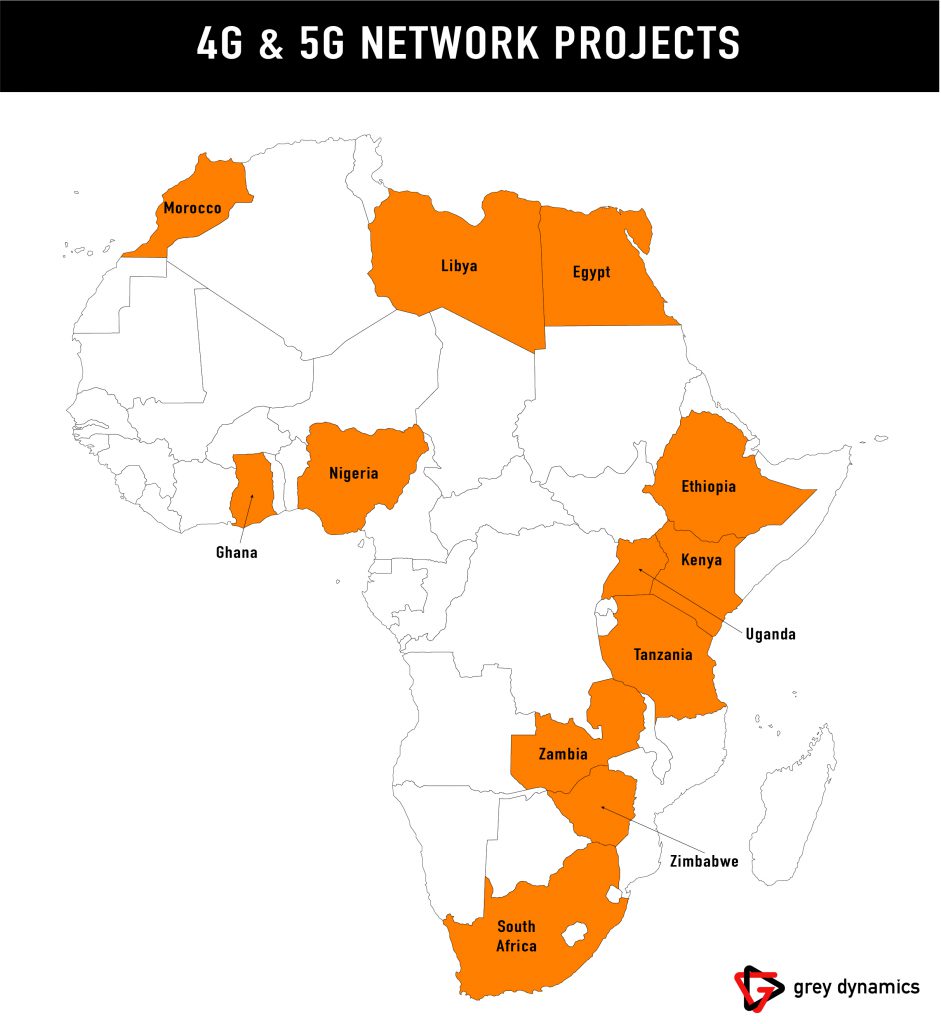
Huawei dominates the African telecommunications market. It is building 70 percent of Africa’s 4G infrastructure. Yet, the system may become a tool for authoritarianism in the continent as accusations of Huawei employees helping Ugandan intelligence to spy on political opponents demonstrate.
Huawei in Uganda
According to senior security officials in Uganda, Huawei employees aided the surveillance of the political opposition. The aid allowed the interception of encrypted communications and social media messages; tracking was provided with the utilization of cell data. This was possible under 2010 laws allowing the government to “secure its multidimensional interests.” Huawei and Beijing deny involvement.
The penetration facilitated by the Huawei employees provided government officials with access to the opposition: Rallies and gatherings were intercepted before happening and Bobi Wine, the opposition leader, was arrested along with dozens of his supporters. Ugandan intelligence also utilized the Israeli “Pegasus Software,” an invasive and sophisticated spyware providing access to encrypted communications.
Uganda is currently diversifying its imports of surveillance capability and through ZTE (a Huawei competitor) is one of three African countries being pilot-tested for the 5G network.
Although there is no evidence that Huawei or China approved the actions of employees working with Ugandan intelligence, the above is an example of how technology may support the decline of digital rights and democracy not only in Africa but globally.
Hypocrisy?
In 2018, the White House banned federal agencies and employees from using Huawei telecommunications equipment as Huawei systems pose an intelligence threat. However, Huawei is not the only manufacturer of surveillance being used for authoritarian ends. American, British, Italian, and Israeli firms, as well as Huawei’s Chinese competitors, are also exporting surveillance software and systems.
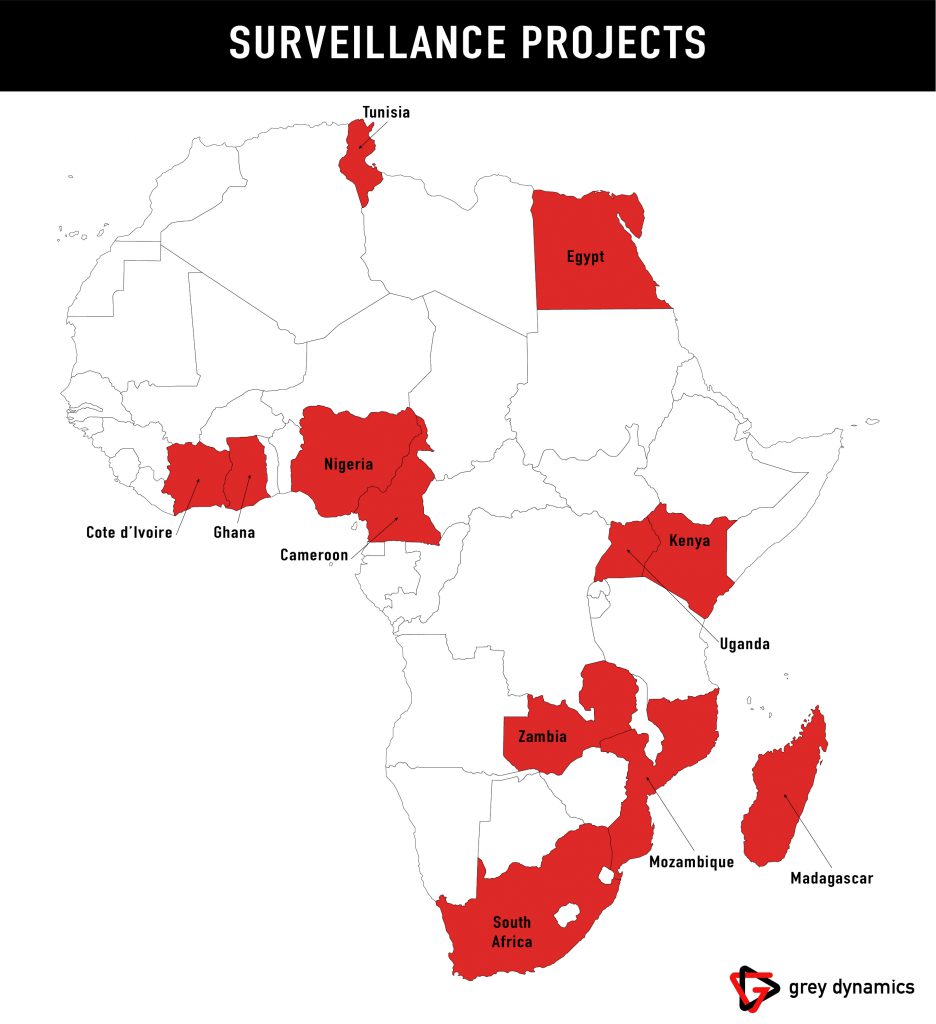
Israeli NSO Group’s “Pegasus Software” has been utilized in South Africa, Kenya, Rwanda, Uganda, Ivory Coast, and Zambia. Until last year, the majority shareholder for the company was the U.S. private equity firm Francisco Partners.
Ethiopia purchased the invasive surveillance software “FinSpy” from the U.K.-based Gamma Group in 2013. In 2015, an Italian-based company Hacking Team exported sophisticated eavesdropping software to Ethiopia. Huawei’s competitor ZTE won a contract to install landline telephone monitoring equipment in Kenya, which a WikiLeaks scandal revealed as happening following bribes to high-ranking members of Kenya’s National Intelligence Service. Huawei is dominating the market in Africa for surveillance. It is unlikely that Western firms would be concerned with ethical issues if the market gap was not that pronounced.
Safe City Initiative
Huawei, in partnership with the Ugandan police, has already established the Safe City Initiative. As aforementioned, the initiative is a mass surveillance system using facial recognition and AI software. A previous Grey Dynamics article analyzed the dangers that AI poses in the hands of authoritarian states. The software uses Internet of Things (IoT) devices to conduct surveillance on an unprecedented scale. There are no safeguards for accountability. This evidently creates human rights and privacy concerns as there is little transparency on operations.
Safe City Initiatives are operating in 12 Sub-Saharan African countries. Eight out of these countries have been assessed as “partly free” or “not free” by the Centre for Strategic and International Studies. The initiative in Nairobi witnessed a 46 percent drop in the regional crime rate in 2015, indicating there are highly beneficial factors to a mass surveillance system. The problem is that legislation and safeguards do not exist to protect African citizens’ rights.
China is ahead of the West in AI application, while the West is progressing further in AI research. An indicator of China’s future focus in systems such as the Safe City Initiative which eases the use of authoritarian tactics is clear. It is likely that as the technology of AI application is dominated by China, Huawei will continue to dominate the export of surveillance technology to Africa.
For similar content, you can follow Grey Dynamics on their social media and website.








COMMENTS