

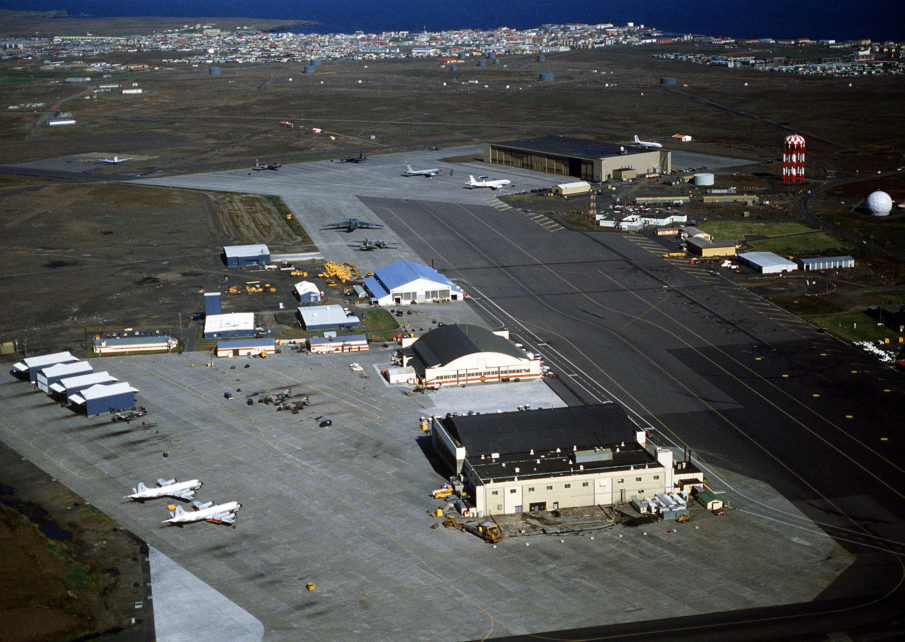
The U.S. Navy’s Boeing P-8 Poseidons, a maritime, patrol, and reconnaissance plane specializing in anti-sub and anti-surface warfare and intelligence gathering, maintain a presence to monitor any abnormal Russian military activity in the Arctic and northern sea trade routes.
Underneath her frozen bosom lie the Arctic treasures natural resources such as mineral, natural gas, and oil. As the world gets warmer and icebergs melt, these resources will be left exposed for the taking. And with murky international boundaries, ‘accidents’ can happen.
In 2006 (the same year the base closed), the Arctic Council (AC) launched as a place of discourse between those vying for Arctic resources. The Council is comprised of eight countries: Iceland, Denmark, Finland, Norway, Sweden, Canada, Russia, and the U.S.; the European Union and China are observers.
Despite her small size, Iceland has had quite a presence in the Council. In 2007, the Icelandic Government shot down an attempt by Denmark to create an ‘Arctic Five.’ This smaller version of the AC would have included only Denmark, Norway, Canada, Russia, and the U.S. Iceland, moreover, has been hosting the Arctic Circle Conference up to this year.
So, now that we’ve established some background, let’s go back to the question: could the elections’ result spell trouble for NATO and U.S. interests in the Arctic?
Iceland has a 63 seat Parliament.
Judging from the election results, a coalition between the Left-Green Movement (11 seats), the Social Democratic Alliance (7 seats), the Progressive Party (8 seats), and the Pirate Party (6 seats) is the most likely scenario. With a combined 32 seats, the above partnership will be able to form a government. And Katrin Jakobsdottir, the leader of the Greens, will probably be the next Prime Minister.
Iceland looks to a left-leaning government over the next four years.
All the above parties except the Progressive are centre-left or left-wing. The Greens, moreover, stress environmentalism, feminism, and pacifism as their most important political aims.
Thus, it looks like there may be some trouble ahead for Western military presence on the island. Although the agreement signed last year stands true, a left-wing government can always find ways to frustrate things. But that also doesn’t mean that they’ll make any approaches to Russia. On the contrary, based on their political vision, they would most probably push for a demilitarised Arctic and a ‘green’ approach to the region’s natural resources.
Featured image courtesy of Wikipedia








COMMENTS