

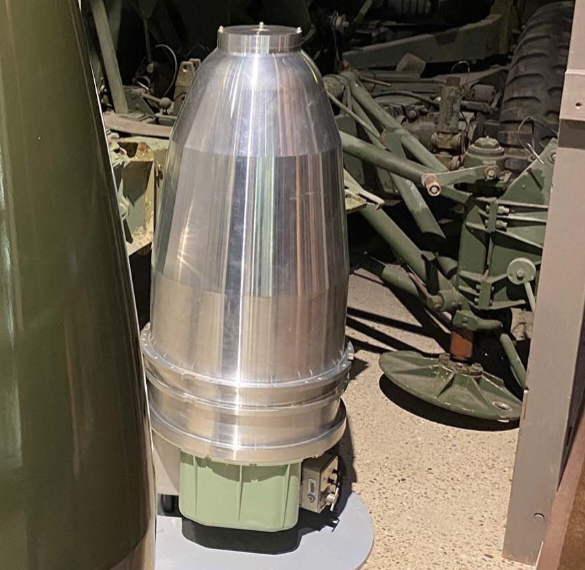
Look at the crude construction and let that sink in. This is 1950’s technology, long since declassified. It uses a gun-type A-Bomb that the Los Alamos engineers considered so simple and reliable that they didn’t bother to test it.
Later, the US Navy wanted some of the action. They appropriated the W19 and adapted it for use in 16-inch guns. The kind used on battleships like the USS Iowa and USS Missouri. There was a slight problem. They had to modify an 11-inch projectile for firing from a 16-inch piece. They used the same W19 warhead assembly and stuffed it into a 16-inch shell and called it the W23. To confuse matters, they also called the W23 “Katie,” keeping the name given to the W19 warhead. The difference is that all-in, the 16-inch shell weighed 1,900 pounds. The Navy wanted the nuke to behave like a conventional 16-inch armor-piercing shell.
The Fattah-2: Iran’s unstoppable delivery vehicle
On October 1, Iran hit Israel with three hundred IRBMs. The attack penetrated Israel’s air defenses. An account of the attack can be found in this SOFREP article, Iran Missile Attack Overwhelms Israeli Air Defenses. The attack consisted primarily of Iranian IRBMs, with some Hezbollah artillery rockets. There were a handful of advanced Iranian hypersonic missiles, the Fattah-2.
There was a lot of confusion about the Fattah-2 in the wake of the October 1 attack. Most reports describe Iran’s Fattah-2 as a new development of its Fattah-1 hypersonic missile. As we shall see, it is a different platform altogether. As it happens, Pakistan also has a weapons system called the Fattah-2, but it is not the same as Iran’s Fattah-2. The Pakistani system is a shorter-range MLRS, comparable to the US ATACMs, with a range of about 300 miles. The Iranian Fattah-1 and Fattah-2 both have ranges of about 1,200 miles, enough to reach Israel from Iran. Do not confuse the Iranian and Pakistani missiles. They are very different animals.
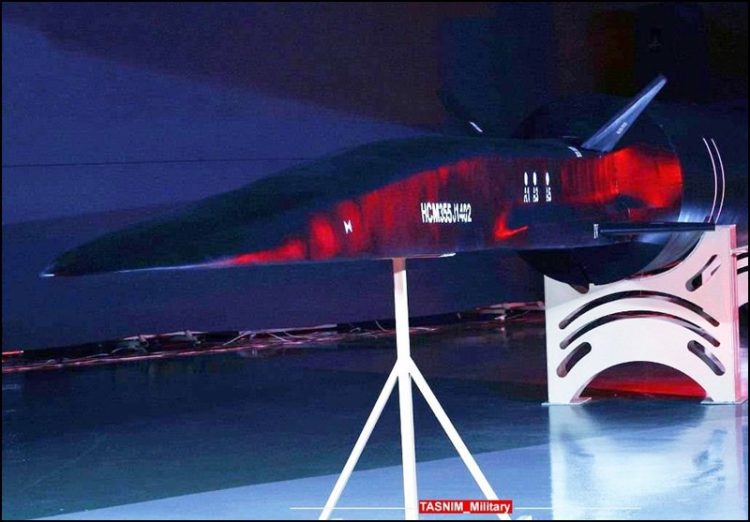
Figures 1 and 3 show the Iranian Fattah-2.
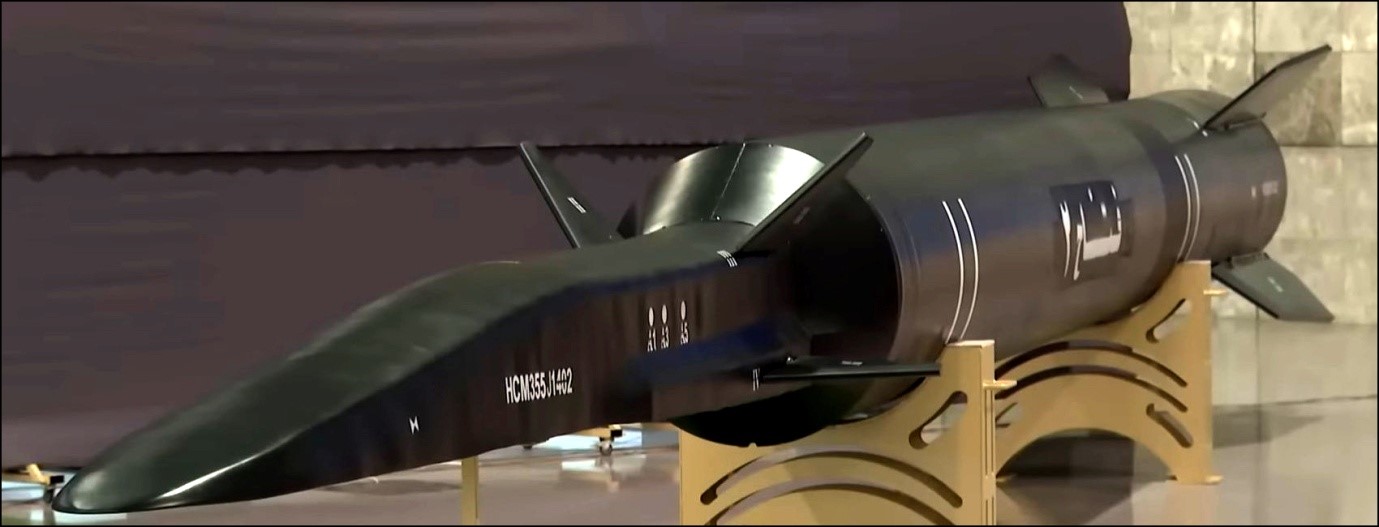
Iran deployed the Fattah-1 in June 2023. The Fattah-2 was unveiled only five months later, in November. It was unusual that the two new hypersonic weapons were deployed so close together. The Fattah-2 was deployed after Israel’s invasion of Gaza.
The Fattah-2 is a Hypersonic Glide Vehicle. That means it is launched on a ballistic trajectory, reaching Mach 15, fifteen times the speed of sound. The missile then drops its booster and cruises towards its target. It then descends to attack altitude and is capable of evasive maneuvering to confuse enemy air defense systems. It actually slows down to a “pedestrian” Mach 5 on its terminal approach to the target. The lower right quadrant of Figure 4 shows the Fattah-2’s typical flight profile.
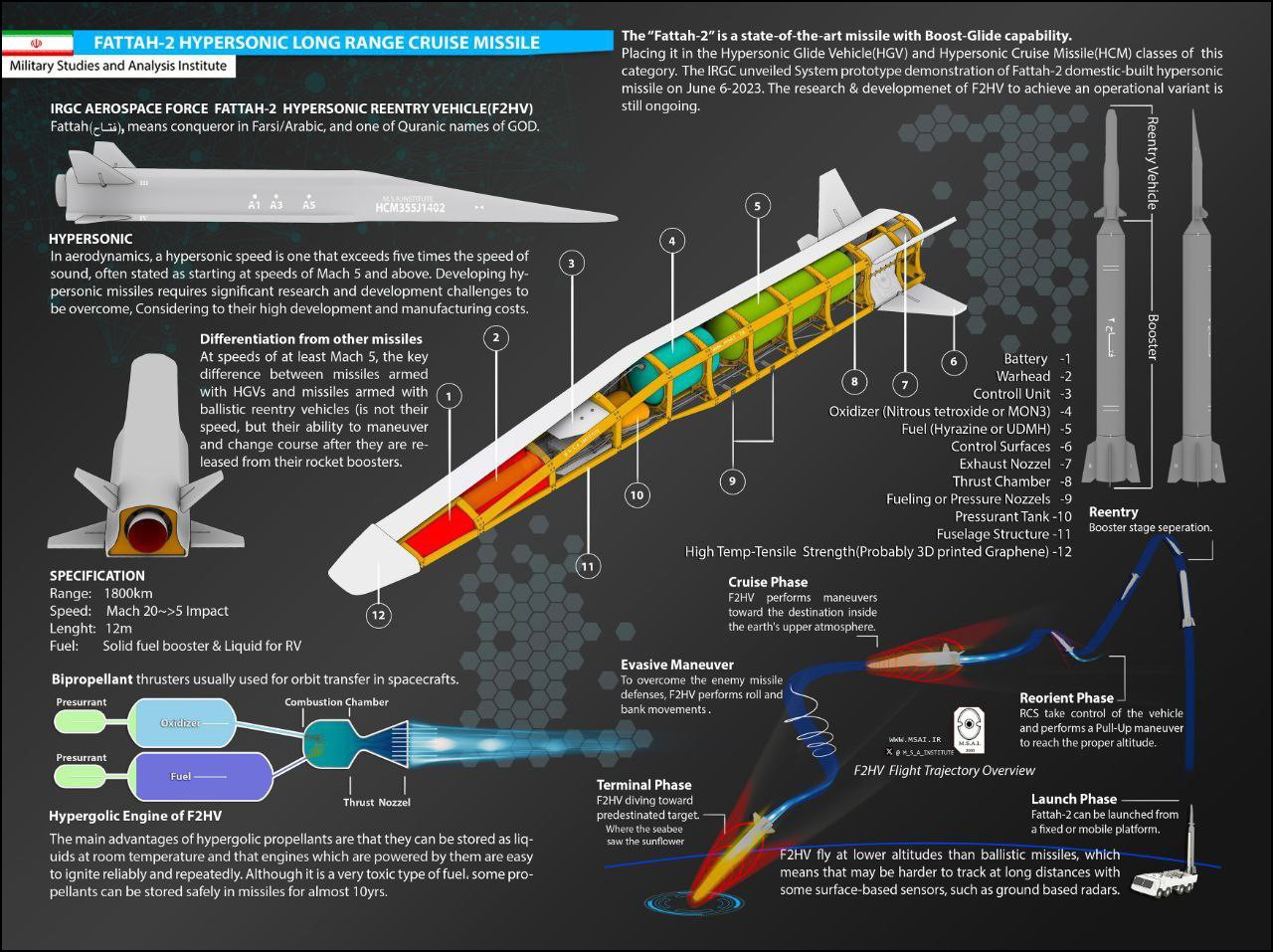
The Fattah-2 is hypersonic throughout its mission profile and is capable of evasive maneuvering. This puts it right up there with the most sophisticated Russian systems like the Iskander-M, Kinzhal, and Zircon. NATO does not have a comparable weapons system in service. There is no known air defense against a maneuvering hypersonic missile.
Putting it together: Iran’s Hypersonic Nuclear Threat
The Fattah-1 fields a payload of 1,000 lbs. While the Fattah-2’s payload specifications have not been disclosed, the payload is probably smaller, on the order of 500 lbs. These parameters are important because we know from declassified US Army and Navy specs that Katie was about 200 pounds.
Dual-purpose missiles typically carry payloads of 1,000 to 2,000 lbs. The Kinzhal, for example, packs 1,000 lbs. Ditto the Fattah-1. The Iskander packs 1,500 lbs. That much conventional explosive provides sufficient bang for the buck and permits the weapon system to carry thermonuclear warheads.
It looks like the Fattah-2 was designed primarily to accommodate a nuclear payload like Katie.
Israel’s problem is that it’s tiny. Shaped like an hourglass with a narrow waist. Most of its population is highly concentrated in Tel Aviv and Haifa.
Figure 6, drawn from Alex Wellerstein’s Nukemap app, shows the effect of hitting Tel Aviv with Katie, mounted on a Fattah-2. The attack will produce casualties of 98,000 killed outright and a quarter of a million injured.
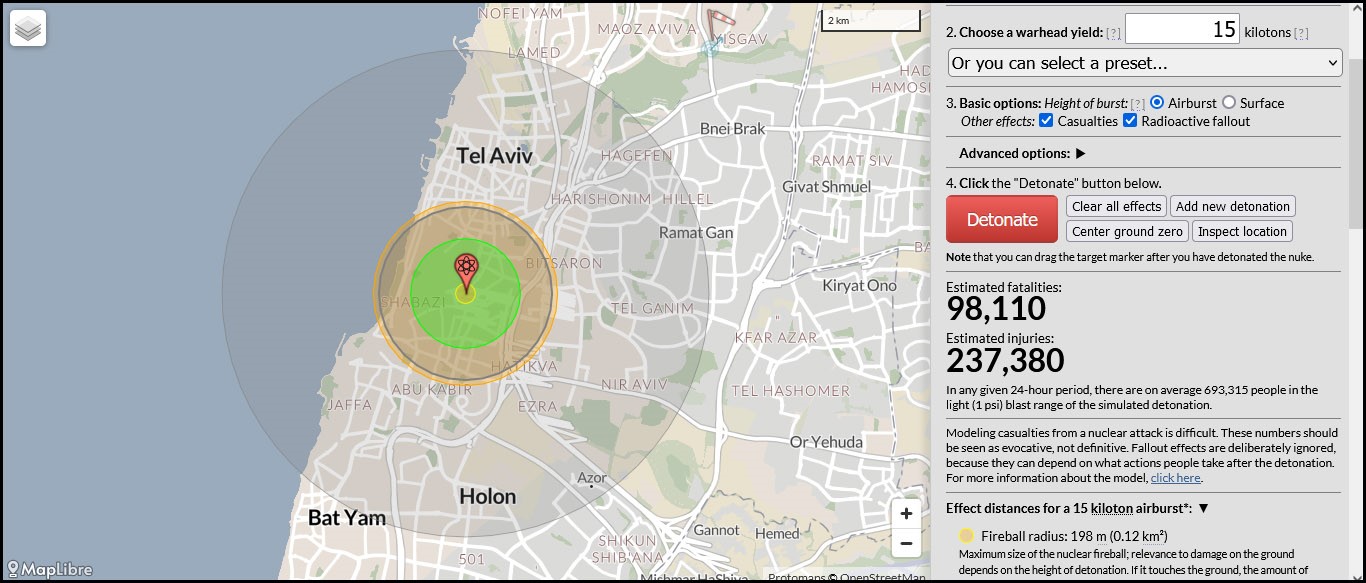
The Fattah-2 is as sophisticated as the best Russian weapons, and it is indigenous to Iran. It is unreasonable to think Iran can build the Fattah-2 and not be able to build Katie. If Iran attacks with a thousand IRBMs and slips in half a dozen Katies on Fattah-2s, Israel will be toast.
About the Author

You may reach Cameron at: [email protected]
Cameron Curtis has spent thirty years in the financial markets as a trader and risk manager. He was on the trade floor when Saddam’s tanks rolled into Kuwait, when the air wars opened over Baghdad and Belgrade, and when the financial crisis swallowed the world. He’s studied military affairs and warfare all his adult life. His popular Breed series of military adventure thrillers are admired for combining deep expertise with propulsive action. The premises are realistic, the stories adrenaline-fuelled and emotionally engaging.
Check out the books here: Cameron Curtis’s Amazon Page

Editor’s Note: Is it just me, or did the holiday shopping season sneak up on us? No worries! I’ve got the perfect gift idea for that action thriller lover on your list. Make their holiday special with a copy of Breed! –GDM








COMMENTS