

Again, there was no sign or lead-up regarding extremism within the force from the previous secretary of Defense. Furthermore, neither were commanders within the Special Operations community aware that this was an ongoing issue that needed to be addressed.
There must be a truth to these two initiatives. Either every soldier is pretending to be blind to these issues or something real is happening within the ranks that is only known to a few and the highest levels of command.
Race and Hate Seem to Be the Focal Points
In some extremism safety stand-down briefings, soldiers received training on what extremism is, how it can be identified, how to approach it, and much more. Moreover, it was clear that race and hate were the focal points.
Training also included what soldiers should be looking for from their fellow soldiers and how to report them to the command. Again, this is on par with the new social standards dictating that everyone must think and move one way: the way you are told.
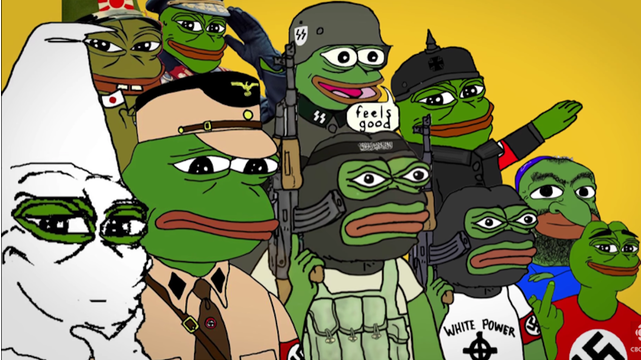
Soldiers also received information about specific and known street gangs, hate groups, outlaw motorcycle clubs, support clubs, and political groups. They were also shown graphics, signs, memes, and gifs which are deemed “extremist” to the professionals are common to today’s social media.

Some of these images included cartoon frogs, star tattoos, common Friday the 13th tattoos, and so many commonly non-extremist artforms altogether. Speaking of just a Friday 13th tattoo illustrates the problem with how easily the Army could go overboard trying to find extremism where it may not even exist.
A tattoo of the number “13” has a centuries-long tradition in the Navy. Sailors believed that by having that tattoo bad luck would see it and pass them by.
In 1995, the famous tattoo artist Oliver Peck created variations on the Friday 13th tattoo as a marketing gimmick. Further, tattoo shops offer discounted rates on any Friday that falls on the 13th of a month. The date is considered the Black Friday of the tattoo industry with hundreds of people showing up to get one.
Yet, the number “13” could also signal affiliation with the MS-13 gang. This Salvadorian gang originated in Los Angeles in the 1970-80s.
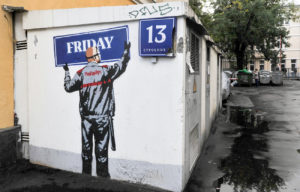
Do you see the problem?
The training itself received mixed reviews but brought to light the actual question: What is being seen in the military? Is there a real issue? If it is there are no numbers to back it up coming from the Army.
Servicemembers discharged for “extremism” are bounced out under the non-specific “misconduct” category that covers a very wide range of activities, not just political extremism. If a servicemember had an offensive bumper sticker on his car and refused to remove it, they would be charged with Failure to Obey a Direct Order under the Uniform Code of Military Justice. But he wouldn’t be charged with engaging in “political extremism” which is a charge that doesn’t even exist under the UCMJ.
The real problem the troops are having is that these programs seem to be based on a presumptive belief that the military is racist, sexist, transphobic, homophobic, and that these diversity and inclusion initiatives are a punishment for these faults.
These Initiatives Must Be Focused on an Actual Identified Extremism Problem and Not Cast a Blanket Suspicion on all Soldiers.
This country’s military has fought through many wars and countless battles. Individuals from all walks of life have joined it. The military isn’t lagging behind American society when it comes to inclusion and diversity. In fact, it tends to lead it.
President Truman desegregated the military in 1948, while full equality for black American citizens didn’t happen until the Civil Rights Acts passed in 1964 and 1968. So for nearly 20 years, black Americans could serve in a non-segregated Army or Navy. But would go home on leave in Alabama where they couldn’t be on the street after 21.00.
The Army needs to be very clear with the troops, and also the public and politicians, about just how big a problem with extremism it really has. It can start with some accurate reporting on servicemembers separated for engaging in extremist activities. And we hope that mere thought-crimes do not constitute extremist activity nor lead to knee-jerk reactions to a tattoo.
Then the Army needs to explain to the troops just how big that problem is and ask for their assistance in dealing with it. It should not treat everyone in the service as if they are extremists in need of deprogramming sessions, which is what it appears to be doing now.








COMMENTS