

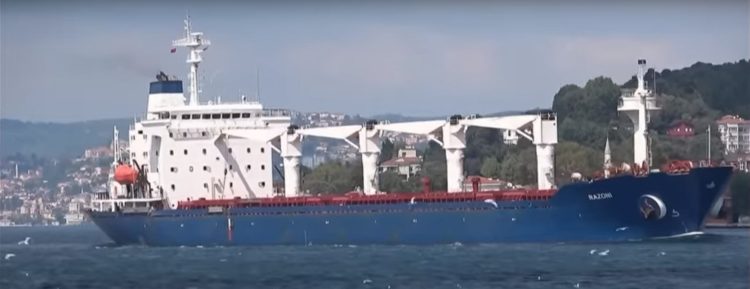
According to the UN-led committee overseeing the Russia-Ukraine grain deal, the Razoni is now looking for a new buyer. As of writing, the Razoni is currently located at the Mersin port in Turkey after its voyage of 7 days, while “waiting for instructions for the new destination.
Politics Hampering Progress in Global Food Crisis?
Lebanon’s economic decline since 2019 continues, with the Lebanese pound losing almost 90% of its value. This was caused by systemic corruption that was only exacerbated by the COVID-19 pandemic. In addition, with the Razoni being able to travel to the Black Sea, the country’s relying on regular shipments to produce an influx of food supplies and commodities to fix the growing food crisis in the country.
The Razoni’s route didn’t expect any setback when it first sailed the Black Sea, but with the recent Putin-Erdogan meeting in Sochin, many wonder if there’s a correlation.
SOFREP previously reported that Turkish President Recep Tayyip Erdoğan and Russian President Vladimir Putin met last week to discuss ways to collaborate amid the Russian-Ukraine war. Though Turkey has yet to release any official statement regarding the outcome of the meeting, the Razoni’s flagging near Turkish ports is still suspicious. For some, they believe the cargo was rejected simply because the grains had poor quality.
According to the information of the shipper the final buyer in Lebanon refused to accept the cargo due to delay of delivery terms (more than 5 months). So the shipper is now looking for another consignee. It can either be in Lebanon or other country. pic.twitter.com/Qj1cyF5Uda
— UKR_Emb in Lebanon (@UKRinLBN) August 8, 2022
The UN-led Joint Coordination Center (JCC) said their inspectors checked the cargo and confirmed that there were no unauthorized crew or cargo on board, but also said they are not responsible for the food inspection itself.
“Details about quality control are understandably vague but the Razoni’s cargo was rejected by the buyer in Lebanon so there will likely be some further problems, particularly on the older grain, which should be seen as distressed cargo,” said Neil Roberts, head of marine and aviation at the Lloyd’s Market Association. “For now, the good news is that some vessels are out and some grain export has resumed, but much remains in the balance.”
An anonymous agent in Tripoli said the buyer had concerns about the quality of the cargo. In contrast, another agent based in Turkey said they have no idea “what will happen” next. If the quality is the problem, it’s doubtful Razoni’s cargo could find another buyer.
The JCC said they’re prioritizing the departure of vessels to travel to the Black Sea to “reduce food insecurity and world hunger.” However, these vessels are being closely watched by insurers to see if it’s now feasible to depend on the Black Sea route for import and export. The JCC added that if the reopening of the Black Sea is successful, exports could reach 2 to 5 million tonnes in a 120-day period.
“All parties at the JCC have recognised that this is a humanitarian initiative and they are working towards that goal,” it said. “At the same time, though, we will not be able to control the commercial world.”








COMMENTS