The line between fear and courage can be thin enough to cut skin. In the hills near Unsan in November 1950, a Catholic priest from Kansas walked that line while shells stitched the ground around him. His name was Emil Joseph Kapaun, and soldiers later said he made chaos feel orderly for a few hard minutes at a time. The Medal of Honor that bears his name was earned in a pocket of North Korea where everything was falling apart, and one man chose to move toward the fire.
Early life and the path to a uniform
Kapaun was born on April 20, 1916, in Pilsen, Kansas, the son of farmers in a tight-knit Bohemian Catholic community. He was ordained a priest on June 9, 1940, after studies in Wichita. Parish work came first, yet the war years tugged him toward service. By 1944, he entered the U.S. Army Chaplain School and soon went overseas, ministering to troops in the India-Burma theater through 1946 before returning to the parish for a short spell. The Army called again in 1948, and he answered.
A chaplain among grunts
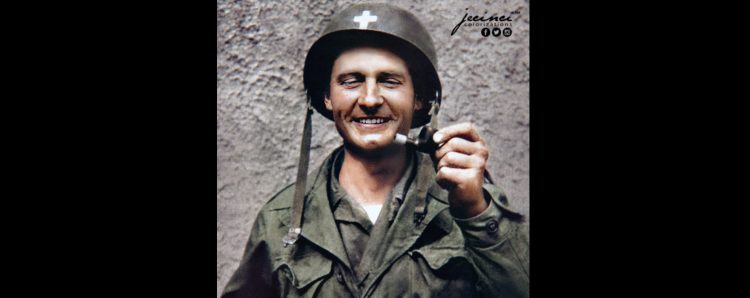
In Korea, Kapaun deployed with the 8th Cavalry Regiment of the 1st Cavalry Division. He learned the map the same way his soldiers did, by walking it under load and under fire. Men saw him in foxholes and aid stations and wherever the fighting grew rough. He carried a Mass kit when he could and carried litter poles when he had to. The job title read chaplain, but what soldiers noticed was his presence.
The actions that earned the Medal of Honor
On November 1 and 2, 1950, near Unsan, Chinese forces encircled the 3rd Battalion, 8th Cavalry Regiment. Under direct fire, Kapaun moved position to position, pulling the wounded out of ambush alleys, praying with the dying, and calming the living. When the perimeter collapsed, he rejected multiple chances to withdraw. Instead, he stayed with the wounded, negotiated with enemy soldiers to spare lives, and physically stopped the execution of an American by pushing the muzzle of a rifle aside. Captured after refusing to leave the injured, he organized a column of prisoners and helped carry those who could not walk. For these actions across those two days, he was later awarded the Medal of Honor.
Captivity and the rest of his life
Kapaun’s war did not end at Unsan. As a prisoner of war, he kept working. In a squalid camp along the Yalu River, he stole moments more precious than food. He scavenged scraps for fires, nursed dysentery cases, said prayers over men who believed they had none left, and lifted morale when the guards tried to grind it flat. Fellow prisoners built a wooden crucifix after his death in his honor. Kapaun died in captivity on May 23, 1951, weakened by pneumonia and malnutrition. He never left the service. His rank at the time was captain.
For decades his remains lay among the unknowns. The Defense POW MIA Accounting Agency identified him in March 2021. Kansas welcomed him home with full honors, and he was laid to rest in Wichita on September 29, 2021. The arc from battlefield to burial took seventy years, yet the men who survived said his memory never faded in the barracks of their minds.
The medal and the meaning
On April 11, 2013, the President of the United States presented the Medal of Honor posthumously to Kapaun’s family, calling him a shepherd in combat boots. The citation covers the firefights and the captivity, but it cannot contain the whole story. Decorations summarize. The man acted.
What we can learn
First, leadership starts where the rounds land. Kapaun modeled a form of authority that does not shout. It shows up, looks men in the eye, and moves them one step forward when stepping forward seems impossible. Second, courage is contagious. In Unsan, people did hard things because they watched someone else do the hardest thing. Third, faith can be a combat multiplier whether you share it or not. For some soldiers, his prayers mattered. For others, it was the steady cadence of a calm voice and a pair of hands that kept working.
Already have an account? Sign In
Two ways to continue to read this article.
Subscribe
$1.99
every 4 weeks
- Unlimited access to all articles
- Support independent journalism
- Ad-free reading experience
Subscribe Now
Recurring Monthly. Cancel Anytime.
For the force today, the lesson is practical. Build teams where every member can be the one who stands upright when fear tries to buckle knees. Train for chaos so you can impose order in small circles and expand them. Set a standard that remains in effect in the fighting hole, in the ward, and in the holding cage of an enemy camp. Kapaun’s battlefield was a ravine in North Korea, yet the template fits anywhere people depend on each other under pressure.
Why he still matters
Kapaun’s story is not a relic. It is a field guide to service. The Medal of Honor is metal and ribbon, but the weight of it is measured in choices. He chose to stand up in a storm of lead, to share water when it was scarce, and to tell broken men they were not alone. That is a workable plan for anyone wearing a uniform today.
—
Editor’s Note: The Association of the United States Army (AUSA) has been kind enough to offer SOFREP direct access to a series off graphic novels they have developed featuring Medal of Honor recipients. You can access the volume dedicated to Emil Kapaun here.










COMMENTS