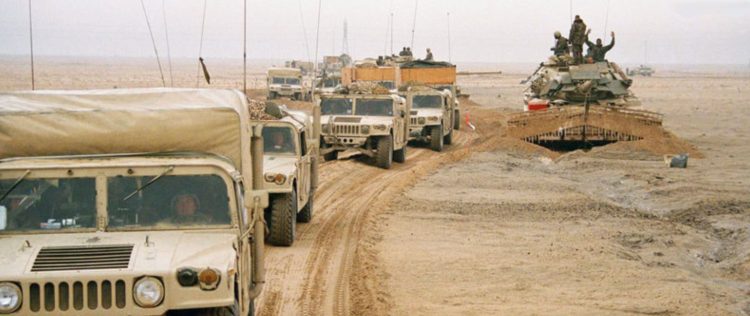
Our civil military operations program in the villages began rather naively. I was going to conduct a project along Route Redleg (one of our transit routes from Taji out into the desert near Fallujah) in order to get the support of the locals. Our convoys carried truck loads of captured enemy ammunition along this road in route to our demil site (where we blew up the ammunition). My Soldiers were very vulnerable along this route. A single IED could set off an entire truck of explosives.
I was determined to make friends with the tribes along this route. Within the rules of engagement, I was prepared to do whatever it took to save the lives of our Soldiers. The question was where to begin.
There was a school about a mile outside of Taji that I had passed many times. The children from this village always cheered and waved when our convoys passed. These people may be friendly, I thought. I would stop at this school, meet the local leaders and see what I could do to establish a relationship with them. So it began.
When our convoy stopped at this school, neither the Americans nor the Iraqis could know how profound an event this would turn out to be. It changed many lives forever. It would be some time before we could understand the significance, or the impact.
Sheik Abd, the local tribal leader, was quick to reach out to the Americans. Just as I assumed, the behavior of the children was indicative of the mood of the village. It was a poor Sunni village that had been terrorized by Saddam’s regime. They were hungry for an opportunity. To our great fortune, this wiry little Sheik was well read and forward-thinking. He was a great surprise.
We began our work there by assisting with clean drinking water. After that, we focused upon schools, and then we turned our attention to electricity. The rumors of our good works spread throughout the area. Soon, tribal leaders from all around came to the school to meet with the Americans.
Culturally, they were looking for someone to be in charge. They wanted a government that cared about their welfare and listened to their concerns. For their part, every visit with the American troops was exposure to democracy and to America. Whether our Soldiers wanted to be or not, they were all ambassadors.
Security for these visits would become ever more challenging, as our enemies learned of our success. But one thing was for sure, the engagement was working. The tribes along this road were helping us protect our Soldiers in the convoys. I was pleased with the outcome and endeared to the Iraqi people.
Amidst the violence associated with Islamism, we had agreed to judge each other by our works. The issue wasn’t what religion we ascribed to. The issue was what we thought about the nature of God. If God is kind and loving, much progress is possible. If you are bringing clean drinking water, food, education and electricity to the people, is that consistent with the nature of a kind and loving God? If you are planting bombs by the road and blowing up innocent children, is that consistent? We would stand on our works.
The good Iraqi people were very encouraged by our progress. They came from near and far – the innocent, the guilty and the hopeful. They brought with them a myriad stories from a life and culture that challenged our imagination.
But one thing was for sure. Together, we had found the strength to believe that a better world, a better life, was possible. Trusting in the one Kind and Loving God of all mankind, we proceeded with great confidence.
Already have an account? Sign In
Two ways to continue to read this article.
Subscribe
$1.99
every 4 weeks
- Unlimited access to all articles
- Support independent journalism
- Ad-free reading experience
Subscribe Now
Recurring Monthly. Cancel Anytime.
MEETING WITH THE SHEIKS
It is a small school
amidst a rich irrigated plain
Shaped like a horse shoe
its yard incarcerated by high walls
Here the leaders come
when they see our gun trucks
With them, the needy, the curious
and, sometimes, the dangerous
Some want restitution
Others want water to farm
schools that will teach
a chance to sell their harvest
Some want to experience democracy
to speak openly
to criticize their government
They want … to come to America
We sit together
in a circle, on small school desks
surrounded by curious onlookers
and my attentive guards
We discuss together – the future
a road to follow
a plan for improvement
the food of hope
We agree
to judge each other in terms of our good intentions
to suspend prejudice
to respect God’s work
We proceed with confidence
aiming to do good things
believing that all hope
springs from this well










COMMENTS