In their current thinking, the Saudis see Islamic extremism as one of the two major threats facing the kingdom—the other threat being Iran. On Iran, there is continuity. I remember when King Abdullah asked me to pass on to President George W. Bush in 2006 that he needed to cut the “serpent’s head” and attack Iran and overthrow the regime. The new leadership, like their predecessors, blames Iran for regional instability and the many conflicts going on.
The new Saudi leadership, in other words, appears to be downgrading ideology in favor of modernization. In fact, one senior Saudi official explicitly said that the Kingdom was pursuing a “revolution under the cover of modernization”—meaning that modernization was now the driver of Saudi policy.
But over time, the Saudis say, their support for extremism turned on them, metastasizing into a serious threat to the Kingdom and to the West. They had created a monster that had begun to devour them. “We did not own up to it after 9/11 because we feared you would abandon or treat us as the enemy,” the Saudi senior official conceded. “And we were in denial.”
Why this new frankness? First, it’s fair to ask how far the new policy really goes. Clearly, there are some questions about whether some extremist Sunni groups, such as al-Nusra in Syria, are still getting Saudi money. But as the Saudis described it to me, this new approach to grappling with their past is part of the leadership’s effort to make a new future for their country, including a broad-based economic reform program.
Read More: Politico
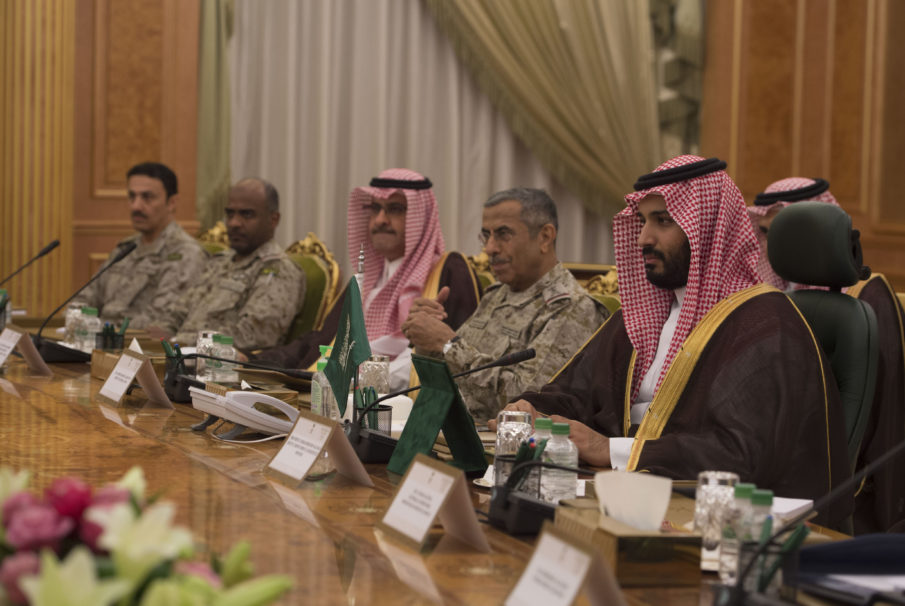
Featured Image – Saudi Arabia’s Deputy Crown Prince and Minister of Defense Mohammed bin Salman (right) meets with Secretary of Defense Ash Carter as Carter arrives in Riyadh, Saudi Arabia – DVIDS
Already have an account? Sign In
Two ways to continue to read this article.
Subscribe
$1.99
every 4 weeks
- Unlimited access to all articles
- Support independent journalism
- Ad-free reading experience
Subscribe Now
Recurring Monthly. Cancel Anytime.
In their current thinking, the Saudis see Islamic extremism as one of the two major threats facing the kingdom—the other threat being Iran. On Iran, there is continuity. I remember when King Abdullah asked me to pass on to President George W. Bush in 2006 that he needed to cut the “serpent’s head” and attack Iran and overthrow the regime. The new leadership, like their predecessors, blames Iran for regional instability and the many conflicts going on.
The new Saudi leadership, in other words, appears to be downgrading ideology in favor of modernization. In fact, one senior Saudi official explicitly said that the Kingdom was pursuing a “revolution under the cover of modernization”—meaning that modernization was now the driver of Saudi policy.
But over time, the Saudis say, their support for extremism turned on them, metastasizing into a serious threat to the Kingdom and to the West. They had created a monster that had begun to devour them. “We did not own up to it after 9/11 because we feared you would abandon or treat us as the enemy,” the Saudi senior official conceded. “And we were in denial.”
Why this new frankness? First, it’s fair to ask how far the new policy really goes. Clearly, there are some questions about whether some extremist Sunni groups, such as al-Nusra in Syria, are still getting Saudi money. But as the Saudis described it to me, this new approach to grappling with their past is part of the leadership’s effort to make a new future for their country, including a broad-based economic reform program.
Read More: Politico
Featured Image – Saudi Arabia’s Deputy Crown Prince and Minister of Defense Mohammed bin Salman (right) meets with Secretary of Defense Ash Carter as Carter arrives in Riyadh, Saudi Arabia – DVIDS










COMMENTS