Under an almost-moonless Crimean sky, SBU Alpha sent heavy-warhead drones into Belbek and punched holes through Russia’s layered defenses, torching a Foxhound and the radars and missile systems meant to keep the whole peninsula under lock and key.
Read the full article for more on:
Important insights and detailed analysis
Expert commentary on current events
Breaking developments and updates
Updating summary...
Night Raid on Crimean Air Base by Ukrainian Special Group Alpha
Warren Gray
Speed
1x
Listen
COMMENTS
Under an almost-moonless Crimean sky, SBU Alpha sent heavy-warhead drones into Belbek and punched holes through Russia’s layered defenses, torching a Foxhound and the radars and missile systems meant to keep the whole peninsula under lock and key.
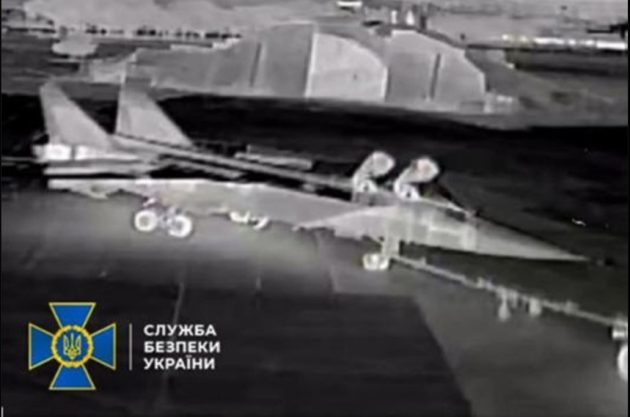
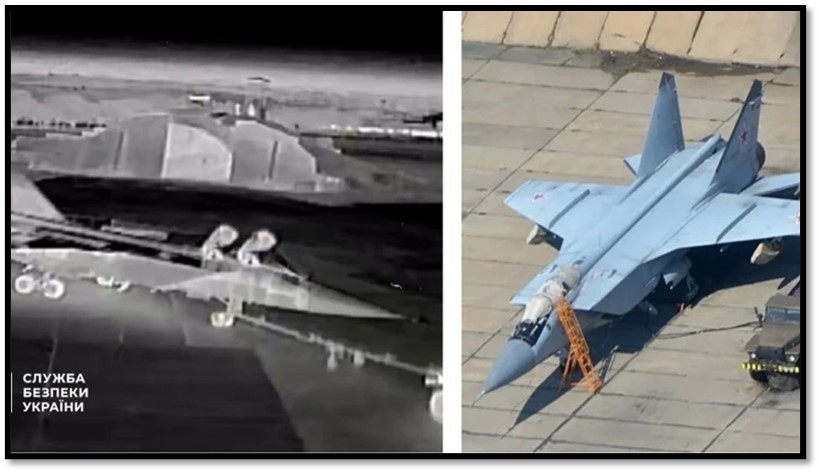
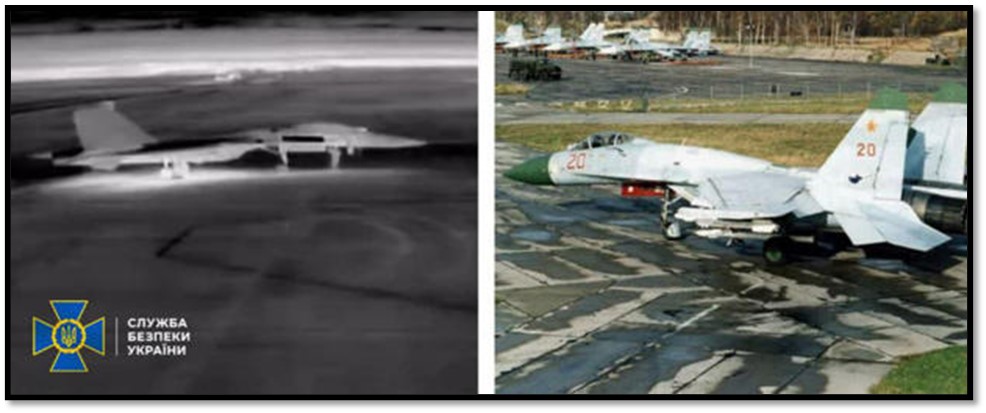
MiG-31BM Foxhound-B fighter at Belbek Air Base, Crimea, December 17, 2025. Photo credit: Security Service of Ukraine (SBU.)
“The SBU continues its effective work to destroy air defense systems in Crimea that cover important military and logistical facilities of the occupiers. The elimination of componentsof this echeloned system significantly weakens the enemy’s defense and military capabilities in the Crimean direction.” — Security Service of Ukraine (SBU), December 18, 2025.
On the almost-moonless night of December 17th to 18th, 2025, the elite Special Group Alpha (or Alfa) special operations unit of the Security Service of Ukraine (SBU) executed a daring and brilliant, aerial drone attack against Belbek Air Base, near Sevastopol, in Russian-occupied Crimea, still legally part of the sovereign nation of Ukraine.
Advertisement
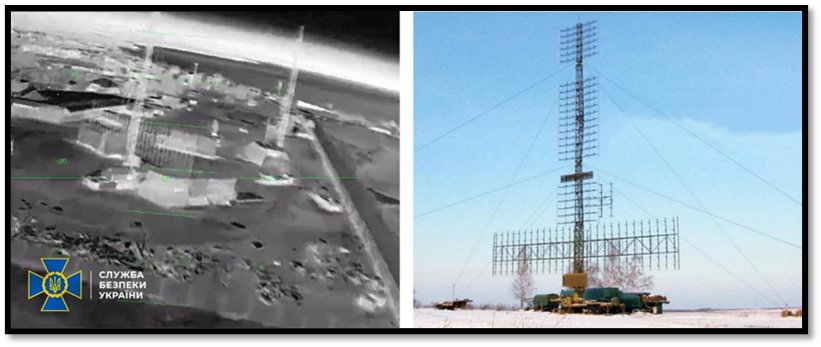
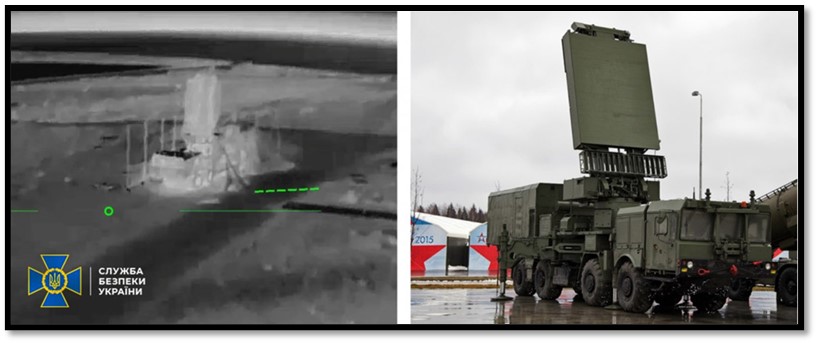
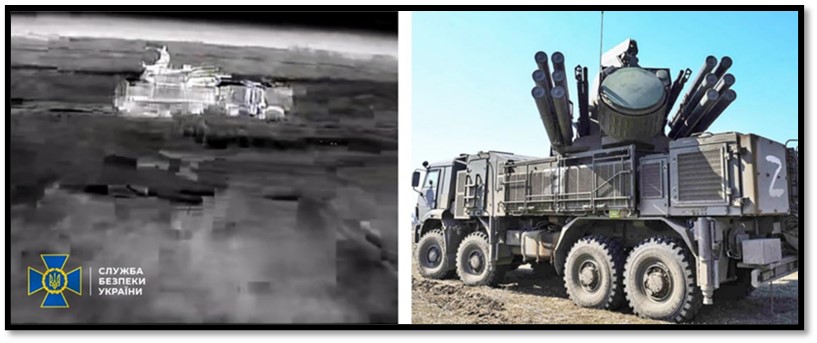
They destroyed a Russian MiG-31BM Foxhound-B jet fighter, two long-range, 1L119 Nebo-SVU air defense radars (240-mile range), one 92N6 Grave Stone fire-control radar (250-mile range) for the long-range, SA-21B Growler (S-400 Triumf) surface-to-air missile system, and an SA-22B Greyhound (Pantsir-S2) gun-and-missile system, with a missile range of 19 miles.
MiG-31BM Foxhound-B fighter at Belbek Air Base, Crimea, December 17, 2025. Photo credit: Security Service of Ukraine (SBU.)1L119 Nebo-SVU air defense radar at Belbek Air Base. Photo credit: Security Service of Ukraine (SBU).92N6 Grave Stone fire-control radar at Belbek Air Base. Photo credit: Security Service of Ukraine (SBU.)SA-22B Greyhound (Pantsir-S2) gun-and-missile system at Belbek Air Base. Photo credit: Security Service of Ukraine (SBU).
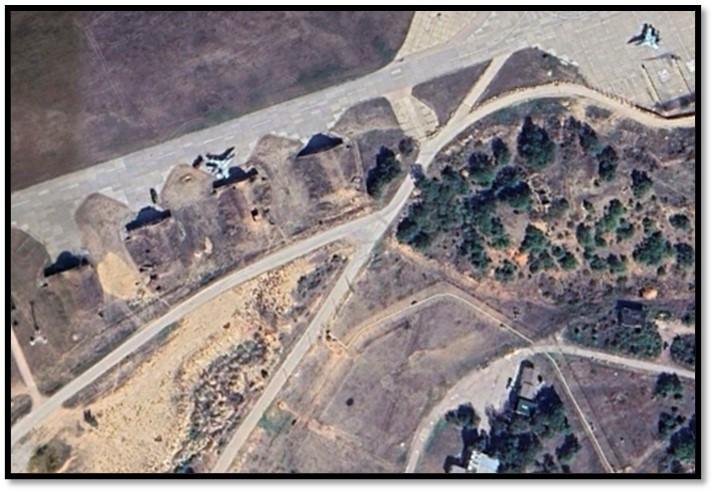
Belbek Air Base is the home of the Russian Air Force’s 38th Fighter Aviation Regiment, housing a variety of MiG-31BM Foxhound-Bs, Su-30SM2 Flanker-Hs, Su-34 Fullback strike fighters, and advanced Su-35S Flanker-M fighters. The key air base on the west coast of Crimea was previously attacked on May 15, 2024, by U.S.-supplied, Ukrainian ATACMS (Army Tactical Missile System) missiles, destroying two MiG-31 Foxhounds and various radar equipment on the ground. These were previously the only confirmed losses of Foxhound fighters in the war. Since then, the use of hardened aircraft shelters has made aerial attacks more difficult.
In addition, the 92N6 Grave Stone system was covered with camouflage or anti-drone netting, making positive identification more difficult, but the mesh barrier failed to protect it from the drones’ large warheads. The Ukrainian SBU provided detailed imagery of the targets, which were valued at $30-50 million for the MiG-31, $30 million for the 92N6, $60-100 million for each of the Nebo-SVUs, and $12 million for the Pantsir-S2.
Advertisement
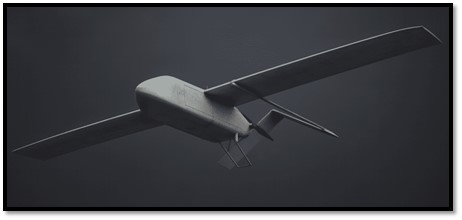
Special Group Alpha apparently employed Ukrainian-made Fire Point FP-2 drones, with a range of 124 miles, and each carrying a 231-pound warhead. The FP-2, introduced in early September 2025, is structurally similar to the earlier FP-1, with a shorter range but a much larger warhead, specifically designed to hit hard targets on the front lines of battle.
Belbek Air Base, May 11, 2024, showing a pair of fully-armed, Su-35S Flanker-M fighters. Photo credit: Google Earth, 2025.Ukrainian Fire Point FP-2 drone, November 22, 2025. Photo credit: UNITED24 Media.
Recent satellite imagery depicted a single MiG-31 fighter sporadically visiting Belbek Air Base from another location and parked on the open tarmac, unprotected. A number of MiG-31K (modified MiG-31BM) Foxhound-Bs have been upgraded to carry the massive (9,500 pounds), hypersonic, Kh-47M2 Kinzhal (“Dagger,” or AS-24 Killjoy in NATO terminology) missile with a range of 1,200 miles, and a breathtaking speed of Mach 10.
Advertisement
The targeted MiG-31 on December 17th had both canopies open and was being towed, suggesting a fully operational aircraft, although no armament was visible on the SBU-supplied imagery. In fact, it’s entirely possible that this was actually a MiG-31K, recently returned from a Kinzhal missile strike mission, with the single, hypersonic weapon as its only armament.
Russian officials, including the governor of Sevastopol, claimed that the nocturnal raid was repelled, with 11 Ukrainian drones shot down, and no damage to Russian facilities, whether this was true or not.
Subsequently, just two nights later, another SBU Alpha drone attack on Belbek Air Base destroyed two Su-27P Flanker-B fighters, at least one of which was fully armed and on the runway, ready for takeoff. The estimated value of both aircraft was about $70 million. The drones also damaged the base’s control tower, disrupting the organization and management of flights.
Advertisement
SBU Alpha struck two Russian Su-27P Flanker-B aircraft at Belbek Air Base. Photo credit: RBC-Ukraine.
After the second attack, the SBU posted that, “Long-range drones of the SBU’s Alpha Special Operations Center hit two Su-27 aircraft at the Russian military airfield in Belbek, temporarily-occupied Crimea. One of the planes was on a taxiway with a full combat load and ready for a combat sortie; it was destroyed.”
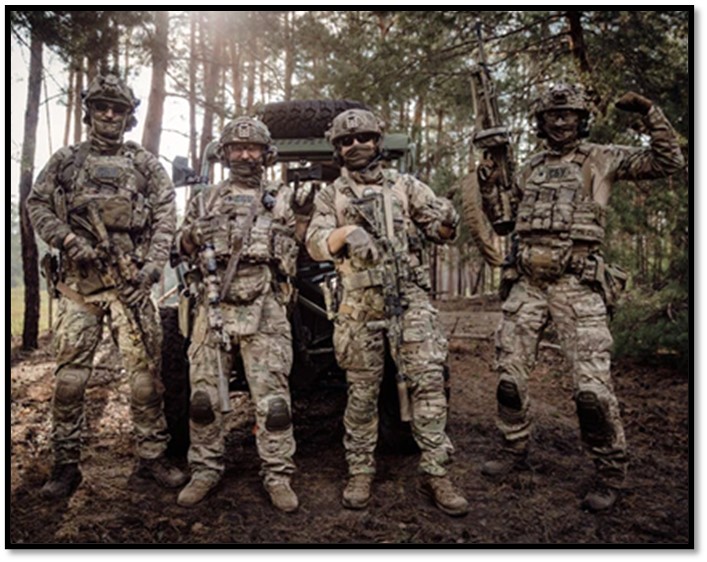
Special Group Alpha of the SBU is an elite, SpetsNaz (special forces) commando unit, based in Kyiv. The unit’s missions include paramilitary operations, covert operations, counterterrorism, direct action, executive protection, high-value target capture or elimination, hostage rescue, unconventional warfare, long-range penetration, high-risk special operations, and special reconnaissance.
SBU Alpha commando team. Photo credit: 112.ua.
SBU Alpha teams typically employ Glock-17 or H&K USP9 pistols in 9mm, Glock FM78 Field Knives, Colt M4A1 carbines in 5.56mm (until very recently), SIG MCX carbines (most recently), ČZ (Czech) 806 Bren-2 carbines, and a wide variety of sniper rifles, including the Sako (Finnish) TRG-22, Blaser (German) R93 Tactical 2, SIG Sauer (German) SSG 3000, B&T (Swiss) APR308, and Desert Tech (U.S.) SRS, all in 7.62x51mm, as well as the Desert Tech (U.S.) HTI in .50 BMG.
This is all in addition to the standard, Soviet/Ukrainian weaponry previously available, such as the Makarov PB suppressed pistol, Stechkin AP machine pistol, AKS-74U compact carbine, VSS Vintorez suppressed sniper rifle, and certain Western equipment, being gradually phased out.
Special Group Alpha has had recent combat experience at the Battle of Antonov Airport from February to April 2022, the Battle of Hostomel during the same period, the Northern Kharkiv Offensive from May 2024 to the present day, and the Kursk Offensive from August 2024 to March 2025, with confrontation continuing to the present day.
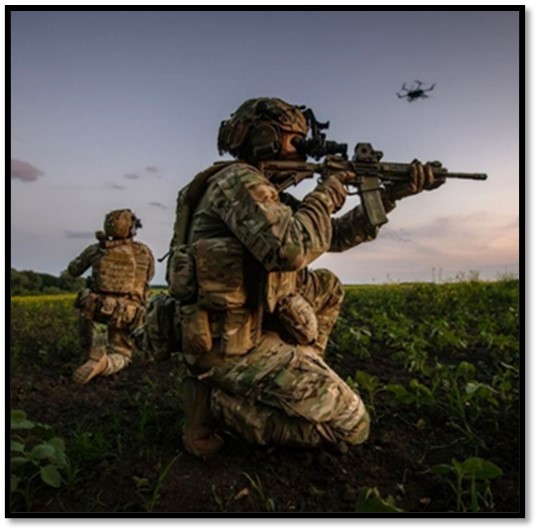
SBU Alpha team with M4A1 carbine and a small drone. Photo credit: Lycksele-Nord/Wikipedia.
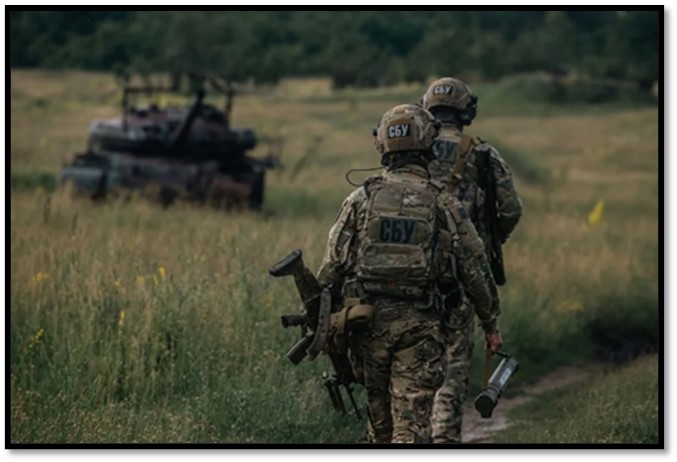
SBU Alpha special operations team with suppressed carbines. Photo credit: Yahoo.com.
Due to the proximity of Belbek Air Base to the surrounding Black Sea, only 420 yards from the western end of the runway, it’s also quite possible that SBU Alpha teams launched their drones from offshore vessels. In fact, recent photography shows them operating at sea.
SBU Alpha team on the Black Sea, and SBU Alpha patch. Photo credit: Pinterest, and ebay.
Ukraine continues to apply pressure on Russian forces deep behind the front lines of battle, using stealthy tactics, special operations units, and a variety of weapons to cripple Russia’s prized air defense assets. This latest night raid of Belbek Air Base stands as a shining example of what can be accomplished by the underdog in a savage war, with a high degree of audacity and ingenuity.
—
** Editor’s Note: Thinking about subscribing to SOFREP? You can support Veteran Journalism & do it now for only $1 for your first year. Pull the trigger on this amazing offer HERE. There is still time, but not much. – GDM
Advertisement
What readers are saying
Generating a quick summary of the conversation...
This summary is AI-generated. AI can make mistakes and this summary is not a replacement for reading the comments.











COMMENTS