


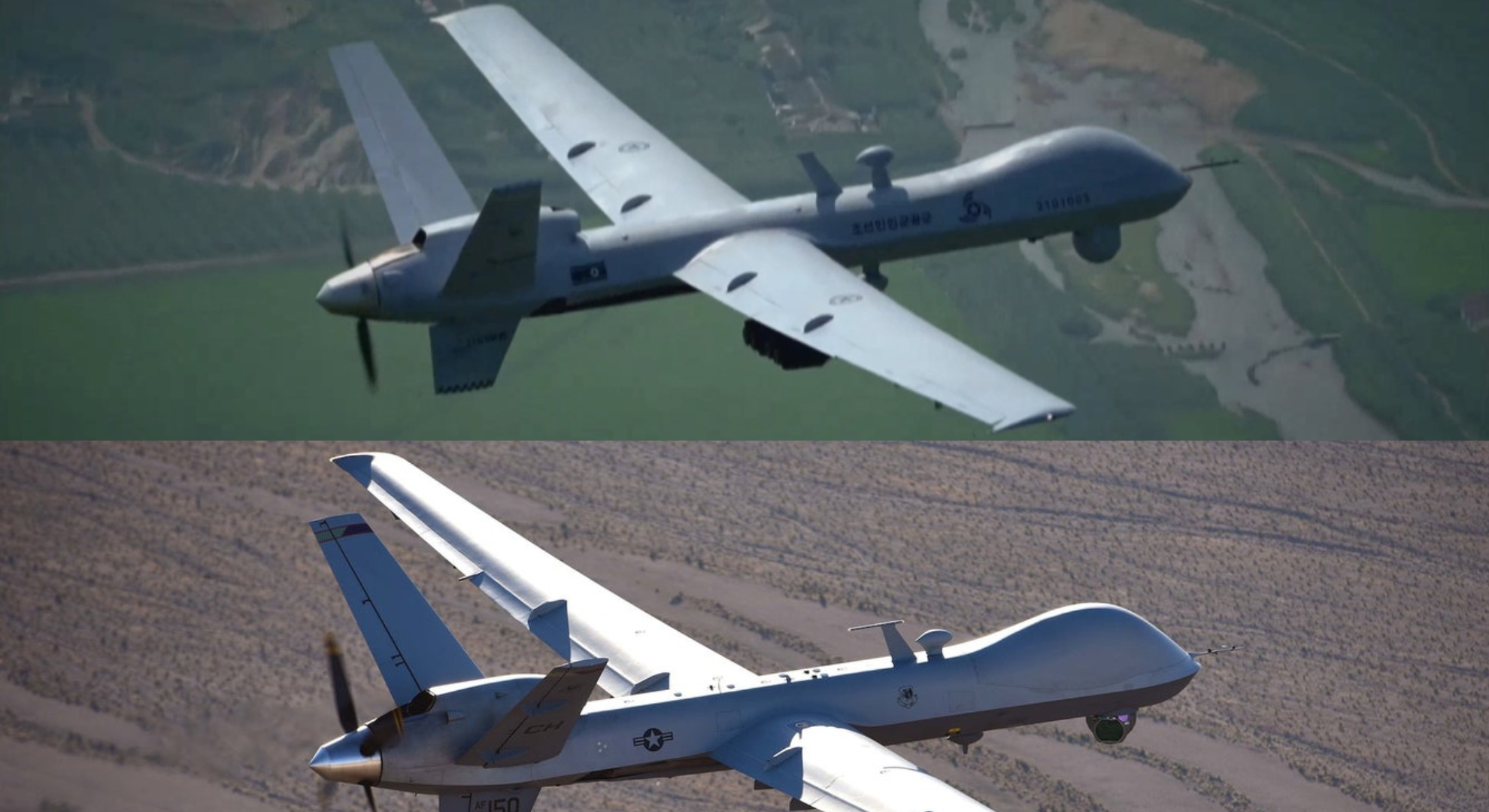

China is known to have an extensive drone industry, with a range of unmanned aerial vehicles (UAVs) that includes models comparable to the sophisticated American Global Hawk and Reaper.
By acquiring certain components from Beijing, Pyongyang could somewhat enhance its drone capabilities. However, it may still fall short of matching the advanced features of U.S. drones. China has supplied military equipment and technology to North Korea in the past, and cooperation in the drone domain would not be entirely surprising.
🇰🇵The missiles of the North Korean Morning Star-9 drone (a copy of the American MQ-9 Reaper) appear to be similar to the American AGM-114 Hellfire and the Iranian Ghaem-114 (also copied from the American AGM-114) pic.twitter.com/O2JRFgvt5k
— S p r i n t e r F a c t o r y (@Sprinterfactory) July 30, 2023
North Korea’s UAV Program Intentions
The unveiling of the Morning Star-4 and Morning Star-9 drones suggests North Korea strives to bolster its military capabilities in the UAV sector. While these drones may not match the sophistication of U.S. models, they could still serve specific purposes in North Korea’s defense strategy.
Pointing out the obvious, replicating the airframe of the Reaper UAV is relatively straightforward. However, it is the advanced systems, particularly its sensors, and software, that define the true capabilities of these drones. North Korea’s focus on developing drones for reconnaissance and potentially striking targets underscores its intent to expand its UAV program’s operational capabilities.
The Morning Star-4 and Morning Star-9 drones could play crucial roles in intelligence-gathering operations, surveilling potential adversaries, and showcasing DPRK’s military advancements in the unmanned aerial domain. While their primary application might not be combat, the mere presence of such advanced-looking drones could have psychological and political implications for North Korea’s adversaries.
A Shifting UAV Landscape in the Korean Peninsula
North Korea’s entry into the realm of more sophisticated drones could prompt responses from other regional actors, particularly South Korea and the United States. The evolving drone landscape in the Korean Peninsula may necessitate strategic adjustments in defense and surveillance capabilities to counter potential threats.
South Korea, in particular, may need to strengthen its drone defense systems to effectively intercept and neutralize any hostile drones that intrude into its airspace. Moreover, the proliferation of drones with greater range and surveillance capabilities could also heighten regional tensions, further complicating the already delicate security situation.
NEW: North Korean state TV has begun airing the military parade held Thursday night to mark the 70th anniversary of the end of the Korean War.
The initial footage showed the DPRK’s new combat drones conducting flyovers of Kim Il Sung Square. pic.twitter.com/GGmTQLgA1I
— NK NEWS (@nknewsorg) July 28, 2023
~
In summary, the unveiling of North Korea’s Morning Star-4 and Morning Star-9 drones raises questions about the true capabilities of these UAVs and their potential impact on regional dynamics. While they bear a visual resemblance to American drones, the true litmus test lies in their performance, which may not match the advanced features of the original models. As the drone landscape in the Korean Peninsula evolves, regional actors must carefully assess the implications of North Korea’s foray into more sophisticated drone technology. The global defense community will closely monitor the development and deployment of these drones as their true potential and impact on regional stability become more evident in the coming years.








COMMENTS