Now that the performative grieving is over, the Christianity as stage show, the politicians weeping into cameras like wrestlers entering the ring, we can finally talk about Charlie Kirk. About what he said. What he built. And what his words did. The “New Republican Party” turned mourning into marketing. Faith into theater.
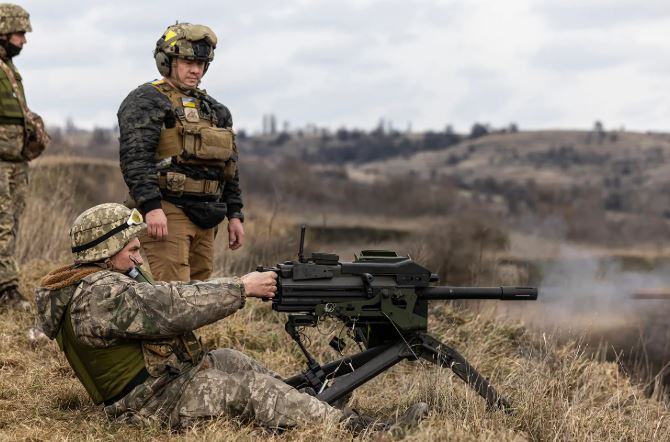
I’m not one of his disciples or his enemies in theory. I fought in Ukraine. I have friends buried in unmarked soil, their bodies burned and left behind. For me, his rhetoric wasn’t entertainment. It was the sound of people learning to stop caring whether we lived or died.
Charlie Kirk made it his mission to undermine that war effort. It is a rich irony from a man who believed his highest form of service was chasing social media clout and courting wealthy donors. While he perfected outrage for profit, some of us strapped on boots for two American wars and one that was ours by proxy.
Let’s examine his words.
“Very few Americans want war with you. The people obsessed with fighting you forever are a minority, and they’re on their way out of power. We want peace.” — Charlie Kirk, posted on X and amplified by RT (Russia Today), November 2024, as reported by Forbes (“The Online Apologies to Putin,” Peter Suciu, Nov 22, 2024)
It sounds simple enough. Nobody wants war with Russia. But what isn’t said screams louder. He apologized to Russians while ignoring Ukrainians’ fight. He portrayed himself as a peace-seeker, yet his peace meant surrender. Whether he intended it or not, Kirk’s words slotted neatly into Moscow’s playbook. His “apology” came days after Putin revised Russia’s nuclear doctrine—a moment when Kremlin propagandists needed Western validation.
“The United States should halt funding to Ukraine,” Kirk said at a University of Tennessee event on March 14, 2025, claiming that “President Volodymyr Zelenskyy did not appear to want peace.” — WUOT News
Again, he undermined the legitimacy of a democratic nation fighting for its survival and of those who supported it, including the American veterans who volunteered alongside Ukrainian soldiers. He spoke as if peace were the opposite of resolve, as if appeasement were an act of virtue.
To his followers, Kirk’s message resonated. It offered something deceptively comforting: an escape from moral complexity. War fatigue, inflation, distrust of elites—all real forces. But he exploited those grievances to feed a narrative where abandoning allies became an act of courage.
These were not isolated remarks. In February 2023, he wrote:
“Trump knows the truth about Zelensky. He’s a puppet of the CIA who marched his own people into a needless slaughter.”
Already have an account? Sign In
Two ways to continue to read this article.
Subscribe
$1.99
every 4 weeks
- Unlimited access to all articles
- Support independent journalism
- Ad-free reading experience
Subscribe Now
Recurring Monthly. Cancel Anytime.
Each statement fueled Russia’s information war. Kirk wasn’t a Kremlin operative in any formal sense. He didn’t need to be. He was an unwitting amplifier—a megaphone for narratives that Russia’s state media could never make credible on its own.
Now contrast his stance on Israel. While he never explicitly called for foreign aid, he also never questioned it. His support rested on scripture alone. “I believe in the scriptural land rights given to Israel … I want them to win,” he told Newsweek in 2024. After his death, Israeli Prime Minister Benjamin Netanyahu offered warm words of praise, proof enough that Kirk was viewed as a friend of Israel and its cause. His unwavering support for Israel, rooted in scripture, stood in stark contrast to his disdain for Ukraine, revealing a moral compass guided by politics, not conviction.
Israel has deployed troops to none of the countries we occupied in the post-9/11 era. In theory, it fights the same breed of enemies we once faced, yet its wars are its own. Ukraine, by contrast, sent sappers to clear IEDs in Kandahar, medics to assist coalition forces in Iraq, and peacekeepers to Kosovo. Since gaining independence, it has been among our most reliable partners. And when it needed help most—when it faced annihilation by a larger, better-armed aggressor—Kirk turned away. He called for an end to aid, mocked Ukraine’s leadership, and revived the oldest betrayal in the American playbook: turning our backs on those who fought beside us.
Kirk didn’t speak about Ukraine from knowledge. He shot from the hip, repeating Russian talking points about “denazification” and U.S.-funded biolabs. A 2024 Brookings Institution study found that The Charlie Kirk Show reached millions with Kremlin-aligned narratives about biolabs, lending credibility to Russia’s disinformation campaign. His rhetoric was part of a broader populist effort to torpedo President Joe Biden’s foreign policy at any cost, a coordinated push that treated disinformation as patriotism and outrage as truth.
U.S. support for Ukraine wasn’t perfect—bureaucracy and politics slowed delivery of critical aid—but Kirk’s solution wasn’t reform. It was abandonment. His anti-Ukraine campaign, echoed by populist allies, gave political cover to Donald Trump’s 2025 freeze on intelligence sharing—a move that left Ukrainian units blind on the battlefield and paid for in blood.
While Charlie Kirk presented himself as a champion of the First and Second Amendments, he spent his life disparaging those who actually fought for the freedoms he monetized. His words emboldened adversaries abroad and poisoned unity at home.
Rest in peace, Charlie Kirk. Real men are doing violent things to defend freedom of speech on your behalf.










COMMENTS