
In my 16 years as an Army officer, I’ve watched wars start before.
One thing is for certain: they do not begin with the explosions you see on a highlight reel. Not really.
They begin with air defenses being blinded, radar screens going dark, and the enemy’s decision cycle being shoved off a cliff.
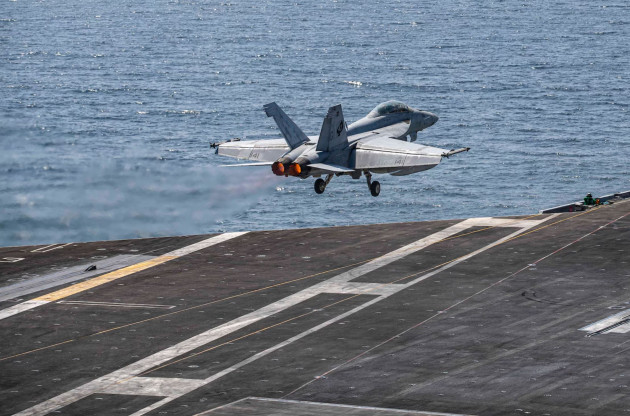
At 1:15 a.m. Eastern on February 28, 2026, U.S. Central Command confirmed Operation Epic Fury began with U.S. and partner strikes on Iranian targets. CENTCOM says the opening targets included Iran’s Islamic Revolutionary Guard Corps (IRGC) command and control facilities, Iranian air defense capabilities, missile and drone launch sites, and military airfields.
That target set defines the campaign. It does not read like a symbolic punch. It reads like a campaign designed to buy freedom of action.
CENTCOM also says follow-on Iranian missile and drone attacks came quickly, and that U.S. and partner forces successfully defended against hundreds of them, with no reported U.S. casualties and minimal damage to U.S. installations.
The Maritime Reality Check
If you want to know how serious this is, stop staring at Tehran and look at the Strait of Hormuz.
Within hours of the strikes, several large international energy firms and tanker operators delayed transits through the Strait of Hormuz, a chokepoint that moves roughly one-fifth of the world’s oil supply. That is the part people miss. Iran does not have to “close” the Strait like a movie villain. It can disrupt the economics of shipping until insurers and owners do the job for them.
Greece’s shipping ministry told Greek-flagged vessels to avoid the Persian Gulf, the Strait of Hormuz, the Gulf of Oman, and the North Arabian Sea, warning of missile or drone attack risk, harassment, and electronic interference that can disrupt navigation systems.
That is not a panic post on social media. That is a state-level advisory reacting to real risk.
Air Defense Suppression: What the Target List Really Says
CENTCOM publicly listed Iranian air defense capabilities among the targets. You do not hit air defenses unless you intend to operate again.
Iran’s air defense picture is not one magic dome. It is a mix of systems, including domestically produced long-range Bavar-373 and the medium-range 3rd Khordad family, with other Russian-origin systems in the inventory as well. The point is not the brand names. The point is the kill chain. Radars, command nodes, and launchers have to work together, reliably, under stress. When you start stripping out command and control and key sensors, you turn a “network” into isolated crews making bad decisions with limited visibility.
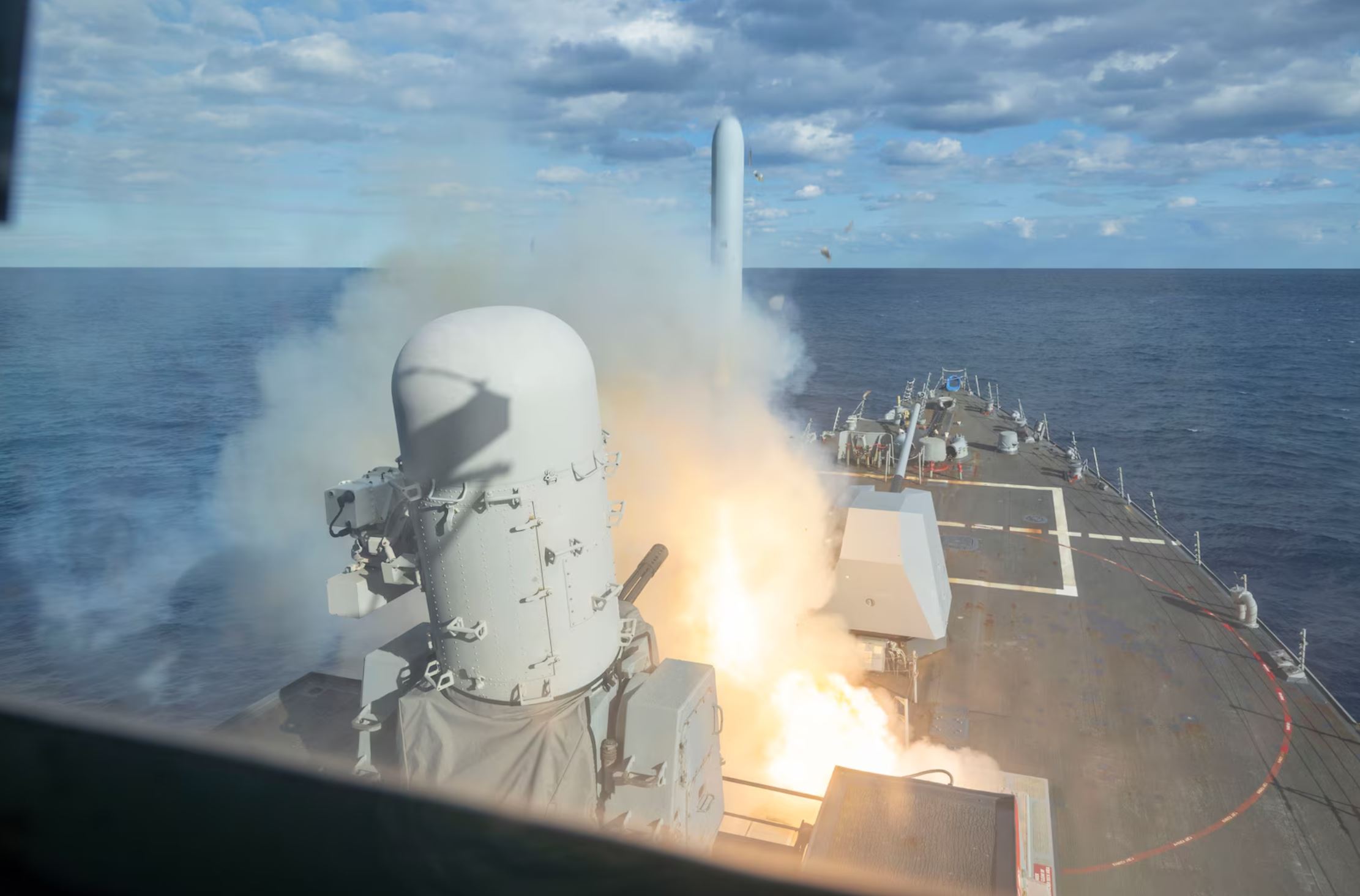
CENTCOM says the opening hours included precision munitions launched from air, land, and sea, and that Task Force Scorpion Strike used low-cost one-way attack drones for the first time in combat. That is important because it signals a willingness to trade expendable systems for tempo. Cheap one-way drones are a way to complicate defenses, burn readiness, and force hard choices about when to light up radars and when to stay dark.
This is not me claiming a specific sequence of SEAD (Suppression of Enemy Air Defenses) shots. This is doctrine meeting a target list that looks built for repeat access.
Proxy Escalation: Where the War Spreads First
The quickest way this expands is not Tehran firing one more missile at a base. It is the periphery.
Greece’s advisory explicitly warns the conflict could spread to the Red Sea and Gulf of Aden because of Iran’s ties to the Houthis. That is the practical nightmare. Even limited renewed Houthi activity forces a constant escort and intercept grind, and it stretches naval resources across multiple maritime lanes.
Hezbollah is the other pressure point. If it stays quiet, that is not calm. That is calculation. The plausible scenarios range from restraint to preservation of combat power for a later phase. Right now, none of those motives are confirmed, so treat them as scenarios, not conclusions.
What Comes Next
CENTCOM says this operation involves the largest regional concentration of American military firepower in a generation. That is not language you use for a one-night warning shot.
Here is the forward-looking reality: Iran will try to regain leverage where it can, and the most leverage sits in sea lanes, proxies, and the global economy. If you see shipping disruptions deepen, or the Red Sea threat profile rise, that is not “adjacent.” That is the war expressing itself through the tools Iran has always preferred.
The opening punch has landed. The next phase is adaptation. The side that keeps its kill chains intact, at sea and in the air, gets to decide how long this goes.








COMMENTS