

That culture isn’t overwhelming however, and lots of Marines choose to return to their previous (or brand new) lives at the end of one or two contracts – so the culture instilling fear in you isn’t enough to make the transition a negative one. That’s where the crappy training comes in.
The Marine Corps can train you to do just about anything, except get a job. I felt pretty confident about that as a retired gunny delivered our Seps training – she had served twenty years before retiring and accepting a GS position that included delivering these briefs. In effect, she’d taken off her uniform, thrown on some khakis and come right back to work — it wasn’t her fault that she had no idea how hiring actually works. She didn’t make the Powerpoints either, but they were equally detached from reality.
We spent an entire day of our week-long training talking about the kind of paper you need to print your resume on. That included water-mark placement, because as we were assured, hiring managers will immediately throw away your application if the attached resume isn’t printed on properly weighted paper with a watermark visible under appropriate lighting and facing the proper direction: any less than that would betray your inability to pay attention to detail and render you unhireable.
What were you supposed to put into that resume? Well, we talked about that a fair amount too… but not in a particularly effective fashion.
Then we spent another full day discussing thank you notes that you should send interviewers after you’ve been interviewed, because if you fail to demonstrate this professional courtesy you will also be culled from the roving hordes of highly qualified unemployed job seekers competing for your position. I left that class feeling like getting a job was like going to a royal wedding in Victorian England: everything rested on my ability to adequately meet the requirements for pomp and circumstance, with very little emphasis placed on what I actually had to offer.

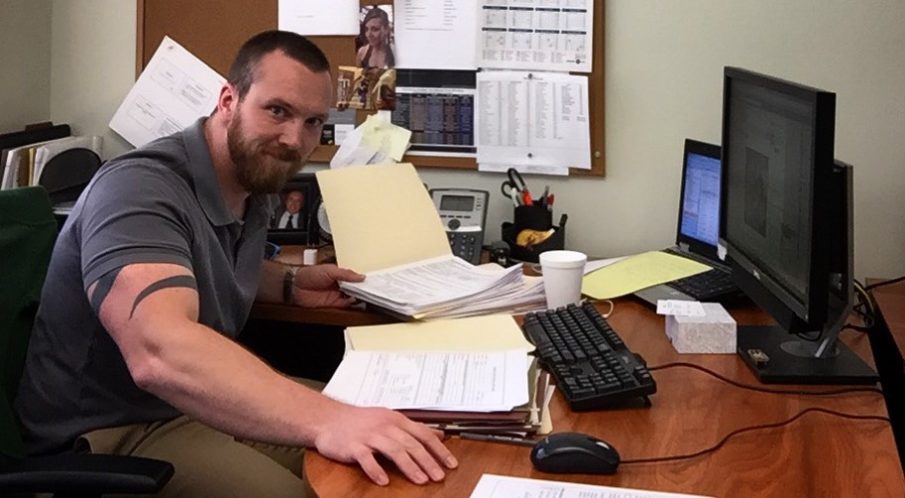
So I got out and went to college, worked at some internships, and before I knew it, found myself in one of those jobs my Seps training had prepared me to pursue. In my case, I was a regional HR Manager and “local business partner” for four facilities contracted through the Department of Defense to build components for military aircraft. It came with a fancy corner office, a good paycheck, and of course, total oversight over all recruitment and hiring efforts for the Northeast region (with a staffing requirement of around 800 employees).
All of a sudden, I was that guy Seps training warns you about – the one that will rescind a job offer because you put salt on your food before tasting it at a working lunch (which they taught us would demonstrate that we are too set in our ways) and that carefully checked the watermarks on your resume to determine if you were a worthwhile candidate. I held that job for about a year before leaving to pursue writing, and in that time I learned a lot about the training I received on my way out of the Corps. Namely… that it was bullshit.
The following are just some of the ways I was steered wrong, as informed from my time as an HR Manager and my wife’s time spent as a technology based corporate recruiter:
- Not only did I not care about what sort of paper you used for your resume, I was immediately annoyed if it was on paper at all. With literally thousands of applicants to sift through, a paper resume makes your information un-searchable unless I want to spend my afternoon hand typing your information into our database. Thanks for the homework, potential applicant, but next time, please apply online.
- Thank you notes are nice, but have never once informed a hiring decision that I made. If you interviewed well and were qualified, I wanted you on my team. If you weren’t – then I didn’t. A thank you note won’t change either determination. You could argue that it might help with a tie-breaker, but I’ve very rarely run into legitimate “ties” when it comes to recruiting.
- After spelling and grammar, key words are the most important part of a resume. Most hiring managers and recruiters use keyword searches to narrow the field of candidates down to a manageable number. That means the first few rounds of cuts from the pile of applicants are done without ever actually looking at your resume at all. To succeed in this system, you need to include language you find in the job description you’re applying for in your resume… because those are the terms they’re going to be searching for.
- As long as you’re polite and courteous, nobody gives a shit about what you eat or how you eat it.
- You need to be well researched before coming in for an interview. Have notes about the company you’re applying for – you should be able to tell me about the job you want, and at least something about the company you’re hoping to work for. It may seem like you’re kissing ass, but it shows that you put forethought and preparation into the endeavor.
- Remember that hiring managers are people. Seps training taught me that hiring managers are robots with one set of guidelines they’re looking for candidates to fulfill — and nothing could be further from the truth. Every hiring manager is different; some may expect a watermark and proper salt etiquette (though I’ve never met one when recruiting for positions ranging from line worker to CFO). Everyone has different preferences when it comes to resumes, interviews, and all the rest, so stop googling the “right” way to respond to answers and start offering your best responses instead.
America’s military has perhaps the most capable training apparatus in the world, but we fall short when it comes to training service people for life beyond the uniform. Take it from me, a guy that felt all the fear and apprehension, only to get to the other side of the curtain and find that the world is full of people, just like the Corps was. What matters most, in the Marines and on the job hunt, has always been trying your best.
We need to teach people about that, and stop focusing on learning the steps to a formal hiring dance that hasn’t existed since the 1980s.
Images courtesy of the author








COMMENTS