

She also said it’s high time nations open the space for diplomacy instead of pushing for the violent war in Ukraine and Russia.
“Let us be clear: Russia’s ongoing actions are the obstacle to a resolution to this crisis.”
Without directly naming Russia, she also said there’s surmounting evidence of the brutality during the war. There are bombings of schools and hospitals, killing aid workers, journalists, and civilians looking to feel. There was also execution-style murder in the Bucha region.”
Additionally, there is supporting evidence showing Russian forces interrogating, forcibly detaining, and deporting hundreds and thousands of Ukrainian citizens “including children,” “tearing them from their homes and sending them to remote regions in the east.”
Bold Ambitions, But Can Russia Do It?
According to the Canadian Armed Forces analysis, Russia is nearly depleted.
“Due to significant losses of personnel and equipment, Russia probably no longer has the military capacity to realize its ambitions in Ukraine.”
https://twitter.com/Flash43191300/status/1550335402682339328/photo/1
2/3 Russia is forced to scale back its strategic goals by presenting a new public rationale for the partial territorial control it has achieved.
''Russia has always had maximalist geographic ambitions in Ukraine.
— FLASH (@Flash_news_ua) July 22, 2022
3/3 Moscow's failed attempts to seize Kyiv and the northeastern cities of Chernihiv, Sumy and Kharkiv at the start of the invasion demonstrate these significant territorial ambitions far beyond the Donbas'', – the statement says.
— FLASH (@Flash_news_ua) July 22, 2022
Their analysis also notes that even though Russia “has always had a maximalist geographic” ambition on Ukraine, they no longer have the weaponry, manpower, and capability to execute large-scale operations.
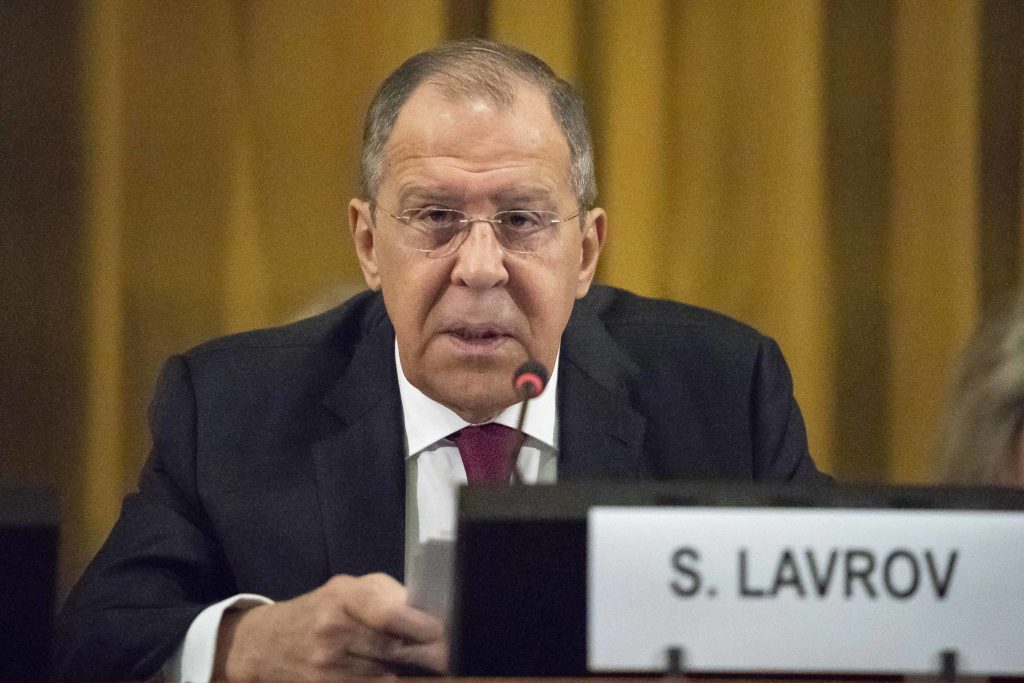
Still, Lavrov’s keeping their stance on continuing their advances in Ukraine.
Meanwhile, the British Defense Ministry’s skeptical about Lavrov’s comments, especially since they’re now sourcing Wagner Group and lowering recruitment standards.
“Russia still has quite a bit of equipment in storage. That’s true. But it’s a considerable step down in terms of quality and technological level compared to what they began the war with. The attrition issue is significant. I think it’s fair to say that, in key categories, they’ve lost 30 percent of the active armored force,” said Michael Kofman, who heads the Russia Studies Program at the Virginia-based think tank CNA.
“It’s not the same challenge. Nonetheless, there is a similar long-term challenge for Ukraine to avoid force degradation, because it’s clear that as the war has gone on Ukraine has also lost a number of its best units that [they] are forced to replace with mobilized personnel and individuals who have limited basic training,” he explained.








COMMENTS