

Sri Lanka: COVID-19 problems, Agricultural Woes, and the Russian Invasion
How did this all happen? The reason behind their default can be blamed on an intertwined number of elements, one being the Russian invasion, another being their COVID-19 policy decisions, and their agricultural sector.
Sri Lanka is one of the world’s fourth-largest tea exporting countries in the world. They are producing around 374,785 tons of it per year. It is next to Kenya, India, and China with regard to its tea producing capacity. The only difference is that Sri Lanka’s tea-producing industry is one of the main sources of foreign exchange for the country and contributes as much as 2% of its GDP.
Its main market for its tea is Iraq, Turkey, and Russia. In fact, Russia is Sri Lanka’s 3rd largest market for their teas. But it can be remembered that Russia’s banking system was removed from the SWIFT system. Seven Russian banks were blocked from the global banking system due to their invasion. As a result, the Sri Lankans cannot export it to Russia as they cannot get paid.
This leaves a high number of their farmers without income as the tea leaves would have nowhere to be exported. Sri Lanka exported 632 million pounds of tea last year, worth $1.3 billion. Without Russia, this number would tremendously decrease, leading to more problems with their country’s foreign reserves, which had been experiencing problems before the invasion.
What makes this worse is that their COVID-19 recovery plan revolved around tourism and exports to replenish its foreign currency reserves. Sri Lanka’s tourists mostly come from Russia and Ukraine as its third. However, both countries are unable to travel to Sri Lanka due to the war. Those are two of their main industries dead brought by the Russian invasion.
“Ukrainian and Russian tourists were coming in significant numbers as the arrivals from other nations had dropped,” said Hotels Association of Sri Lanka official M Shanthikumar to the Financial Times. “Their absence now due to war could cause a huge slump again.”
When the COVID-19 pandemic struck, the Rajapaksa government banned all fertilizer imports in an attempt to prevent the depletion of their foreign reserves under the guise of a 100% organic farming nation. While that does sound good at first glance, this led to their agricultural sector declining in production, which led to the need to import more food. This left tea and rubber farmers dead in the water as their profits significantly dropped, which led to lower export incomes. Less income from exports means less money could be used to import food, leading to a food crisis. Also, less income for their people means they wouldn’t be able to buy food and other essential goods.
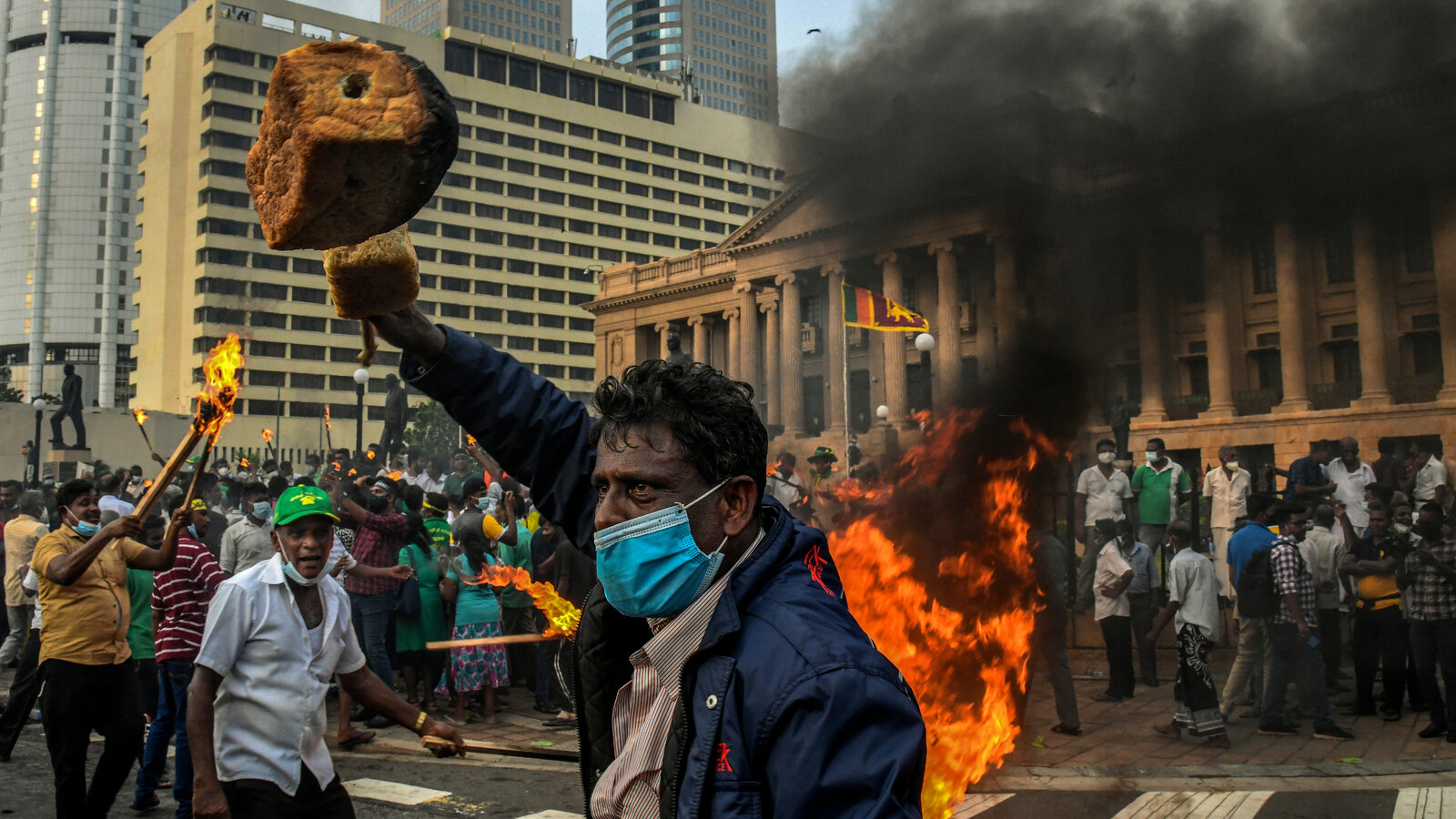
With no money to buy food and the limited number of food and medicine available, the prices of these items shot up, leaving the country in a serious food and economic crisis.
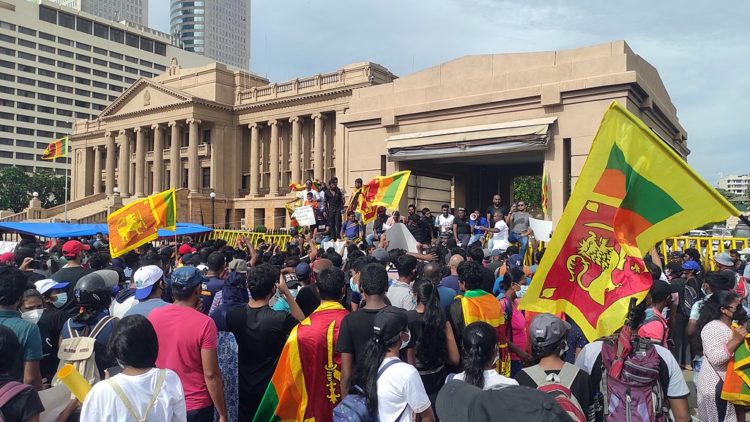
🇱🇰🪧 06.15 PM: On one of Sri Lanka’s most prominent public holidays – The Sinhala and Tamil New Year, thousands of protesters continue their cause for #SriLankaProtests against #SriLankaEconomicCrisis #lka #SriLanka pic.twitter.com/gIIrfMMFiE
— Dasuni Athauda (@AthaudaDasuni) April 14, 2022
However, these factors alone were not where their economic woes had begun. Sri Lanka has had a bout with its foreign exchange reserves for decades. They’ve heavily relied on their exports for economic gain. They began to export garments along with their teas as well as relying on tourism and overseas Sri Lankan workers for remittances. This means that any decline in their exports or remittances would put their country in an economic shock.
Put together the COVID-19 economic woes, policy decisions that decreased their agricultural productivity, no tourists from two of their top international visitors who are currently in a war, rising fuel prices, and 16 IMF loans to pay back. It is no wonder why Sri Lanka is on the brink of not being able to pay its external debt.
The Sri Lankan government will be talking to the IMF for a solution to their crisis, which makes it the 17th time it is taking a loan from the international body.
“The government intends to pursue its discussions with the IMF as expeditiously as possible with a view to formulating and presenting to the country’s creditors a comprehensive plan for restoring Sri Lanka’s external public debt to a fully sustainable position,” their statement read.








COMMENTS