

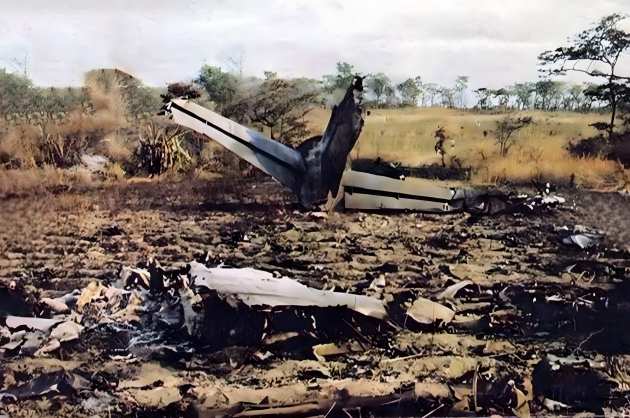
In mourning, Rhodesians tuned into a memorial service sermon given by the Very Reverend John da Costa, the Anglican Dean of Salisbury.
“…Times come when it is necessary to speak out…against murder of the most savage and treacherous sort…This bestiality, worse than anything in recent history, stinks in the nostrils of heaven. The ghastliness of this ill-fated flight from Kariba will be burned upon our memories for years to come. Nobody who holds sacred the dignity of human life can be anything but sickened at the events attending the crash of the Viscount Hunyani. The horror of the crash was bad enough, but that this should have been compounded by the murder of the most savage and treacherous sort leaves us stunned with disbelief and brings revulsion in the minds of anyone deserving the name ‘human’…”
“One listens for the loud condemnation by Dr David Owen [labor party British Foreign Secretary under PM James Callaghan], himself a medical doctor, trained to extend mercy and help to all in need.”
“One listens and the silence is deafening.”
“One listens for the loud condemnation from the President of the United States [Jimmy Carter], himself a man from the Bible-Baptist belt, and again the silence is deafening.”
“One listens for the loud condemnation by the Pope, the Archbishop of Canterbury, by all who love the name of God.”
“Again, the silence is deafening.”
“I have nothing but sympathy with those who are here today and whose grief we share. I have nothing but revulsion for the less-than-human act of murder which has so horrified us all. I have nothing but amazement at the silence of so many political leaders of the world. I have nothing but sadness that our churches have failed as badly to practice what they preach.”
In the aftermath of the crash of the Viscount Hunyani, British Foreign Secretary Dr David Owen released a numbly neutral public statement in which he condemned violence on all sides, expressed sympathy for the victims, and urged all sides to commit to negotiations and end the fighting. Crucially, he did not condemn the ZIPRA or ZAPU by name, nor did he call the incident a war crime, demand justice, ask why the Soviet Union had handed Strela-2 (SA-7) surface-to-air missiles to unaccountable guerilla forces, or even single out the perpetrators. While his statement was consistent with British foreign policy, pursuit of a negotiated settlement to end the fighting and transition Rhodesia into a majoritarian government, Dr Owen had also normalized atrocities. ZIPRA and ZANLA watched the milquetoast reaction from Dr Owen and his associates in the UN closely. Atrocities would not disqualify actors from future legitimacy. That message was duly noted, not only by the ZIPRA guerillas, but by all of the other factions watching the British Foreign Secretary’s broadcast.
A second civilian airliner, Air Rhodesia Flight 827, would be shot down in February 1979, killing all 59 aboard.
These incidents, and the painful cowardly feckless callousness demonstrated by the British Foreign Secretary and UN, all of it served to harden attitudes of Rhodesians who began to believe that the world and indeed their own English kin hated them to such an extent that no one would share in their mourning.
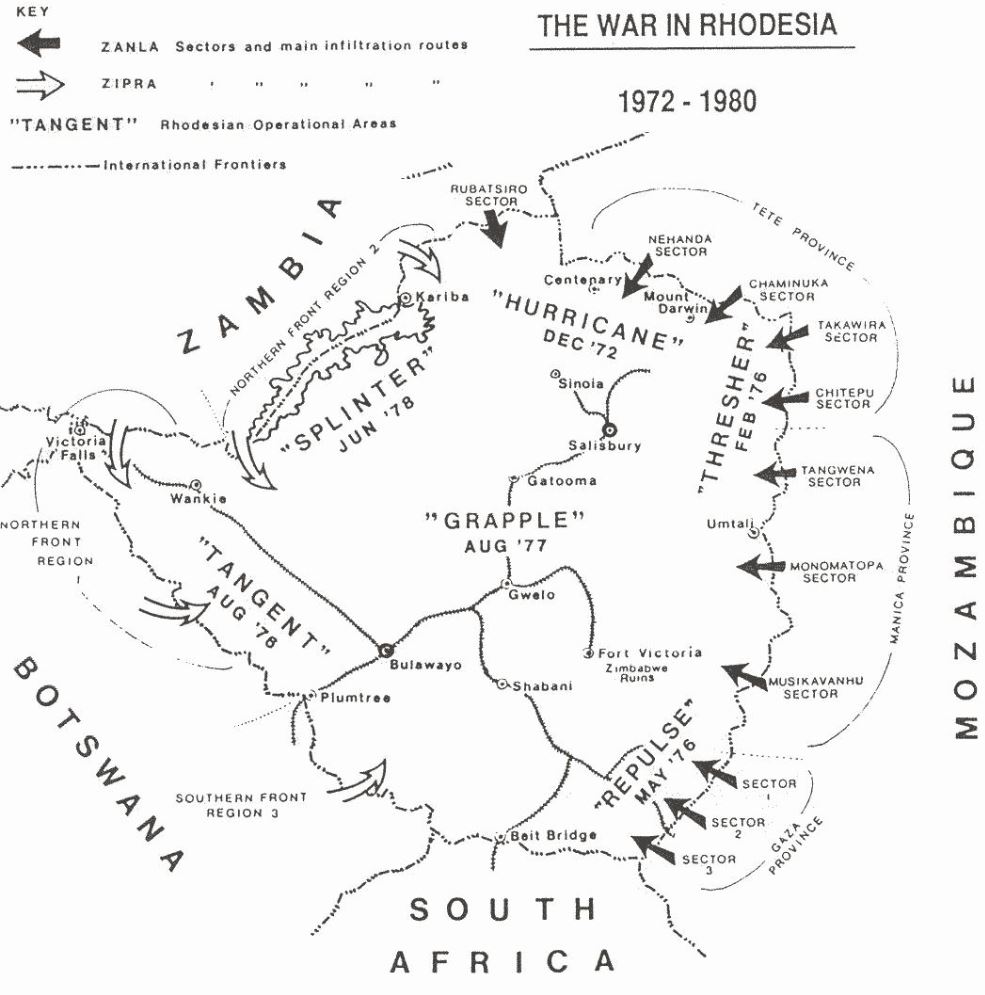
In response, the Rhodesian Security Forces launched ruthless cross-border retaliatory raids against ZIPRA bases in Zambia. These operations were among the most politically sensitive and strategically risky actions of the late Rhodesian Bush War.
ZIPRA’s major rear bases were in Zambia. The group used Zambian territory to stage operations into north-western Rhodesia and was supplied by the Soviets (and UN food programs) via channels routed through Zambia. Rhodesia had repeatedly warned that civilian targeting would trigger retaliation. After Flight 825, Salisbury decided to make that threat real.
Within days of the shootdown, Rhodesian forces struck large ZIPRA encampments in central Zambia (notably the Mkushi area), damaging training, logistics, and command facilities hundreds of kilometers north of the Zambian-Rhodesian border. At the physical limits of their operational range, these raids were conducted using Rhodesian Air Force Hawker Hunters and Canberra bombers and SAS and RLI detachments as helicopter-borne troops for rapid strikes and extraction. The operations followed a familiar Fireforce pattern: airstrike to shock and disorganize, ground assault to inflict casualties and destroy infrastructure, and rapid withdrawal before a Zambian response could be mobilized.








COMMENTS