From the trenches of World War I to today’s quiet KSK raids, Germany’s four-legged operators are still out front, taking the first risk so their human teammates do not have to.
Read the full article for more on:
Important insights and detailed analysis
Expert commentary on current events
Breaking developments and updates
Updating summary...
SOF Pic of the Day: German Special Operations Canines
Guy D. McCardle
Speed
1x
Listen
COMMENTS
From the trenches of World War I to today’s quiet KSK raids, Germany’s four-legged operators are still out front, taking the first risk so their human teammates do not have to.
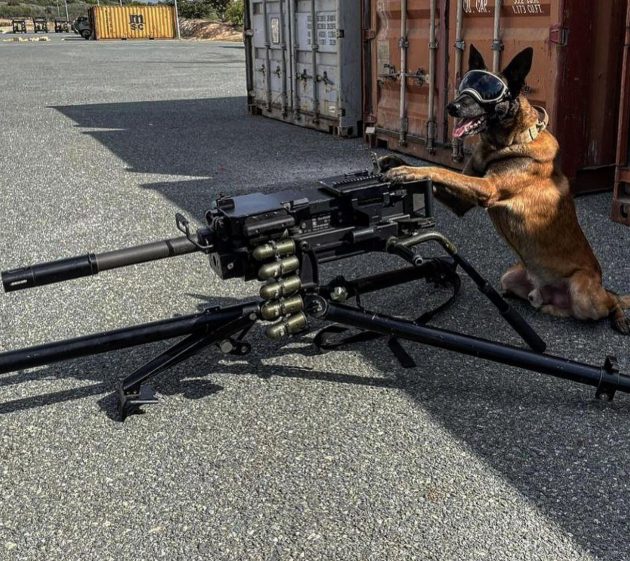
A German military working dog mans (dogs?) an H&K automatic grenade launcher. Image Credit: Reddit
So many jokes could be made here. You’ve heard of the “dogs of war”, right?
Advertisement
Well, here’s a German Special Operations canine during a photo op with an H&K GMG Granatmaschinengewehr or “grenade machine gun”.
German war dogs are not a novelty act. They have been in the fight longer than most modern units and they are still running point for some of Germany’s most sensitive missions.
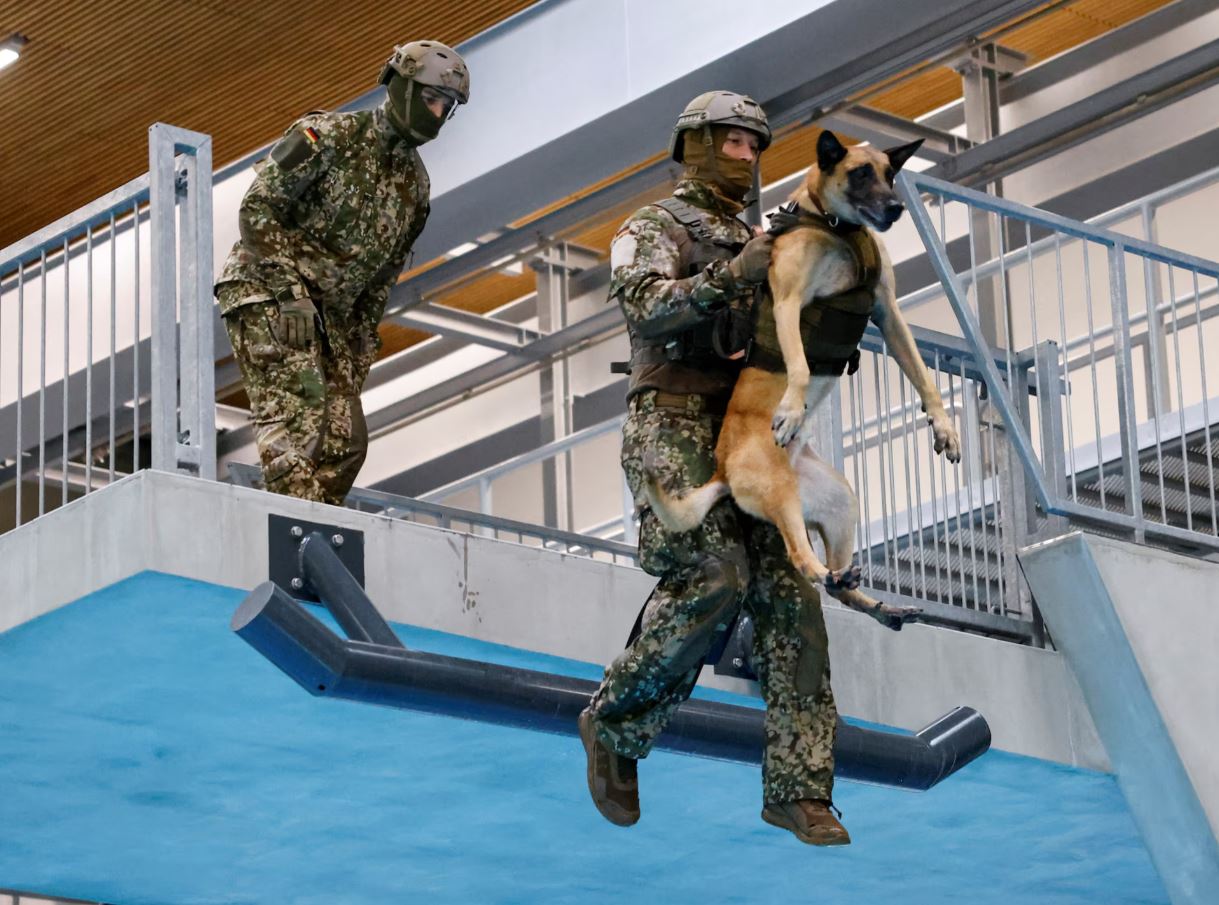
German KSK special forces begin a water training exercise with their military working dog. Image Credit: Reuters / Heiko Becker
Germany was ahead of the curve when it came to military working dogs. The German Shepherd emerged in the late 19th century as a purpose-built dog for police work, and it did not take long for the military to notice. By World War I, these dogs were carrying messages through artillery fire, standing sentry in the dark, and guiding wounded or blinded soldiers away from the trenches. They were force multipliers before anyone used that kind of language.
Advertisement
Fast forward through the next century of conflict, and you find those same bloodlines still working in the shadows, now alongside Germany’s elite Kommando Spezialkräfte, the Special Forces Command of the Bundeswehr. These dogs are not mascots. They parachute, they rappel, they move through compounds and tight urban spaces. Out front, nose working, ears up, they are the first to hit a doorway that everyone else is not sure is safe.
Safe on a raft and enjoying his day at the pool. Training in Calw, Germany. Image Credit: Reuters / Heiko Becker
Modern German special operations canines wear more than a collar. They run in ballistic or load-bearing vests with cameras, comms, and sometimes small medical kits strapped on. A handler can watch the dog’s point of view in real time and clear a room or a tunnel without sending in a human first. Training covers advanced obedience, explosive and narcotics detection, tracking, building searches, and the ability to operate calmly under gunfire and in aircraft, vehicles, and helicopters.
Advertisement
German Shepherds still fill a lot of these roles, but, as with other Western units, Belgian Malinois have taken a bigger share of the special operations kennel because of their speed, agility, and ability to work hard day after day. Breed is secondary to the bond. Handlers and dogs live, train, and deploy together, often forming a family-level relationship. Some units give their dogs honorary noncommissioned officer rank, a small but telling sign of the respect these four-legged operators earn.
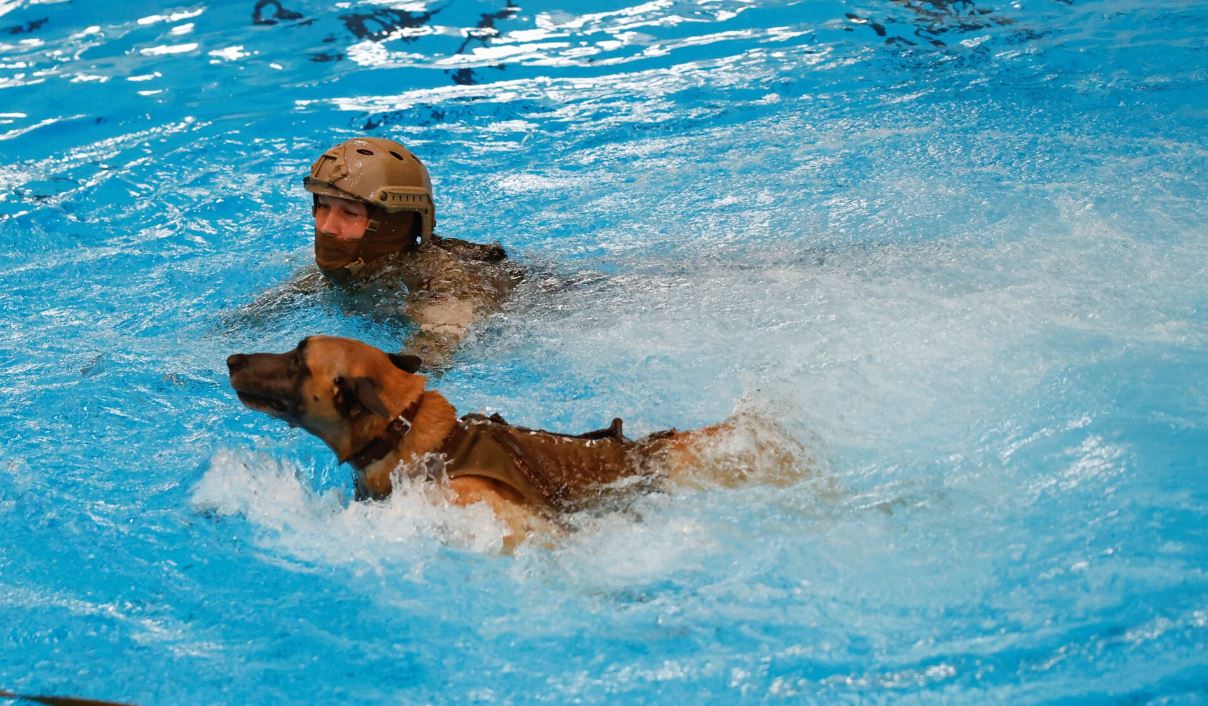
A KSK soldier swims with his canine. Image Credit: Reuters / Heiko Becker
From the mud of World War I to the quiet, surgical raids of today’s KSK, German working dogs have been in the stack, doing the dangerous, close-in work that keeps human operators alive and missions on track.
The tools have changed. The value of a good dog has not.











COMMENTS