

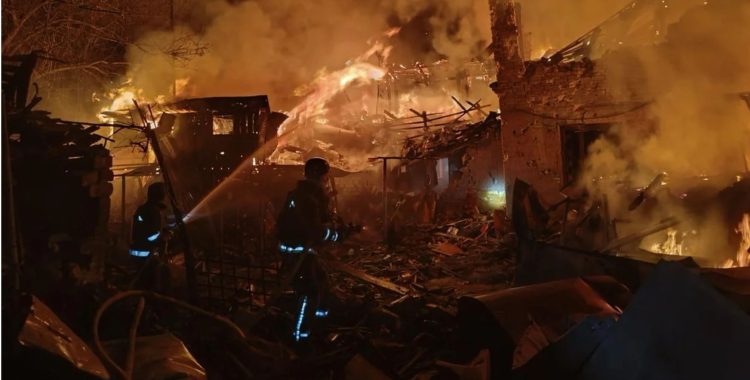
Jerusalem has tied major humanitarian steps to progress on the remains. Prime Minister Benjamin Netanyahu’s office said the Rafah crossing with Egypt stays closed until further notice, conditioning any reopening on Hamas fulfilling its obligations on hostages and bodies. Aid groups are pressing for access, but the government’s position is clear: the pipeline opens when the accounting is complete.
Hamas says it has returned what it can reach and that locating the rest is hard in a place where whole blocks are now piles of broken concrete. Recovering bodies, the group argues, often needs heavy machinery and time inside neighborhoods that were shelled and tunneled. Independent reporting has tracked multiple returns this week, alongside announcements that more remains are being recovered for handover. The battlefield reality keeps colliding with the clock.
The ceasefire has curbed the worst of the fire but not the tension. Reports of shootings and strikes continue to surface, each one threatening to spin the deal apart. Critics warn that linking border access and large aid flows to hostage milestones risks turning relief into leverage. Supporters argue it is the only pressure that keeps the returns moving. Either way, the deal holds for now, though it creaks under the weight of every accusation.
Washington’s plan lays out phased exchanges and broader steps aimed at stabilizing Gaza. That includes releases of living hostages for Palestinian prisoners, followed by structured returns of the dead and larger aid deliveries. None of that is simple. The record over the last week shows incremental progress, then friction, then another handover. Not a neat ledger. A running fight with paperwork tagged to it.
For Israeli families, the tenth return is a hard kind of closure. For Palestinian families, the daily grind of limited aid and closed crossings continues. The ceasefire survives because both sides still see something in it they need. It could snap with a single misstep. It could also deliver the remaining bodies and more living hostages if the pressure and the channels stay intact. Today, at least, one more family has an answer. Tomorrow is earned the same way. Inch by inch.
Hamas returns remains of 10th Israeli hostage from Gaza
Read more🔗https://t.co/MqLltNEM8C
— Sky News (@SkyNews) October 18, 2025
Colonel Randrianirina Takes Madagascar’s Helm
Colonel Michael Randrianirina walked into the High Constitutional Court in a dark suit and walked out the president of Madagascar. The oath on October 17 capped a whirlwind three weeks that began with youth driven street protests over blackouts, dry taps, and an economy on fumes. Parliament impeached Andry Rajoelina. He fled abroad. The army’s elite CAPSAT unit moved, and Randrianirina announced the takeover.
The colonel is no household name to most Malagasy. He comes from the Androy region, built his career in infantry commands, and even did time in a military lockup after a failed mutiny two years back. That past turned into political capital once CAPSAT threw its weight behind the crowds massing in Antananarivo. On Friday he shed the uniform for a suit and promised unity, human rights, and reforms.
Foreign capitals did not cheer. The African Union suspended Madagascar and called the move an unconstitutional change of power. The United Nations and major partners signaled the same line. Markets noticed. S&P Global put the country’s credit rating on negative watch, warning that instability will chill investment and slow already weak growth.
Randrianirina says the country will be run by a military council for 18 to 24 months and then go to elections. It is a tightrope. The young demonstrators who helped topple Rajoelina want lights on, water running, jobs created, and graft punished. The colonel needs donor money to keep the economy from stalling, yet donors usually insist on a credible civilian roadmap.
Rajoelina’s exit and impeachment came at speed. As lawmakers moved against him, CAPSAT declared it was in charge. The message carried because daily life had become a grind and the security forces were no longer unified behind the president. In the space of days the palace changed hands, the court blessed the transition, and the colonel’s swearing in made it official.
Here is the hard part. Restoring power and water while rebuilding public trust is a slog, not a parade. If the military council can secure critical infrastructure, open space for media and opposition, and set clear, dated milestones to elections, it buys time and credibility. If not, the same crowds that lifted Randrianirina could turn on him. The clock started the moment his hand left the Bible.
African Union suspends Madagascar from its body after military take over.
However, in reaction to this the new President of Madagascar Colonel Michael Randrianirina:
“We do not wish to remain part of an organization that prioritizes membership over genuine care. We reject a… pic.twitter.com/5RHUqFGGuO
— African Hub (@AfricanHub_) October 17, 2025








COMMENTS