

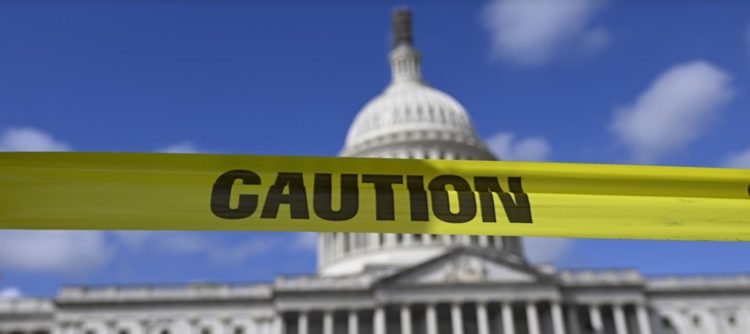
Fort Benning’s Name Fight Isn’t Over—Congress Aims to Bring Back Fort Moore
America’s Army posts are more than ZIP codes and gate guards—they’re shorthand for the wars we fought and the values we claim. That’s why the name on the big sign outside Columbus, Georgia, keeps turning into a political wrestling match. After Congress renamed Fort Benning to Fort Moore in 2023—honoring Lt. Gen. Hal Moore, the Ia Drang commander, and Julia Moore, whose quiet grit changed how the Army cares for families—the story might have ended. It didn’t.
In early 2025, Defense Secretary Pete Hegseth rebooted the controversy with a memo directing the post to be called Fort Benning again. This time, the honorific shifted to Cpl. Fred G. Benning, a World War I hero unrelated to the Confederate general Henry Benning. That move drew fire instantly. To critics, it looked like a backdoor reversal of a clear congressional intent: move U.S. bases away from Confederate ties and toward figures whose service reflects the modern force.
Now Congress is swinging back. Buried in the House’s defense bill is Section 2834, a provision that would require the Army to re-rename the installation in Muscogee and Chattahoochee Counties back to Fort Moore. The House cleared it; the Senate hasn’t. The next phase is the knife fight we call conference—where both chambers hash out differences line by line. If the Fort Moore language survives that scrum, both chambers vote on the final package, and the President decides with a signature. Only then would the Pentagon move to update signs, stationery, and every map app that continues to send soldiers to the wrong gate.
This isn’t a debate over paint on a marquee. It’s about who we elevate as examples for a new generation of troops and families. Hal Moore led from the front under murderous fire; Julia Moore rewrote the rules on casualty notification so families weren’t learning of their worst day from a taxi driver with a telegram. That pairing tells a complete Army story—combat and care, steel and spine. But then again, the name Fort Benning embodies generations of American fighting history. Benning equals Infantry in the minds of many.
Here’s the ground truth: if the Senate buys the House language, Fort Moore returns. If it doesn’t, the Hegseth directive stands and Fort Benning stays—under a new namesake but an old brand. The outcome will say plenty about whether Congress wants bases that reflect hard service and hard-earned reforms, or whether we’re comfortable letting identity tug-of-war rewrite the signposts of American military history.
Fort Moore could come back as Congress proposes another base name change https://t.co/RagT6YNezA
— Task & Purpose (@TaskandPurpose) September 22, 2025
UN Sanctions on Iran Are Snapping Back—Here’s What That Means
The clock ran out on diplomatic niceties. After Britain, France, and Germany (the E3) formally told the U.N. Security Council that Iran is in “significant non-performance” of the 2015 nuclear deal, the snapback clause in Resolution 2231 kicked off a 30-day timer. That window is closing now, and the old U.N. sanctions regime is set to roar back to life.
Moscow and Beijing tried a last-minute stall, floating a resolution to delay the hammer for six months. It couldn’t clear the bar. Only four of fifteen members backed it, so the effort failed—and with it any chance of slowing the automatic reimposition. Translation: the legal machinery moves on, whether Tehran likes it or not.
What’s actually snapping back? Expect a broad ban on arms transfers to and from Iran, renewed restrictions on enrichment and related nuclear work, tight limits tied to ballistic missile activity, and asset freezes and travel bans aimed at officials and entities tied to those programs. Countries also get the authority to inspect suspect cargo linked to prohibited activity. Western diplomats say these are the same guardrails the deal once suspended—and they’re returning because Iran kept pushing the envelope on enrichment, advanced centrifuges, and inspector access.
Timing matters. Diplomats signaled the sanctions would take effect this weekend, with Reuters noting an 8 p.m. EDT Saturday activation as the clock hits zero. Iran has blasted the move as unlawful, recalled its ambassadors to the E3 capitals, and threatened to cut cooperation with nuclear inspectors—though it says it will stay in the Non-Proliferation Treaty. That’s posturing with a purpose: raise the cost of enforcement while keeping a political door cracked open.
The likely impact? Iran’s economy is already under U.S. sanctions pressure, but a U.N. snapback makes global compliance less optional and complicates oil sales, weapons trade, finance, shipping, and insurance. In military terms, think of this as re-establishing interlocking fields of fire: national sanctions, plus multilateral ones, plus the legal cover for interdictions at sea or in port. That shrinks Tehran’s maneuver space.
Bottom line: Diplomacy didn’t die, but it’s back on a short leash. The E3 pulled the ripcord because they judged Iran’s nuclear advances and inspector stonewalling to be more risk than talk could manage. With snapback now in motion, any future deal starts from a tougher baseline—and the next move belongs to Tehran.
BREAKING: The UN Security Council failed to pass a resolution blocking the “snapback” of sanctions on Iran.
The vote was 4 in favor, 9 against, 2 abstentions.
As a result, all pre-2015 UN sanctions against Iran will be automatically reimposed after the September 28 deadline. pic.twitter.com/u9HmMdOTvZ— Ehsan Eghbal Eslami (@Ehsaneghbale) September 19, 2025








COMMENTS