

Canada and China Announce Strategic Partnership
Canada and China have moved to reset strained relations with a high-level diplomatic push, trading tariff relief and expanded access for stability as Ottawa looks to hedge against worsening U.S. trade friction.
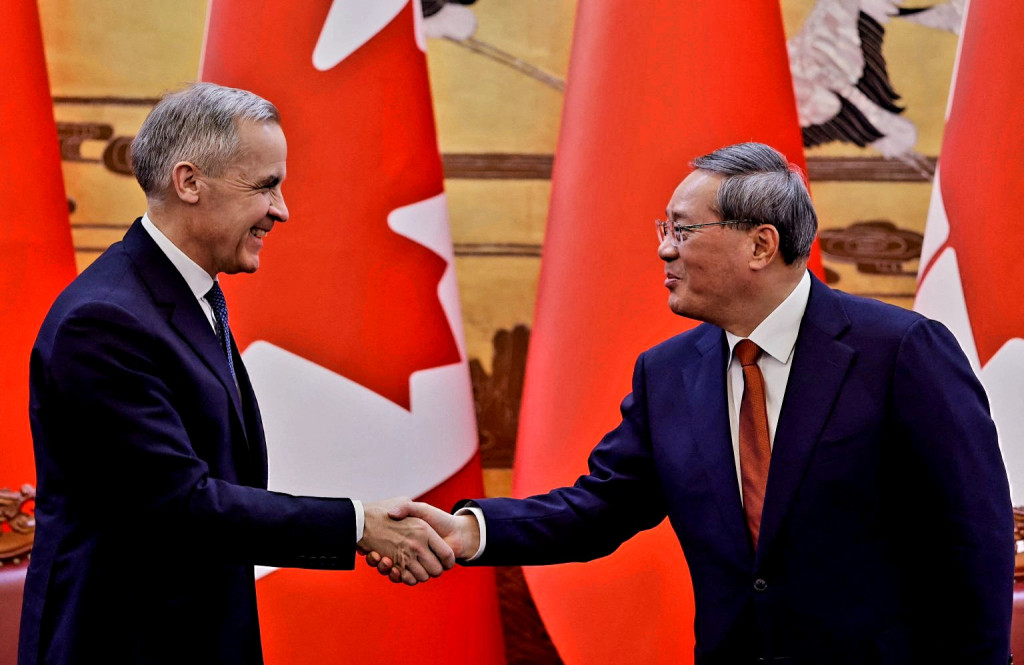
Canadian Prime Minister Mark Carney traveled to Beijing from January 14 to 17, 2026, marking the first official visit by a Canadian prime minister since 2017. Carney met with Chinese President Xi Jinping, Premier Li Qiang, and National People’s Congress Chairman Zhao Leji, signaling a deliberate thaw after years of diplomatic freeze driven by trade disputes, arrests, and political mistrust.
During the visit, both governments announced a new Canada-China Strategic Partnership structured around five pillars: energy cooperation, trade and economic ties, public safety and security, multilateral engagement, and expanded people-to-people exchanges. Canadian officials reaffirmed Ottawa’s One China policy, while both sides pledged to manage disagreements with what they described as mutual respect.
The most immediate impact came on trade. Canada agreed to sharply reduce tariffs on up to 10,000 Chinese electric vehicles, cutting rates to a most-favored-nation level of 6.1 percent. That move reversed a 2024 decision to impose a blanket 100 percent tariff aligned with U.S. policy. In return, Beijing committed to lowering combined tariffs on Canadian canola seed to roughly 15 percent by March 1, 2026, easing pressure on one of Canada’s most politically sensitive export sectors.
Both governments also revived stalled economic mechanisms, including the Canada-China Economic and Financial Strategic Dialogue and the Joint Economic and Trade Commission. Officials said the forums will be used to address long-running disputes over intellectual property, market access, and trade remedies. China additionally announced plans to grant visa-free travel for Canadian tourists, a move aimed at rebuilding commercial and cultural ties.
The reset comes as Ottawa looks to diversify trade relationships amid renewed tariff pressure from Washington. China remains Canada’s second-largest export market, particularly for agriculture and energy products. Officials on both sides emphasized coordination through APEC, where China hosts in 2026, and alignment with UN development frameworks.
Human rights concerns and political differences were acknowledged but kept largely out of public messaging. For now, pragmatism is driving policy. Canada appears focused on economic insulation, while China gains a Western partner willing to reopen doors without demanding public concessions.
Syrian Government Secures Deir Hafer Near Aleppo
Syrian government forces regained full control of Deir Hafer east of Aleppo after the Kurdish-led SDF withdrew under mediation, consolidating Damascus’ hold west of the Euphrates and tightening pressure on Kurdish autonomy talks.
Syrian government forces announced full control of the town of Deir Hafer on January 17, 2026, after units from the Syrian Democratic Forces withdrew earlier that morning. The town sits roughly 50 kilometers east of Aleppo and has long been a friction point between Damascus and the Kurdish-led coalition.
SDF commander Mazloum Abdi said on January 16 that the withdrawal would proceed as part of mediation efforts by what he described as friendly countries and in line with a stalled March 10, 2025 integration framework with the Syrian government. SDF units reportedly began pulling back around 0700 local time, disengaging from defensive lines around Deir Hafer and the nearby town of Maskanah before redeploying east of the Euphrates.
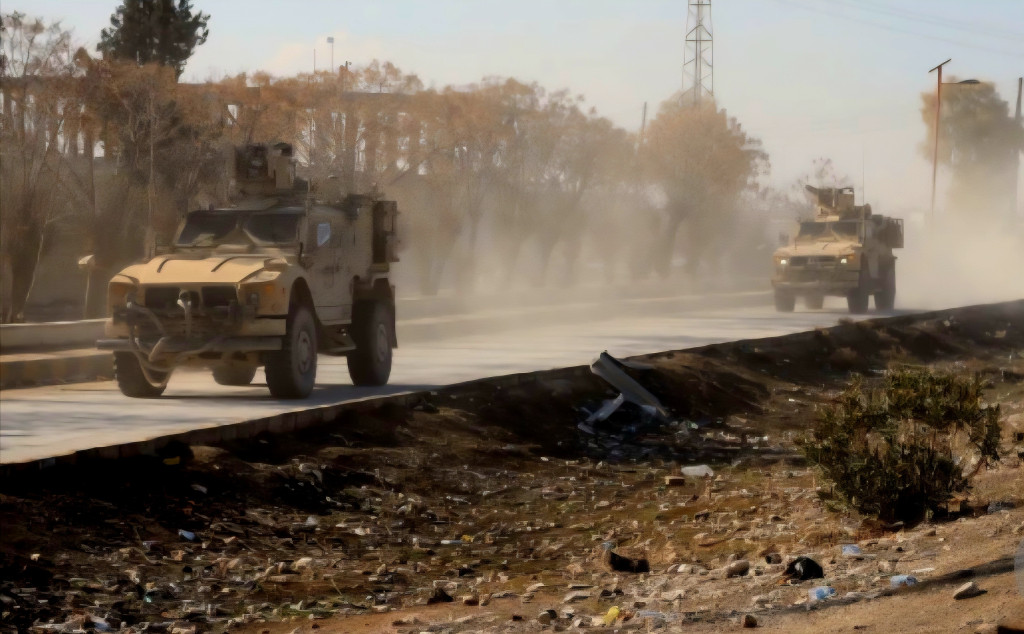
Syrian Arab Army units moved in almost immediately, declaring Deir Hafer a closed military zone while conducting mine clearance, security sweeps, and road control operations. Damascus stated that no major clashes were reported following the withdrawal.
The move followed several days of escalation. Tensions spiked after Syrian forces retook the Aleppo neighborhoods of Sheikh Maqsoud and Ashrafiyeh on January 11, prompting an SDF evacuation from the city. Syrian forces then launched artillery, rocket, and drone strikes on SDF positions around Deir Hafer beginning January 14. Syrian officials accused the SDF of harboring PKK-linked fighters, embedding ISIS elements, and conducting attacks on civilians.
The SDF rejected the government’s accusations, saying Syrian artillery and drone strikes hit residential areas and that its forces responded with limited counterfire while trying to avoid a wider fight. Hours before the withdrawal, a U.S. military delegation visited Deir Hafer and met with SDF officials in what appeared to be a last-minute effort to tamp down tensions and prevent further escalation. U.S. officials have maintained working relations with both the SDF and Damascus-linked forces in the area and have repeatedly urged calm, but a U.S. military spokesperson did not immediately respond to requests for comment on the visit or its outcome.
Civilians bore the brunt of the fighting. Thousands reportedly fled SDF-controlled areas through humanitarian corridors, with Syrian officials claiming more than 4,000 reached government lines despite blocked highways and damaged bridges.
Strategically, the takeover cements Syrian government control west of the Euphrates and further narrows the SDF’s negotiating space. While Damascus welcomed the withdrawal, officials said security conditions would remain under review, signaling the pressure campaign is not over.








COMMENTS