

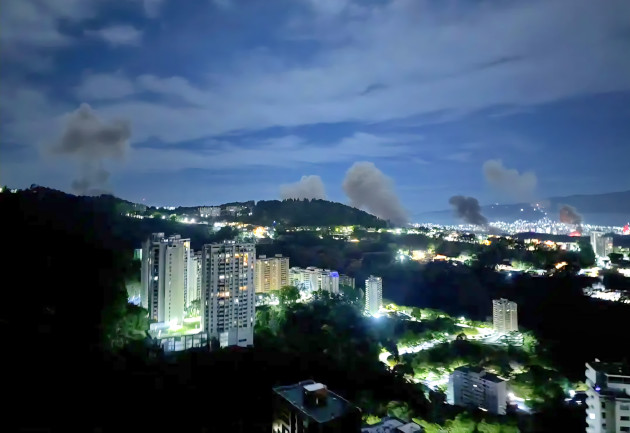
U.S. officials have previously framed these actions as counter-narcotics operations targeting Venezuelan-linked trafficking networks. The Caracas explosions mark a clear escalation from maritime interdiction and offshore pressure to apparent direct action inside Venezuelan territory.
That escalation is real, regardless of how Washington ultimately characterizes it.
Unverified but Circulating
Most explosive are claims that the operation went well beyond air and missile strikes.
Multiple U.S. and international reporters citing anonymous U.S. officials report that President Donald Trump authorized large-scale strikes on Venezuelan military targets and approved direct action missions in and around Caracas. Some reporting goes further, alleging that U.S. ground forces operated inside the capital during the overnight window.
More significantly, unconfirmed reports claim that Nicolás Maduro himself was captured during the operation.
According to these accounts, Delta Force (1st SFOD-D, also known as CAG) conducted a high-value target snatch at a secure site in Caracas. The reported operation involved insertion by 160th SOAR MH-47G Chinooks, with attack aviation providing close air support during exfiltration.
Video circulating on social media appears to show low-altitude heavy helicopters over Caracas during the blast window, along with what analysts assess may be attack helicopters engaging targets near Fort Tiuna. None of this imagery has been independently verified.
Some reporting adds that U.S. Air Force F-35s and F-22s conducted suppression of enemy air defenses, neutralizing Venezuelan Buk surface-to-air missile systems to clear the airspace. Aviation tracking data cited by analysts suggests aircraft recoveries toward Puerto Rico, though no official confirmation has been issued.
SOF Context and Unit Speculation
DEVGRU’s role in maritime interdictions against Venezuelan-linked drug-smuggling vessels is well documented and confirmed as part of the broader campaign. There is no confirmation of DEVGRU conducting ground operations in Caracas itself.
However, unverified reporting and prior leak-based analysis suggest DEVGRU’s Red Squadron may have supported Delta Force in planning, intelligence, or infil and exfil coordination. This remains speculative and unconfirmed.
There are no credible reports tying Green Berets, MARSOC, or AFSOC to direct ground action during the January 3 events.
Venezuelan state media references to “U.S. Special Forces” remain vague and nonspecific.
Maduro’s Status and Regime Stress
The most telling political signal may not be explosions, but silence.
Later Saturday, Venezuelan Vice President Delcy Rodríguez publicly demanded proof of life for Maduro, a remarkable move that signals potential internal confusion or fracture within the regime. Defense Minister Vladimir Padrino López was initially rumored to be killed, then resurfaced, condemning the strikes, further muddying the picture.
The Pentagon has declined to confirm any SOF involvement or Maduro’s status, referring all questions to the White House. Trump, however, has publicly praised the Venezuela operation as “brilliant,” reinforcing that these were U.S.-directed actions rather than ambiguous incidents.
Broader Risks
Any confirmed removal or capture of Maduro would carry immediate second-order effects. Venezuela maintains deep ties with Iran, Hezbollah, and Russian intelligence networks in the region.
Retaliatory actions, proxy activity, or asymmetric responses should be expected if the regime perceives itself under existential threat.
Bottom Line
Factually, Venezuela experienced coordinated nighttime explosions, air activity, and infrastructure disruptions consistent with a major military operation. Politically, this represents a sharp escalation in U.S. pressure against the Maduro government.
Operationally, the fog of war remains thick.
If reports of a successful SOF capture of Maduro prove accurate, this would rank among the most consequential U.S. special operations missions in decades. If not, the strikes alone still signal a shift from containment to overt action.
Expect rapid follow-on reporting in the next 24 to 72 hours, including confirmation of Maduro’s status, BDA (battle damage assessments), and international reaction.
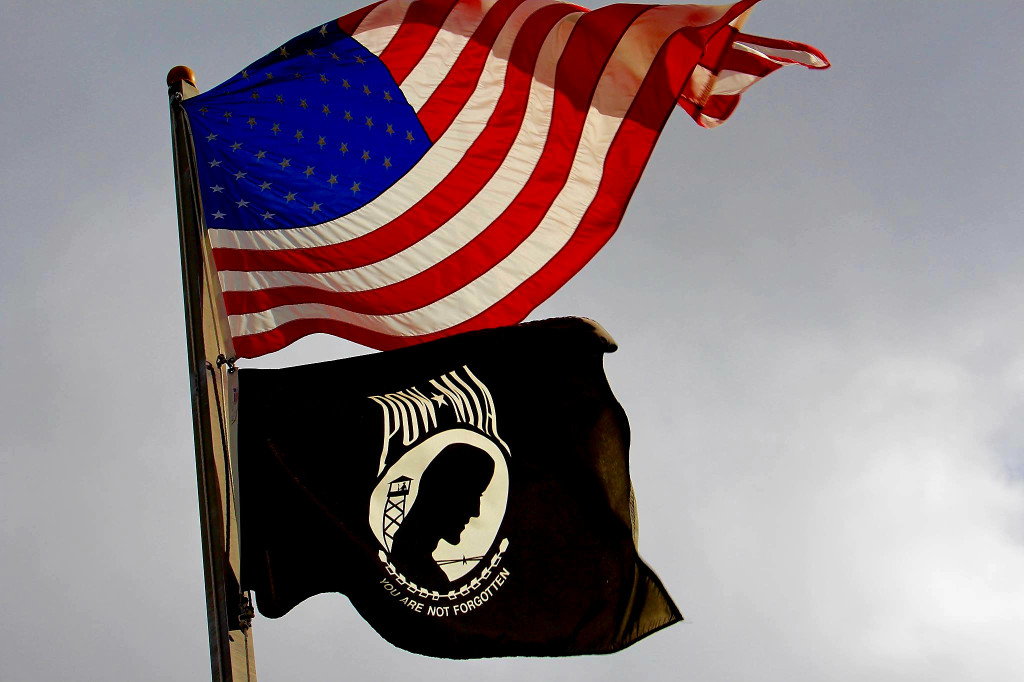
DPAA Sets Record With 231 Identifications in FY25, Brings More Americans Home
The Defense POW/MIA Accounting Agency identified 231 missing U.S. service members in fiscal year 2025, the highest total in the agency’s history and a clear jump from recent years. The figure beats FY24’s 172 identifications, FY23’s 158, and FY22’s 166, according to figures released by the agency.
For the first time, DPAA came within striking distance of its long-stated goal of 200 identifications in a single year.
This was not luck. It was grind, science, and long-term projects finally paying off.
One major driver was expanded DNA analysis using single-nucleotide polymorphisms, or SNPs. Unlike older methods that required close living relatives, SNP testing allows analysts to work outward through extended family trees. That alone accounted for roughly 30 identifications in FY25. It is not fast work. It is patient work, and it is the kind that rewards agencies that keep showing up year after year.
Another boost came from maturing recovery projects that have been underway for decades. World War II sites did most of the heavy lifting, including disinterments tied to the Enoura Maru prison ship in Japan, which produced 20 identifications.
Additional recoveries came from long-running efforts in the Solomon Islands, the Tokyo Prison fire site, and the Cabanatuan POW camp in the Philippines. These are not one-off digs. They are slow, methodical operations that only get more efficient once enough data stacks up.
Money also helped. DPAA received approximately 185.5 million dollars in FY25, allowing it to conduct 134 missions and disinterments worldwide. That was a 12 percent increase over FY24 and translated directly into more boots on the ground, more lab throughput, and fewer delays. The Asia-Pacific laboratory at Joint Base Pearl Harbor-Hickam carried a large share of that load, processing remains from across the region.
The identification breakdown shows progress across conflicts. Vietnam War identifications doubled to eight, the highest number since 2018. Korean War identifications rose by roughly 75 percent compared to FY24. World War II still dominates the totals, which is not surprising given the scale of that conflict and the age of the cases.
Despite the record year, the mission remains massive. DPAA still lists 71,806 Americans missing from World War II, 7,386 from Korea, and 1,566 from Vietnam.
Looking ahead, the news is less encouraging. An eight percent funding cut slated for FY26 under the National Defense Authorization Act is expected to reduce DPAA missions by roughly one-third. That will make another record year harder to pull off.
DPAA proved in FY25 what sustained effort can accomplish. Whether it can keep that pace now depends on decisions made far from the labs and recovery sites.

FBI Seizes $40 Million Motorcycle Hoard Linked to Fugitive Olympian Turned Cocaine Trafficker
Mexican authorities recently rolled up what may be the most aggressively irresponsible motorcycle collection ever assembled by a single human being. Sixty-two ultra-rare, high-end motorcycles were seized during raids on four properties in and around Mexico City, and U.S. officials believe the bikes belong to Ryan Wedding, a former Canadian Olympic snowboarder now wanted for allegedly running a multinational cocaine trafficking operation.

According to USA Today and statements released by the FBI’s Los Angeles office, the motorcycles are part of a broader asset seizure that also included vehicles, artwork, drugs, ammunition, documents, and two Olympic medals. Authorities estimate the motorcycle collection alone is worth roughly 40 million dollars. That is not a typo. That is more money than most motor pools have seen since the Cold War.
Wedding, 44, competed for Canada at the 2002 Winter Olympics in Salt Lake City, finishing 24th in parallel giant slalom.

Prosecutors now allege he later became a major cocaine trafficker, moving large quantities of narcotics from Colombia through Mexico into the United States and Canada. He was indicted in federal court in Los Angeles on multiple drug charges, with additional charges added in late 2025 accusing him of ordering the murder of a federal witness. Wedding is currently on the FBI’s Ten Most Wanted list, with a reward of up to 15 million dollars for information leading to his arrest and conviction.
Authorities believe he is hiding in Mexico and may be under cartel protection.
That said, the real star of this seizure is the bike lineup.
Photos released by the FBI show rows of motorcycles that look less like a criminal evidence lockup and more like a Ducati museum after a billionaire with impulse control problems found cocaine. While no official inventory has been released, motorcycle enthusiasts have already started identifying machines visible in the images.
At least five Ducati Desmosedici RR MotoGP replicas appear in the photos. Each one is essentially a street-legal apology letter from Ducati’s lawyers, built in limited numbers and worth well north of half a million dollars apiece in today’s market. There also appear to be multiple Ducati 888 and 851 superbikes from the late 1980s and early 1990s, machines that helped define modern racing homologation and now command serious collector money.
A Bimota is visible, because of course there is. No absurd motorcycle hoard is complete without at least one Italian engineering experiment that answers a question nobody asked. Other bikes appear to include rare Ducati race machines, possible Supermono variants, and additional high-performance European hardware that would make an insurance adjuster quietly resign.
Officials have not confirmed exact makes, models, or VINs, and investigators are still cataloging the collection as part of an ongoing forfeiture case, according to Mexican security officials and the FBI. Until that list is public, identification remains visual and unofficial.

If authorities are looking for someplace safe to store a few of those bikes while the paperwork clears, there’s room beside my Ducati in the living room. It is a sacrifice, but leadership means stepping up when called.
For now, the motorcycles sit under guard while the man allegedly responsible for acquiring them remains on the run. Law enforcement agencies in the United States, Mexico, and Canada continue joint efforts to locate Wedding and dismantle the organization prosecutors say he led.
Whether this case ultimately ends in a courtroom or a manhunt finale, one thing is already clear. This was not a midlife crisis garage. This was a full-scale MotoGP fever dream funded by alleged cocaine money, and it finally hit a wall.
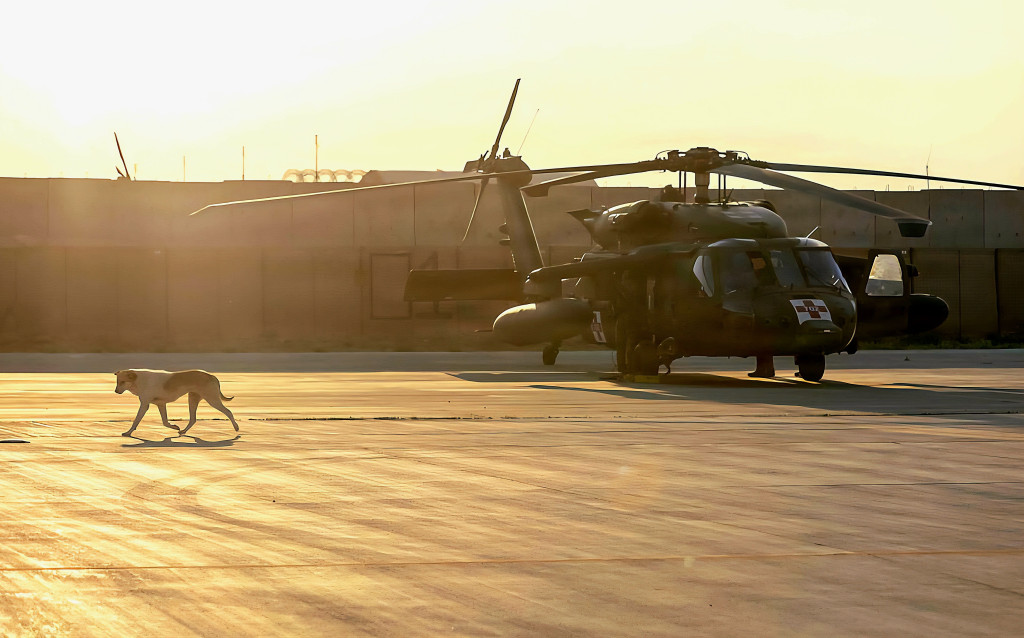
Iraq Says It No Longer Needs Coalition Forces. Again. What Could Possibly Go Wrong?
Iraqi officials announced this week that Coalition forces will fully hand over Ain al-Asad Air Base in Anbar province to Iraqi control next week, marking what Baghdad calls another milestone in national sovereignty and operational independence.
If that sounds familiar, it should. We have all heard the exact same speech before.
Lt. Gen. Qais al-Mohammadi framed the withdrawal as proof that Iraqi forces no longer require Coalition support to counter ISIS remnants. Prime Minister Mohammed Shia al-Sudani made a similar statement back in September, saying foreign troops were no longer essential, even as discussions over bilateral U.S.-Iraq defense agreements continue. About 2,500 U.S. personnel will remain elsewhere, primarily near Baghdad International Airport and at Erbil Air Base in Kurdistan.
So this is not a full exit. Just a “this time is different” exit.
According to Iraqi officials, ISIS is no longer a serious threat. Mohammadi pointed to just four ISIS attacks in 2025, down from 42 in 2024. All were described as ineffective. None seized territory. None disrupted national security. That assessment sounds reassuring.
It also sounds exactly like what we were told in 2011.
Back then, ISIS also did not control territory. It also could not conduct meaningful operations. It was also declared finished.
Shortly after that, Iraq asked U.S. forces to leave, the last combat troops departed, and the country promptly fell apart. Mosul collapsed. Anbar burned. ISIS declared a caliphate, and thousands of Iraqis and coalition troops paid the price for the belief that good intentions were a substitute for U.S. power.
But sure. This time is different.
Ain al-Asad became a major U.S. hub again after 2014, when American and coalition forces surged back into Anbar to help Iraqi units claw the province back from ISIS. The base has since been repeatedly targeted by Iran-backed militias using rockets and drones, a fact that tends to get politely skipped in discussions about “stabilized” security conditions.
Iraqi officials now say the focus has shifted from ISIS to managing those militias and broader regional tensions. That is encouraging in the same way saying “the fire’s out but the gas line’s still hissin’.”
Logistically, the handover will involve equipment transfers and base infrastructure being left for Iraqi use. Symbolically, it is being sold as proof that Iraq stands on its own. Again.
So, genuinely, good luck. No sarcasm there. I mean it. I hope Iraqi forces succeed. I hope ISIS stays dead. I hope not a single Iraqi soldier, policeman, or civilian loses their life because of this decision.
But history is not subtle, and it does not forgive selective memory. Iraq said it didn’t need coalition forces in 2011, too. We all remember how that worked out.
May this time be different. May no one pay for déjà vu with blood.








COMMENTS