

IEA Member countries agreed yesterday to release 400 million barrels of oil from their emergency reserves amid market disruptions from the Middle East conflict.
This is the 6th oil stock release – and the largest – in the IEA’s history.
Read more 👉 https://t.co/O9TIXDoqoE pic.twitter.com/FgwZ3SHuVg
— International Energy Agency (@IEA) March 12, 2026
Fighting continues across the region. Gulf states including Bahrain, Saudi Arabia, and the United Arab Emirates reported new Iranian missile and drone attacks over the weekend.
Iran has warned it could target energy infrastructure linked to the United States if its own oil facilities are hit.
The war’s toll is mounting. More than 1,300 people have been killed in Iran, according to humanitarian groups. Iranian strikes have killed civilians in Gulf states and at least a dozen people in Israel.
The conflict is spreading across multiple fronts. Oil routes, air defenses, and regional alliances are now part of the same fight.
Michigan Synagogue Attack Linked to Family Killed in Israeli Airstrike
Israel’s military claimed Sunday that Ibrahim Ghazali, the brother of a man who attacked a Michigan synagogue last week, was a Hezbollah commander.
Ibrahim and three relatives were killed in an airstrike in Lebanon on March 5.
Authorities allege Ayman Mohamad Ghazali, 41, carried out the attack outside Temple Israel near Detroit after learning of the deaths. He waited two hours in his car with a rifle, fireworks, and gasoline before crashing into the building and exchanging fire with a security guard.
Ghazali fatally shot himself; no one inside was hurt.
The Israeli military said that a Hezbollah commander killed in an Israeli airstrike last week was the brother of a man accused of carrying out an attack on a synagogue in the United States.
In a statement on Sunday, the military said Ibrahim Muhammad Ghazali, a Hezbollah…
— Iran International English (@IranIntl_En) March 15, 2026
The Federal Bureau of Investigation, leading the investigation, called it an act of violence against the Jewish community but has not confirmed it as terrorism. Officials declined to comment on Israel’s claim about Ibrahim Ghazali’s role in Hezbollah.
Ghazali, a naturalized US citizen since 2016, lived in Dearborn Heights, Michigan. The attack coincided with a separate shooting at Old Dominion University in Virginia, highlighting a surge in targeted assaults amid escalating Middle East tensions.
Zelenskyy Pushes for Peace Talks as War and Global Crises Complicate Diplomacy
Ukrainian President Volodymyr Zelenskyy said Sunday he is ready for the next round of trilateral peace talks with Russia and the United States.
The problem, he said, is getting Moscow to show up.
Washington proposed hosting another meeting between American, Ukrainian, and Russian negotiating teams. But Russia has so far refused to send a delegation, leaving the next step uncertain.
Zelenskyy said Kyiv is open to any venue. Either the United States must select a different host country, or Moscow must accept the American proposal.
Ukrainian President Volodymyr Zelenskyy claimed on Sunday that the US had suggested holding a trilateral meeting with Russia on American soil to end the conflict in Ukraine, but Moscow refused https://t.co/tveMKzI9QG pic.twitter.com/qoTO5zUe90
— Anadolu English (@anadoluagency) March 15, 2026
The talks come as the war in Ukraine drifts from the center of the global stage. Fighting in the Middle East has forced Washington to postpone diplomatic efforts aimed at ending Russia’s invasion, now more than four years old.
Zelenskyy warned the Iran war could create another problem for Kyiv. Ukraine depends heavily on Western air defense missiles to counter Russian strikes, and he said the risk of depleted stockpiles is “very high.”
The Ukrainian leader said he recently discussed alternatives with French President Emmanuel Macron, including the European-made SAMP/T system as a possible backup to US Patriot batteries.
Ukraine plans to test whether the European-made SAMP/T system can intercept ballistic missiles later this year – and the stakes couldn’t be higher.
Ballistic missiles are faster, harder to track, and right now only the US-made Patriot can reliably stop them – and Ukraine doesn’t… pic.twitter.com/HwyQdFoWJw
— Euromaidan Press (@EuromaidanPress) March 15, 2026
Zelenskyy also pushed back on comments from Donald Trump, who said Washington does not need Ukrainian drone technology. According to Zelenskyy, US military institutions have repeatedly asked Kyiv for assistance related to drones.
Ukraine previously proposed a $35 billion to $50 billion defense cooperation deal that would give Washington access to technology from roughly 200 Ukrainian drone, artificial intelligence (AI), and electronic warfare companies. The agreement remains unsigned.
Energy politics are adding another layer of tension. Zelenskyy rejected calls to reopen the Druzhba pipeline for Russian oil transit through Ukraine while sanctions remain in place.
Hungary’s Prime Minister Viktor Orbán has blocked new European Union sanctions on Russia and a major loan package for Ukraine until shipments resume.
Zelenskyy called the pressure “blackmail.” But he acknowledged Kyiv could be forced to reconsider if the dispute begins to threaten weapons supplies.
The diplomacy around Ukraine is now tangled in a wider web of wars, sanctions, and energy politics. Peace talks remain possible, but the path to them is anything but clear.
Kim Jong Un Oversees North Korea Rocket Drill Amid US-South Korea Exercises
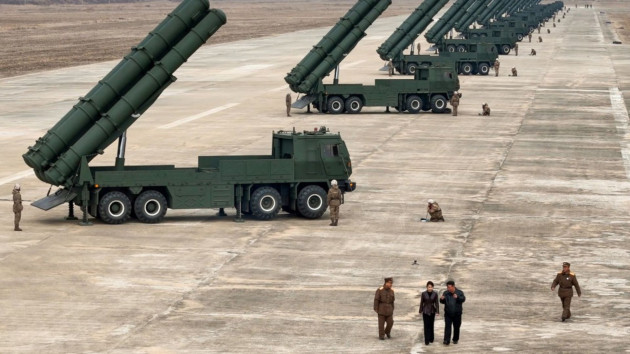
North Korean leader Kim Jong Un watched a live-fire test of multiple rocket launch systems on Saturday, accompanied by his teenage daughter, Kim Ju Ae, state media reported Sunday. The test comes as a likely response to ongoing US-South Korea military exercises, which Pyongyang regularly decries as invasion rehearsals.
The strike drill involved twelve 600mm-calibre, ultraprecision rocket launchers off North Korea’s east coast. South Korea detected about 10 ballistic missiles fired toward the eastern sea, calling the launches a provocation that violates UN Security Council resolutions.
North Korean Supreme Leader Kim Jong Un, accompanied by his daughter Kim Ju Ae, oversaw a live-fire test of multiple rocket launch systems on Saturday.
The state said the drill showcased its deterrence capabilities and its ability to hit targets up to 420 km away, potentially… pic.twitter.com/REZtmKiDu0
— The Daily News (@DailyNewsJustIn) March 15, 2026
Korean Central News Agency (KCNA) cited Kim saying the drill would give enemies within the 420-kilometer (260-mile) striking range “a deep understanding of the destructive power of tactical nuclear weapons.” He warned that if deployed, the weapons could obliterate military infrastructure within range.
Photos released by KCNA showed Kim and his daughter inspecting the massive olive-green launch trucks as rockets fired. Kim Ju Ae, about 13, has appeared at multiple high-profile events, fueling speculation she is being groomed as his successor.
Experts note that North Korea’s large rocket launchers blur the line between artillery and ballistic missiles, with some reportedly capable of carrying nuclear warheads. The Freedom Shield exercises, running through March 19, continue to serve as a trigger for North Korea’s weapons tests and aggressive rhetoric.
Editor’s Note: Details in this story reflect the latest information at publication and may change as events evolve.








COMMENTS