

Trump Declares Victory in Iran War as Strategy Questions Mount
US President Donald Trump says the United States is winning the war with Iran, even as thousands of additional US troops deploy to the Middle East.
His message has shifted repeatedly. Trump has threatened to “obliterate” Iran’s energy sector, downplayed the impact of the Strait of Hormuz crisis, and delayed deadlines for Tehran to reopen the waterway. He has criticized allies for not contributing, then said the US does not need their help. The mixed signals are drawing scrutiny as the war enters its second month.
Critics say the rhetoric is creating confusion at a critical moment. Leon Panetta warned that truth often erodes in wartime, while Michael Rubin said Trump’s approach breaks from traditional presidential messaging discipline.
Supporters argue the unpredictability is intentional. Trump has long used shifting positions to keep adversaries off balance, a tactic that may now be shaping how Tehran interprets US intentions.
Markets are less convinced. US stocks posted their worst week since the war began, reflecting uncertainty over the conflict’s direction and duration.
On Capitol Hill, frustration is building. Representative Gregory Meeks accused the administration of inconsistency, while some Republicans voiced concern over the lack of detailed briefings. Republican lawmakers broadly support strikes on Iranian targets. But there is hesitation about escalation. Polling shows strong backing for air operations, but limited support for deploying ground troops.
That divide could become decisive. A prolonged war risks political fallout ahead of the November elections, especially if costs rise and objectives remain unclear.
The administration may soon face another test. Officials are weighing the need for up to $200 billion in additional funding, a difficult ask for fiscal conservatives already wary of long-term commitments.
The White House maintains the campaign is succeeding. Officials say Iran is under pressure and may be forced to negotiate.
♦️ According to recent data from CENTCOM and CSIS, the US military offensive in Iran has cost an estimated $26.74 billion
♦️ The financial scale of this month-long operation is historic, ranging from $10 billion in air defense interceptors to over 10,000 strikes across the… pic.twitter.com/vRoyKCkVMh
— Anadolu English (@anadoluagency) March 28, 2026
Trump’s strategy blends pressure, messaging, and unpredictability. It may complicate Iran’s decision-making. But it also clouds US objectives at home. If the war drags on, the gap between rhetoric and reality could become harder to manage.
Houthis Enter War as US Reinforces Region and Shipping Risks Surge
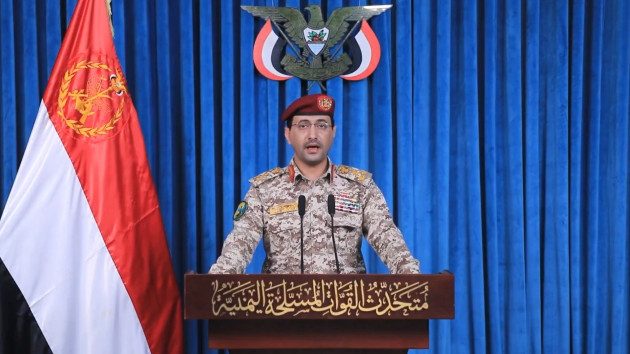
Iranian-backed Houthi movement forces entered the month-old Middle East war on Saturday, claiming a missile launch toward Israel that Israeli defenses said they intercepted.
The move opens a new front. It raises the risk of renewed attacks on commercial shipping through the Bab el-Mandeb Strait, a corridor that carries roughly 12 percent of global trade.
The conflict is already straining global markets. Iran’s grip on the Strait of Hormuz has disrupted oil, gas, and fertilizer flows. Prices are rising. Air travel is tightening.
Iran signaled limited relief, agreeing to allow humanitarian and agricultural shipments through the strait after a United Nations request. US President Donald Trump has set an April 6 deadline for Tehran to fully reopen it.
US President Donald Trump said Thursday that he is delaying his deadline to bomb Iran’s energy infrastructure until April 6, citing progress in negotiations https://t.co/2B6fOJJ04k pic.twitter.com/j7Kfzkt3KR
— Anadolu English (@anadoluagency) March 26, 2026
Fighting continues across multiple fronts. Witnesses reported heavy strikes in Tehran. Israel said it targeted Iran’s naval weapons production and aims to degrade key facilities within days. Iran responded with missile fire. US forces say they have struck more than 11,000 Iranian targets since the war began.
The Houthis’ entry could widen the economic shock. The group has previously targeted over 100 vessels in the Red Sea, disrupting shipping and driving up costs. Analysts warn a renewed campaign would hit far beyond energy markets.
Strategic waterways are now linked. With Hormuz constrained, Gulf oil is rerouting through the Bab el-Mandeb toward the Suez Canal, increasing exposure to Houthi attacks.
Iran’s actions could choke the Strait of Hormuz and Bab el-Mandeb strait, risking a breakdown of global trade and major disruptions to oil markets. The National’s Mohamad Ali Harisi explains. pic.twitter.com/o851fDwnmo
— The National (@TheNationalNews) March 26, 2026
Military pressure is building. About 2,500 US Marines have arrived in the region, alongside additional airborne forces. It marks one of the largest US force buildups in the Middle East in over two decades.
At sea, risk calculations are shifting. The presence of US carriers, including the USS Gerald R. Ford (CVN-78, could draw the kind of attacks previously seen against American warships in the Red Sea.
Diplomatic efforts are moving in parallel. Pakistan is hosting talks with Saudi Arabia, Turkey, and Egypt aimed at de-escalation. But Iran remains skeptical, accusing Washington of contradictory demands in ceasefire proposals.
On the ground, the war is taking a growing toll. Iranian strikes have wounded US troops at bases in Saudi Arabia, including Prince Sultan Air Base. More than 300 American service members have been injured, with at least 13 killed.
Casualties are climbing across the region. Iran reports over 1,900 dead. Israel has reported 19 fatalities. In Lebanon, more than 1,100 have been killed since fighting expanded south. Iraqi security forces and civilians across Gulf states and the West Bank are also taking losses.
◾️ US-Israeli attacks since Feb. 28 leave 1,950+ dead and 24,800 injured in Iran, 1,142 dead in Lebanon
◾️ Iran retaliatory strikes hit Israel, Gulf countries and US assets, leaving casualties across region
◾️ 13 US soldiers killed, 200 injured as regional escalation continues… pic.twitter.com/0bCKtI0tXf
— Anadolu English (@anadoluagency) March 28, 2026
The war is widening along both geography and domain. From Hormuz to the Red Sea, chokepoints are turning into pressure points. The entry of the Houthis links them into a single battlespace. If attacks on shipping resume at scale, the conflict will not stay regional.
Zelenskyy Courts Gulf as Ukraine Exports Drone War Expertise
Ukrainian President Volodymyr Zelenskyy made unannounced stops in the Gulf on Saturday, pitching Kyiv’s battlefield-tested drone defenses as Iran’s war ripples across the region.
In the United Arab Emirates (UAE), Zelenskyy met President Mohamed bin Zayed Al Nahyan to discuss regional security and Iranian strikes. Hours later, he landed in Qatar, where he met Emir Sheikh Tamim bin Hamad Al Thani and senior officials.
The message was direct. Ukraine can help.
Kyiv has emerged as a leading producer of low-cost drone interceptors shaped by war with Russia. Those systems now form the backbone of Ukraine’s defense against waves of Iranian-designed Shahed drones.
Zelenskyy is offering that playbook to Gulf states now under threat from Tehran. In return, Ukraine wants access to high-end air defense. Systems like Patriot missile system remain in short supply as Russia intensifies strikes on Ukrainian cities.
Deals are already taking shape. Kyiv has signed 10-year security agreements with Saudi Arabia and Qatar, with a similar pact expected soon with the UAE. The agreements go beyond arms. They include joint production, investment, and technology sharing.
Zelensky toured the Gulf, visiting Qatar and the UAE, and signed a 10-year defense cooperation deal in Doha. pic.twitter.com/W1VfTzImPX
— Open Source Intel (@Osint613) March 28, 2026
Zelenskyy said Ukraine is helping five Gulf partners counter Iranian drone attacks, linking Kyiv’s war experience directly to Middle East defense needs. He also signaled interest in supporting maritime security in the Strait of Hormuz, where Iran’s blockade has shaken global markets.
The Middle East war, triggered by US and Israeli strikes on Iran in late February, is redrawing alliances and stretching Western resources.
Kyiv sees both risk and opportunity. There are concerns the conflict could divert weapons and attention away from Ukraine. Zelenskyy said he has received no indication from Washington that aid will be redirected. But rising energy prices are already benefiting Moscow, giving the Kremlin economic breathing room.
On the battlefield, the war grinds on. Russia launched more than 270 drones overnight, killing civilians and striking infrastructure across Ukraine. Kyiv continues to respond with its own drone attacks deep inside Russian territory.
The exchange is relentless. It is also evolving.
❗️During the night, 🇺🇦Ukrainian forces shot down 252 out of 273 🇷🇺Russian drones pic.twitter.com/rePaqURKUE
— 🪖MilitaryNewsUA🇺🇦 (@front_ukrainian) March 28, 2026
Ukraine is exporting more than hardware. It is exporting a combat model built under constant drone threat. For Gulf states facing Iranian strikes, that model offers immediate utility. For Kyiv, it is leverage. As wars converge from Eastern Europe to the Persian Gulf, drone warfare is becoming the common language of modern conflict.
Editor’s Note: Details in this story reflect the latest information at publication and may change as events evolve.








COMMENTS