Brandon Webb critiques the Biden administration's decision to allow US missiles to target Russia, arguing it escalates the Ukraine conflict and complicates future peace negotiations. Critics, including former President Trump, suggest this move undermines stability and could lead to broader geopolitical risks.
Key points from this article:
The Biden administration's decision to permit US missiles to be launched into Russia is viewed as a reckless escalation of the Ukraine conflict.
How this decision affects the Biden administration's foreign policy is significant, as critics label it a move that complicates peace negotiations and undermines stability.
Why this matters is highlighted by Trump's outreach to Putin, proposing a resolution that could reshape the geopolitical landscape, with implications for NATO's relationship with Russia.
Updating summary...
SOFREP Weekly-Former Navy SEAL Exposes Biden’s Risky Move: Missiles Into Russia
Brandon Webb
Speed
1x
Listen
COMMENTS
The Biden administration’s gamble to greenlight U.S. missile launches into Russia’s backyard risks igniting a geopolitical powder keg, leaving critics questioning whether this is strategy or sheer recklessness.
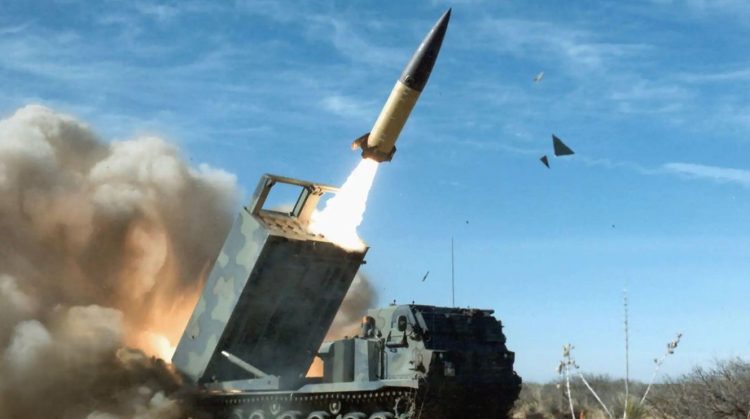
An M270 launcher fires off a missile, embodying the high-stakes brinkmanship fueling the escalating U.S.-Russia tensions in the Ukraine conflict.
In this week’s analysis, former Navy SEAL and SOFREP Editor-in-Chief Brandon Webb shifts his focus to the Biden administration’s controversial move to allow US missiles to be launched into Russia, escalating the Ukraine conflict. This decision, seen by some as reckless, raises concerns about broader geopolitical risks and the long-term implications for U.S. foreign policy.
Advertisement
Critics argue that President Biden‘s administration, described as a “band of puppeteers,” is undermining stability and complicating future efforts for peace negotiations. Former President Trump, positioned as a strong negotiator, has reportedly reached out to Putin to de-escalate tensions until he takes office, proposing a pragmatic resolution: Russia retains control over disputed eastern territories, Ukraine remains outside NATO, and a face-saving agreement is struck.
The geopolitical chessboard sees the U.S. funding 95% of Ukraine’s military and financial aid, giving Washington significant leverage. However, concerns over NATO’s encroachment on Russia‘s borders have fueled the Kremlin’s resistance, an issue that predates the current conflict and echoes longstanding assurances from the West.
Advertisement
Observers see these developments as part of a broader political clash, with the current establishment pushing back against Trump’s outsider status prior to his return to office. This dynamic correctly fuels speculation of strategic moves by Biden’t people to try to preemptively weaken Trump‘s position, both domestically and on the world stage.
With the risk of escalation into a broader European conflict, the stakes couldn’t be higher.
Advertisement
The SOFREP team underscores the importance of informed, unbiased reporting on these critical issues, drawing on firsthand military and Agency experience.
Stay tuned as we continue to bring you unbiased, boots-on-the-ground perspectives.
In this week’s analysis, former Navy SEAL and SOFREP Editor-in-Chief Brandon Webb shifts his focus to the Biden administration’s controversial move to allow US missiles to be launched into Russia, escalating the Ukraine conflict. This decision, seen by some as reckless, raises concerns about broader geopolitical risks and the long-term implications for U.S. foreign policy.
Critics argue that President Biden‘s administration, described as a “band of puppeteers,” is undermining stability and complicating future efforts for peace negotiations. Former President Trump, positioned as a strong negotiator, has reportedly reached out to Putin to de-escalate tensions until he takes office, proposing a pragmatic resolution: Russia retains control over disputed eastern territories, Ukraine remains outside NATO, and a face-saving agreement is struck.
The geopolitical chessboard sees the U.S. funding 95% of Ukraine’s military and financial aid, giving Washington significant leverage. However, concerns over NATO’s encroachment on Russia‘s borders have fueled the Kremlin’s resistance, an issue that predates the current conflict and echoes longstanding assurances from the West.
Observers see these developments as part of a broader political clash, with the current establishment pushing back against Trump’s outsider status prior to his return to office. This dynamic correctly fuels speculation of strategic moves by Biden’t people to try to preemptively weaken Trump‘s position, both domestically and on the world stage.
With the risk of escalation into a broader European conflict, the stakes couldn’t be higher.
The SOFREP team underscores the importance of informed, unbiased reporting on these critical issues, drawing on firsthand military and Agency experience.
Stay tuned as we continue to bring you unbiased, boots-on-the-ground perspectives.
Advertisement
What readers are saying
Generating a quick summary of the conversation...
This summary is AI-generated. AI can make mistakes and this summary is not a replacement for reading the comments.










COMMENTS