

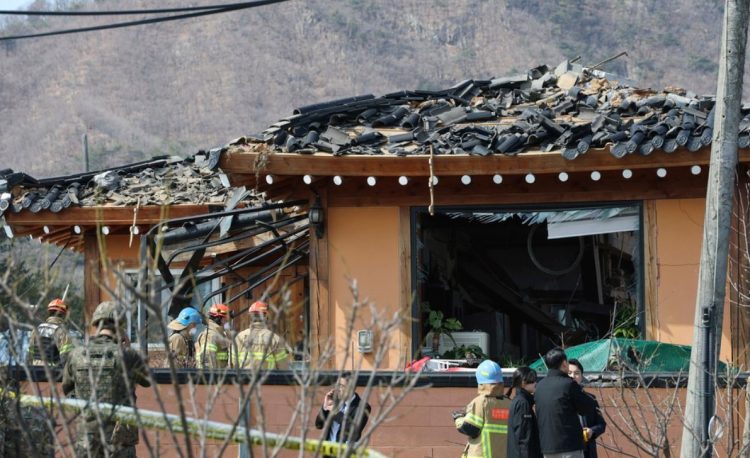
In official statements, the South Korean Air Force expressed deep regret for the “abnormal bomb release that resulted in civilian harm.” Pocheon’s Mayor, Paek Young-hyun, described the scene as chaotic and “awful” during a televised briefing, emphasizing the need for stronger preventive measures. He urged the military to halt training exercises in the city until reliable safety protocols were established to protect local residents.
The political response was swift, with both ruling and opposition parties calling for action. The ruling People Power Party demanded a transparent investigation, immediate assistance for affected residents, and stronger safety measures to prevent similar accidents. Meanwhile, the opposition Democratic Party leader wished the injured a speedy recovery and pushed for a thorough review of military training practices.
The incident raised serious concerns due to its location near the North Korean border and its timing—just days before the scheduled joint military exercises with the United States. With tensions already high in the region, the mishap underscored the need for greater caution in military operations near civilian areas.
Official Response: Apologies and Investigations
The South Korean Air Force responded quickly to the accidental bombing incident. Their first action was to issue an official apology, expressing deep regret for the “abnormal bomb release that resulted in civilian harm” and extending their wishes for a swift recovery to those who were injured.
As a precautionary measure, the military immediately suspended all live-fire training exercises across the country until a thorough investigation could be completed. To ensure a full understanding of what went wrong, the Air Force established an accident response committee to investigate the cause of the mistake and assess the extent of civilian damage.
Officials also promised compensation for those affected, stating that they would take all necessary steps to support the victims and help them recover from the incident. In an effort to be transparent, the Air Force openly shared details about the accident with foreign media, including information about the type of bombs used and how the situation unfolded.
Acknowledging the mistake, an Air Force official revealed that one of the KF-16 pilots had entered incorrect coordinates for the bombing site, which led to the bombs being dropped in the wrong area. A Defense Ministry official added that further investigation was needed to determine why the second jet also released its bombs over the civilian zone.
Overall, the Air Force’s response demonstrates a commitment to taking responsibility for the accident, compensating those affected, and ensuring that similar mistakes do not happen again. By suspending drills, launching an investigation, and maintaining transparency, they are working to rebuild trust and prevent future tragedies.
Broader Implications: Safety Concerns and Military Preparedness
This incident has sparked a broader discussion about the safety protocols of military exercises conducted near civilian populations. The mishap raises fresh questions about South Korea’s military capabilities, especially as the nation shares wartime operational control (OPCON) of its military with Washington and must contend with an increasingly bellicose North Korea.
The live-fire drills were preparatory exercises ahead of the larger-scale joint military exercises between the U.S. and South Korea, known as Freedom Shield, scheduled from March 10 to 20.
Moving Forward: Ensuring Safety and Accountability
The South Korean government and military have pledged to conduct thorough investigations to determine the exact cause of the mishap and to implement measures to prevent similar incidents in the future. Compensation for the victims and reconstruction of the damaged infrastructure are among the immediate priorities.
This incident reminds us of the potential dangers associated with military exercises near civilian areas. It reinforces the need for stringent safety measures, meticulous planning, and continuous reassessment of protocols to ensure the well-being of civilians while maintaining military readiness.
As the investigation unfolds, the community in the affected area will require substantial support to rebuild and recover from this unforeseen tragedy. The incident also calls for a reevaluation of current practices to strike a balance between necessary military preparedness and the safety of civilian populations.








COMMENTS