Exactly a year ago, I wrote a piece titled “Target the Cartels, Expose Their Enablers, and Hold U.S. Bureaucrats Accountable.” I warned then that narco-terrorist organizations weren’t just drug traffickers; they were armed insurgents, political subversives, and key players in a broader unholy alliance that includes radical regimes, Chinese laundering networks, and terrorist operatives. Today, that warning reads less like commentary and more like a forecast.
The recent arrest of a U.S. Drug Enforcement Administration agent in the Dominican Republic underscores the accountability gap I wrote about then. When American officials abroad become entangled in criminal or corruption probes, it weakens credibility at precisely the moment Washington is asking partners to confront cartel penetration in their own systems. Accountability at home is not optics, it is operational leverage. Without it, deterrence erodes.
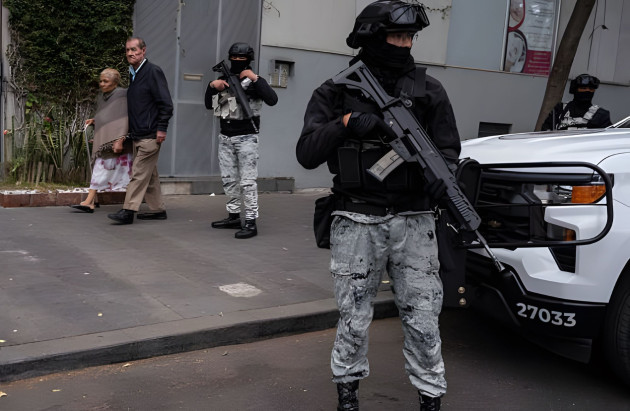
The violence tied to the Jalisco New Generation Cartel confirmed what many already understood. Following reports surrounding Nemesio “El Mencho” Oseguera, CJNG elements launched coordinated acts of terror, intimidation and disruption. Highways were blocked with burning vehicles, businesses shut their doors, and civilians scrambled for safety as gunfire echoed near major transit corridors. Once again, parts of Mexico shifted from normalcy to paralysis in a matter of hours.
And the official Mexican response followed a familiar script: minimize, deflect, and insist that social policy can solve what is fundamentally a security crisis. The reality on the ground is harder to ignore, cartels exercise coercive authority across significant territory, often outmatching the state’s ability to impose order.
This narco-defiance isn’t confined to Mexico.
In Guatemala, cartel-linked violence and entrenched gang power continue to exact a deadly toll. Border communities remain exposed, security operations trigger retaliation, and prison systems periodically fall under criminal control. Institutional reform has yet to translate into sustained territorial dominance, and allegations of corruption inside the executive and its security structures continue to undermine public confidence. As in Mexico, ordinary citizens pay the price.
Colombia reflects a parallel trajectory. Under the banner of “peace,” pressure on illicit cultivation eased while engagement with armed and criminal actors expanded. The result has been a sharp rebound in coca cultivation and cocaine output, reversing prior declines. Whether framed as policy recalibration or political gamble, the effect is the same: criminal economies regained momentum.
Luckily, Washington’s posture has moved beyond rhetoric. The United States is now openly employing lethal force at sea against suspected narcotics trafficking vessels in the Caribbean and Eastern Pacific, confirming that counter-narcotics has crossed into a national-security mission set. At the same time, operational activity on sovereign territory in the region remains largely indirect, relying on intelligence integration, partner execution, and expanded interagency coordination rather than overt U.S. ground combat presence. The strategic debate has shifted, but legal and diplomatic constraints still shape how far force is applied, for now.
What is no longer debated in serious circles is the nature of the threat. Cartels operate with the discipline, financing, and coercive reach of insurgent entities. They assassinate officials, corrupt institutions, terrorize populations, and shape migration flows. Their influence expands wherever governance is weak, fragmented, or compromised.
What is too often ignored, or deliberately obscured, is how that influence expands through politics as much as through violence. Across the region, criminal leverage increasingly hides behind the language of leftist reform, social justice, and institutional “renewal.” In Mexico, Guatemala, Colombia, and Brazil, the pattern is difficult to miss: courts become battlegrounds for ideological control, prosecutorial bodies face political pressure, and oversight mechanisms weaken just as criminal economies grow. The result is a quiet convergence where corruption and coercion operate beneath a veneer of good intentions, eroding the rule of law while preserving the optics of democratic process.
The Mexican state faces structural penetration by criminal power. Guatemala continues to struggle for consistent territorial control. Colombia is attempting to reconcile political negotiation with the resurgence of illicit economies. Across the region, governments invoke sovereignty while citizens live under cartel coercion. But sovereignty without security is fiction, and sovereignty without law is surrender.
Already have an account? Sign In
Two ways to continue to read this article.
Subscribe
$1.99
every 4 weeks
- Unlimited access to all articles
- Support independent journalism
- Ad-free reading experience
Subscribe Now
Recurring Monthly. Cancel Anytime.
Meanwhile, the enabling ecosystem grows stronger. Chinese precursor supply chains remain central to synthetic drug production, while sophisticated laundering networks move billions with speed and opacity. Criminal corridors increasingly intersect with actors tied to sanctioned groups and Islamic terror networks, amplifying the strategic risk beyond narcotics trafficking alone.
There is, however, a fragile point of optimism. After years of relentless increases, overdose deaths in the United States have declined from recent peaks, reflecting the combined effects of prevention, treatment, and sustained enforcement pressure. But this progress is reversible. As long as supply chains remain resilient abroad, the threat persists at home.
A year ago, I argued that dismantling cartel power was both a moral and strategic necessity. That assessment still stands. But today there is an added imperative: preparedness. Sustained pressure will provoke responses, cyber disruption, targeted intimidation, and political maneuvering designed to shield criminal interests. Policymakers must anticipate that reality, not react to it.
This is not a passing surge in violence. It is a prolonged contest for authority across the hemisphere.
And in contests like this, hesitation doesn’t calm the battlefield; it cedes it.










COMMENTS