Armed with amphibious rifles, Russian Spetsnaz turn the waterline into a kill zone instead of a transition point.
Read the full article for more on:
Important insights and detailed analysis
Expert commentary on current events
Breaking developments and updates
Updating summary...
Spetsnaz From the Deep: Russia’s Underwater Riflemen and the Avtomat Dvukhsrednyy Amphibious Assault Rifle
Galen Fries
Speed
1x
Listen
COMMENTS
Armed with amphibious rifles, Russian Spetsnaz turn the waterline into a kill zone instead of a transition point.
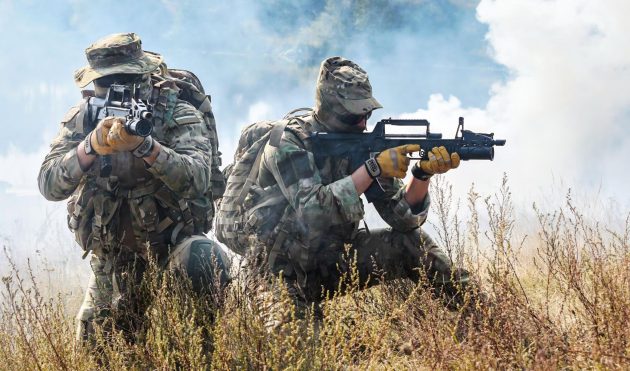
РОССИЯ Spetsnaz with the ADS amphibious assault rifle. Image Credit: Reddit
If combat divers could haunt your dreams…
Advertisement
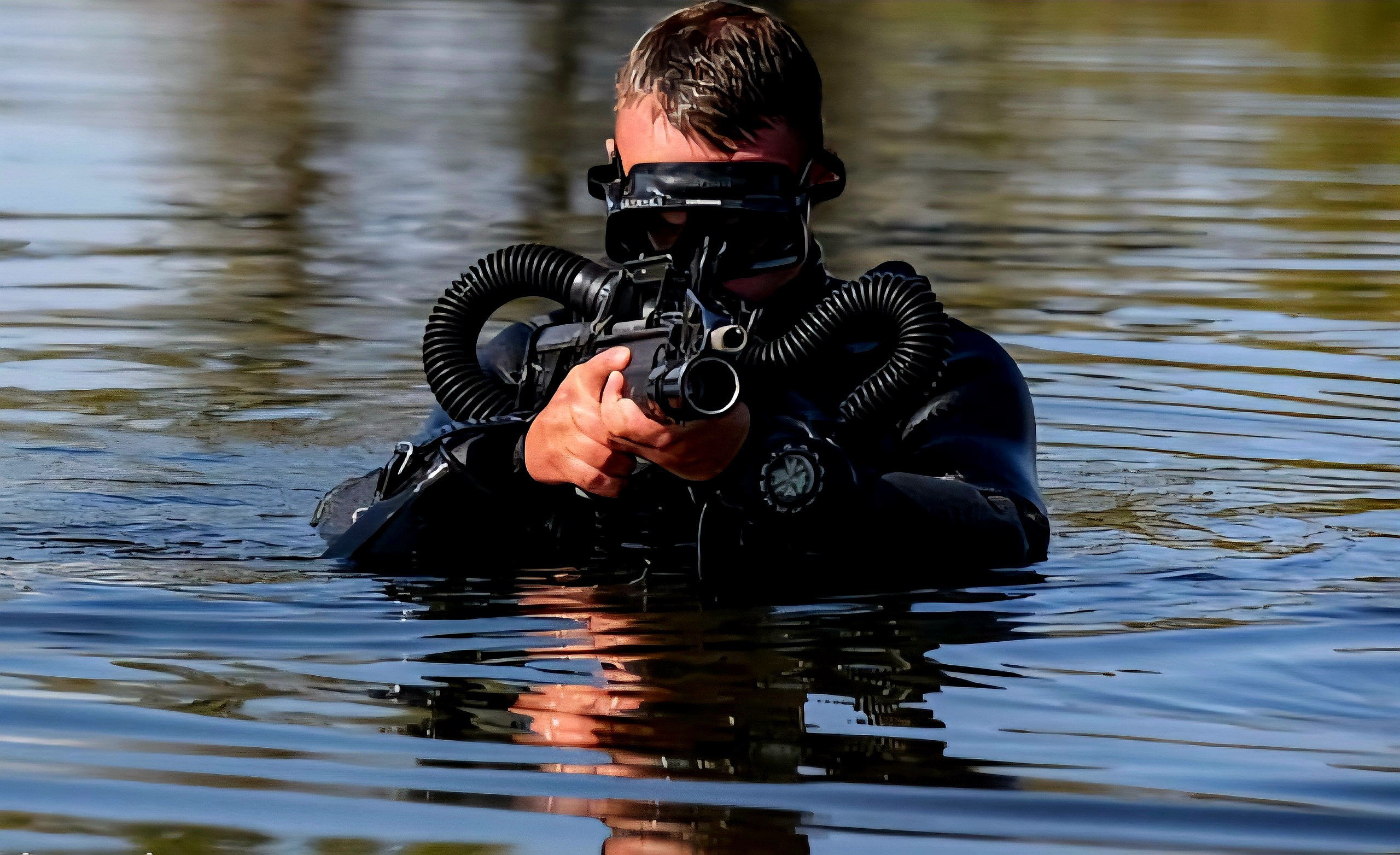
Russian Spetsnaz train to come out of cold, black water ready to kill. No weapon swap. No pause. No fumbling for gear. They surface with rifles that work underwater and on land, and they keep moving. Their tool for that job is the Avtomat Dvukhsrednyy (ADS) amphibious assault rifle, and it exists for one reason: to fight where most soldiers cannot.
Russian Naval Spetsnaz training with a re-breather and an ADS Assault Rifle. Image Credit: Reddit
The ADS was developed by the Tula KBP Instrument Design Bureau for maritime special operations units under Russia’s Department of War. It replaces the older APS underwater rifle, which was effective underwater but useless once boots hit dry ground. The ADS fixes that problem by doing both.
On land, the ADS is a compact bullpup rifle chambered in 5.45×39mm. It fires standard AK-74 ammunition with an effective range out to roughly 500 meters. Muzzle velocity of around 2950 feet per second, and the cyclic rate is about 700 rounds per minute. It handles like a short AK, with controllable recoil and familiar ballistics.
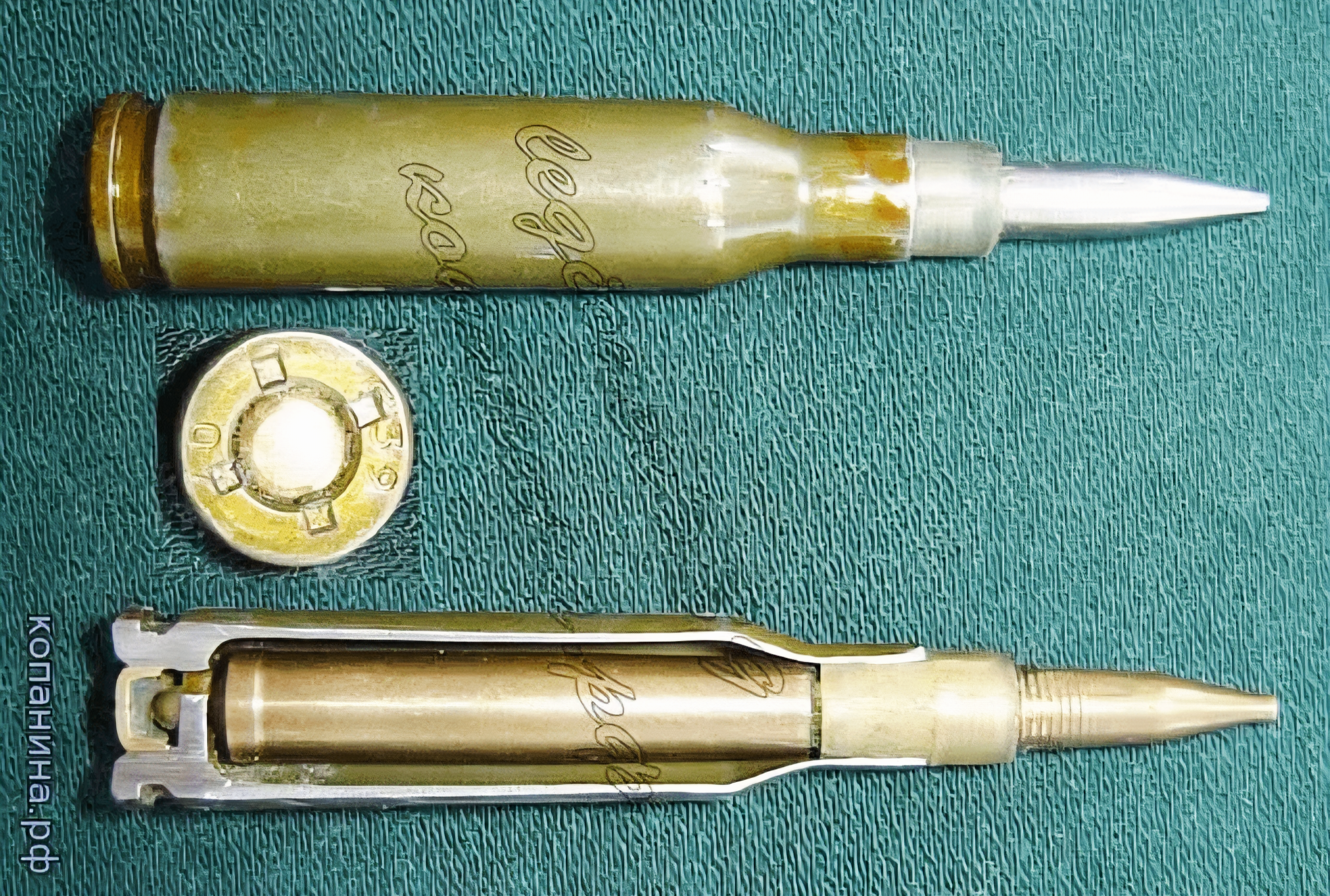
Standard rifle bullets fail almost immediately in water. Drag destabilizes them within meters. The ADS solves this with a dedicated cartridge called the PSP round. The PSP uses a long, needle-like steel projectile recessed into a standard 5.45×39mm case. When fired underwater, the projectile creates a supercavitation bubble around itself, reducing drag and keeping it stable as it travels.
Advertisement
At shallow depths around five meters, the ADS can deliver lethal fire out to roughly 25 meters underwater. At 20 meters depth, effective range drops to about 18 meters. That may not sound impressive until you remember that underwater visibility is often measured in feet, not yards. At those distances, the ADS dominates the fight.
Unlike the old APS, which fired massive steel darts from a dedicated platform, the ADS feeds its underwater ammunition from standard 30-round magazines using the same barrel.
When a diver transitions from water to land, he switches ammo, not weapons. That’s important in operations where seconds count.
Advertisement
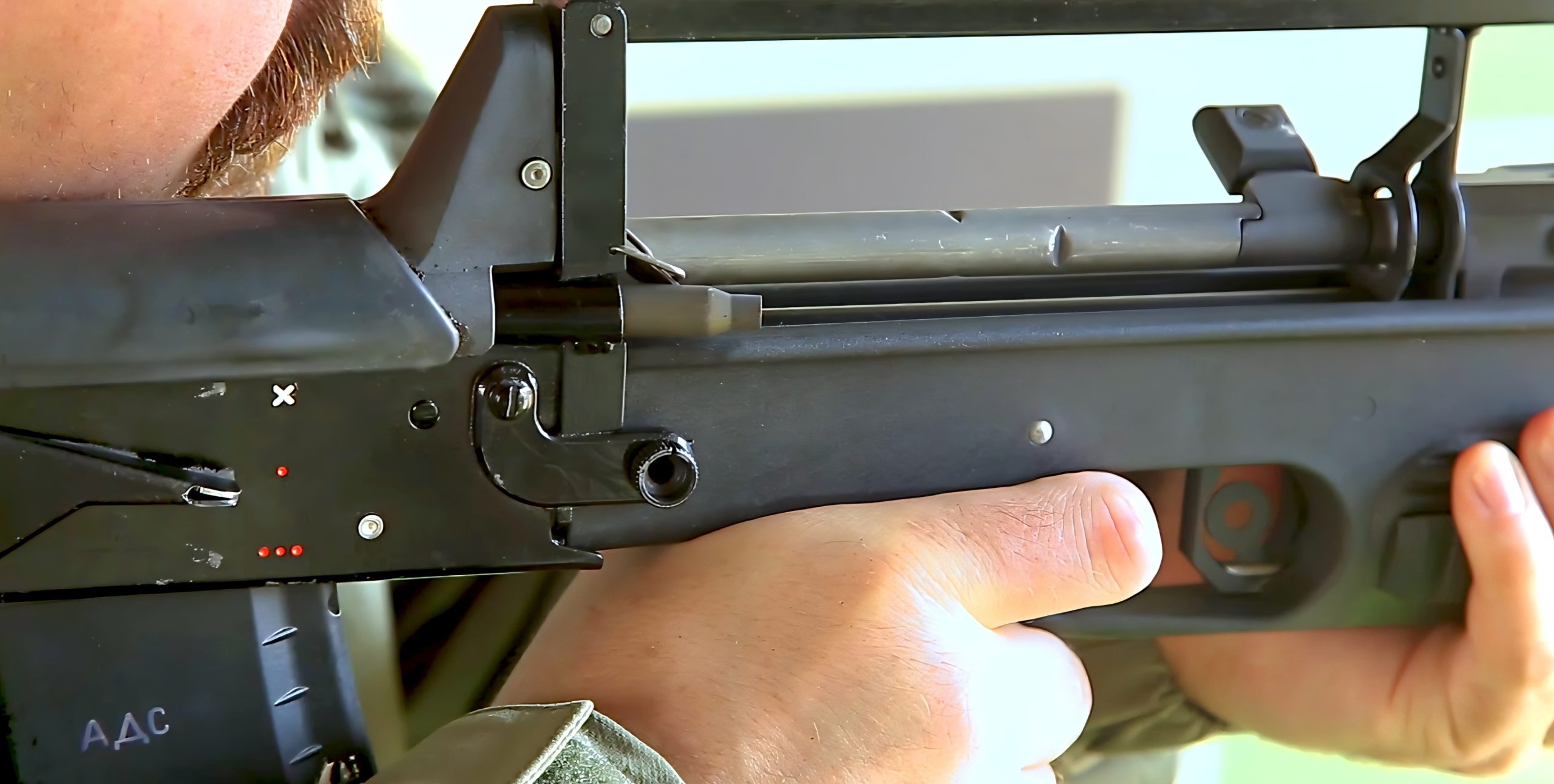
This shows the brass casing locked in place. If another round is fired, this case will eject forward. However, the shooter has the ability to pull this case free and pocket it if need be. Image Credit: Lazarev Tactical
The rifle itself is built for that environment. It uses a gas-operated rotating bolt and forward case ejection, allowing true ambidextrous use. Forward ejection is critical in a bullpup and keeps spent brass out of the shooter’s face in confined spaces. Not only that, but the rifle only ejects the last casing when the next round is fired, giving the operator an opportunity to collect each spent case.
The ADS is also designed to carry a standard Russian underslung 40mm grenade launcher, most commonly the GP-34. Mounted beneath the rifle, the launcher gives naval Spetsnaz immediate access to high-explosive, fragmentation, smoke, and illumination rounds without changing weapons. This capability is critical in port raids, ship boardings, and littoral fights where targets may be behind bulkheads, vehicles, or hard cover that rifle fire will not solve. The bullpup layout keeps the combined system compact and balanced, even with the added weight. With the launcher attached, the ADS becomes a true multi-role weapon, able to clear confined spaces, mark targets, or break contact immediately after transitioning from water to land.
The ADS can mount optics on a Picatinny rail and accept a GP-34 40mm grenade launcher. With the launcher attached, the system weighs about 4.6 kilograms.
Russian naval units began fielding the ADS in limited numbers around 2009. Public footage and reporting indicate it was quickly favored over the APS due to better accuracy, easier handling, and far greater flexibility. It is not a general infantry rifle. It is a specialist weapon for insertion from the sea, rivers, and ports.
If Western special operations forces pride themselves on owning the night, Russian naval Spetsnaz aim to own the waterline. Silent entry. Cold surf. Rifles that work before and after the breach.
If nightmares had nightmares, this is what they would look like.
Advertisement
What readers are saying
Generating a quick summary of the conversation...
This summary is AI-generated. AI can make mistakes and this summary is not a replacement for reading the comments.










COMMENTS