Staff Sergeant Alan E. Magee survived a 22,000-foot fall from a B-17 bomber over occupied France in 1943, crashing through the glass roof of Saint-Nazaire railroad station without a parachute. The station's structure absorbed enough impact to save his life, defying the laws of physics and expectations.
Key points from this article:
The article details Alan E. Magee's miraculous survival after falling from a B-17 Flying Fortress at 22,000 feet over Saint-Nazaire, France, on January 3, 1943.
How Magee's fall was broken by the glass roof and steel girders of the Saint-Nazaire railroad station, which absorbed enough force to prevent his death.
Why Magee's survival is significant: it defies both physical expectations and wartime fatalism, highlighting extraordinary events during World War II.
Updating summary...
Staff Sergeant Alan E. Magee: The Man Who Fell 22,000 Feet From the Sky and Lived
SOFREP News Team
Speed
1x
Listen
COMMENTS
Alan Magee fell 22,000 feet from a B-17 without a parachute, crashed through a train station roof in France, and survived.
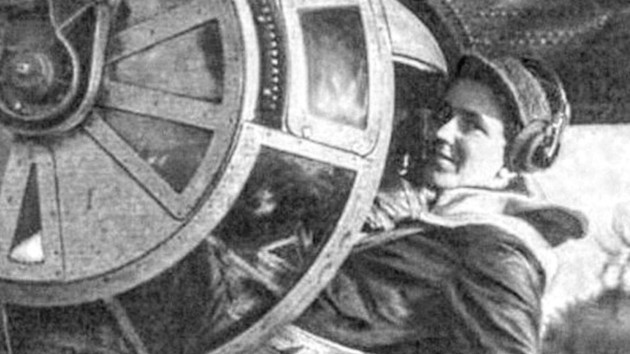
Staff Sgt. Alan E. Magee squeezes into the cramped ball turret of a B-17 Flying Fortress circa early 1940s. Image Credit: American Air Museum in Britain
War aviation teaches its crews a hard truth early. Gravity is undefeated. At 22,000 feet (6,700 meters), there are no second chances. On January 3, 1943, in occupied France, Staff Sergeant Alan E. Magee fell out of a B-17 Flying Fortress without a parachute and LIVED.
Advertisement
He should not have survived. Physics says he should not have survived. But war does not always follow clean rules.
A Young Gunner in a Global War
Alan Eugene Magee was born on January 13, 1919, in Plainfield, New Jersey, the youngest of six children. When the attack on Pearl Harbor dragged the United States into World War II, Magee did not hesitate. He enlisted on January 7, 1942, in Newark, New Jersey.
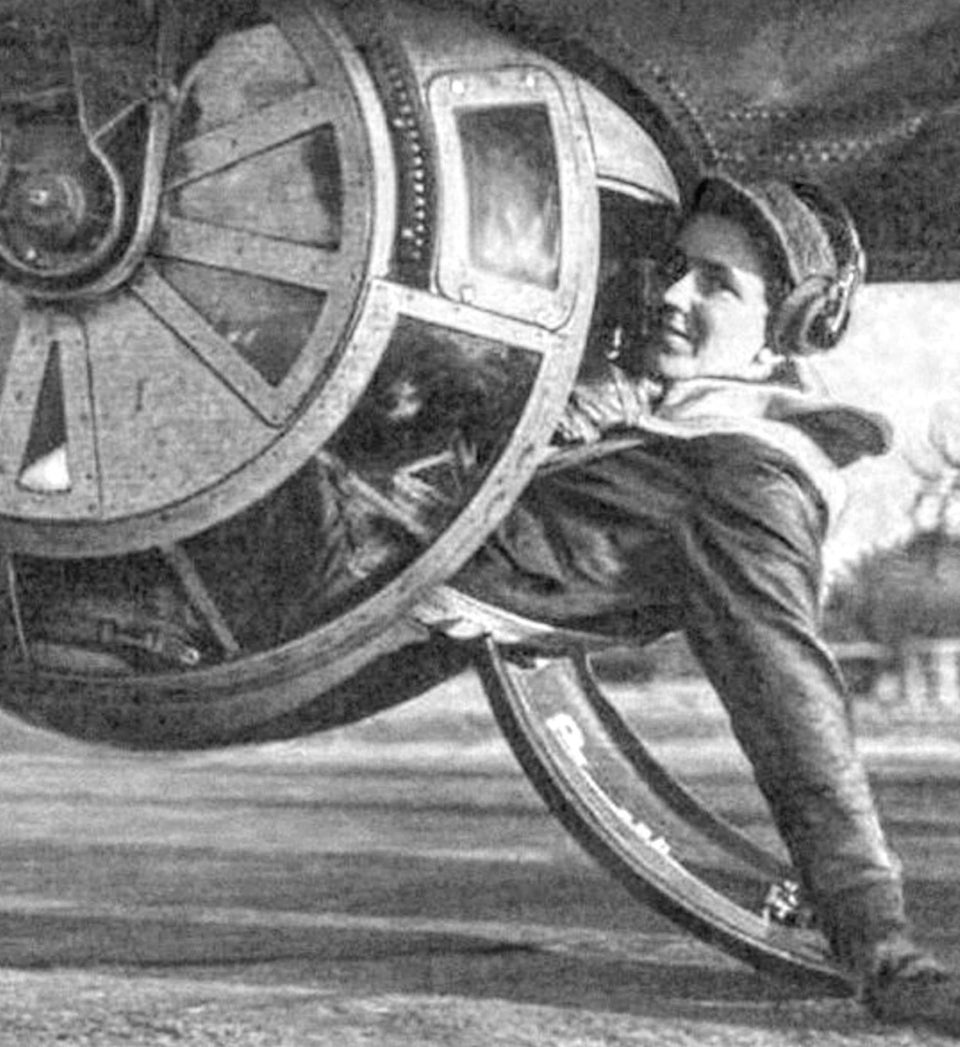
He trained as a ball turret gunner, one of the most vulnerable positions in the American bomber fleet. The ball turret sat beneath the belly of the B-17, exposed to flak and fighters, suspended between sky and earth with no room to move and nowhere to run.
Advertisement
Magee was assigned to the 303rd Bomb Group, 360th Bomb Squadron, flying B-17 Flying Fortresses out of Molesworth Airfield in England. By early 1943, he had completed six combat missions over occupied Europe. Each one carried odds that grew worse by the week.
The Seventh Mission
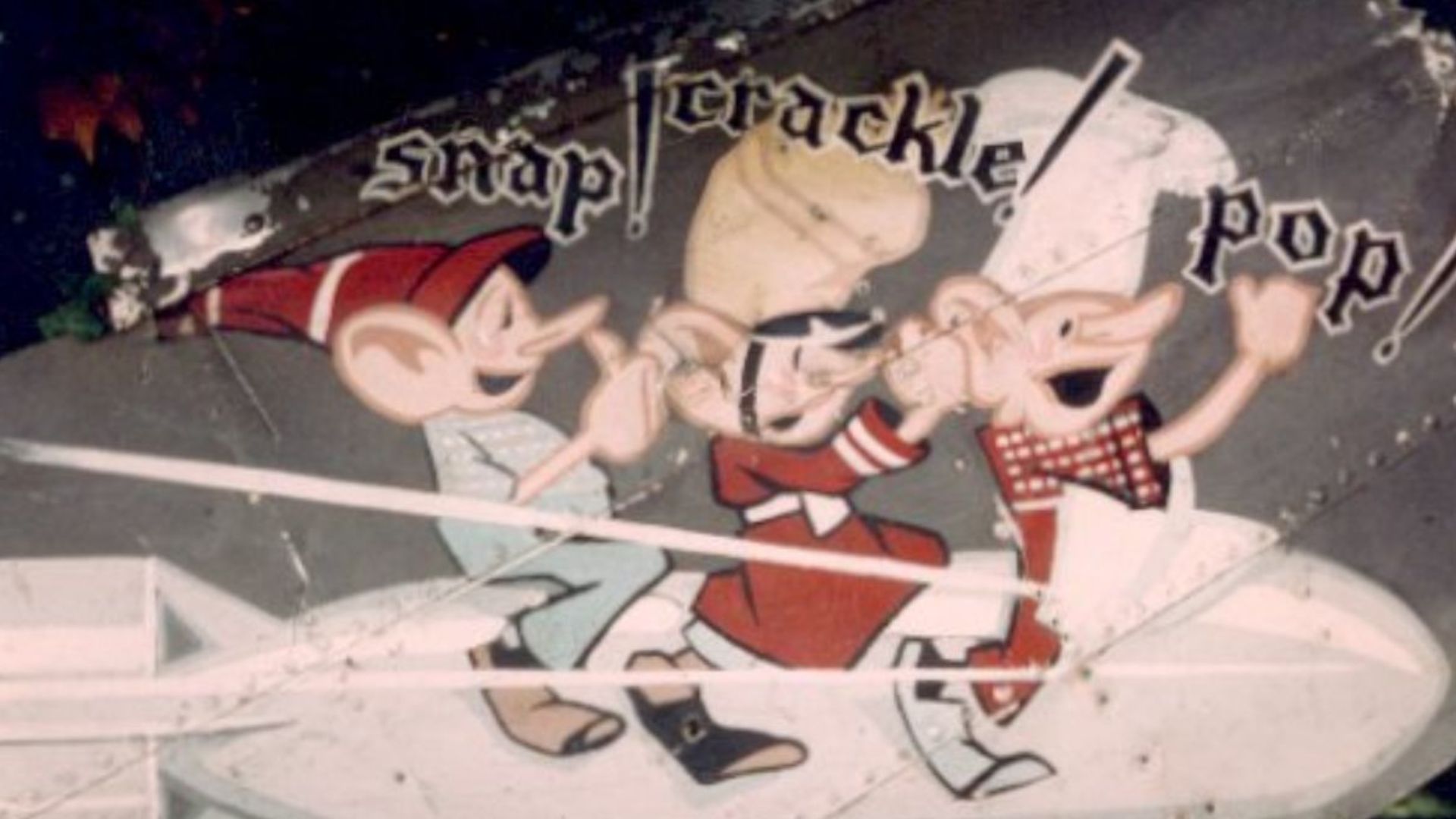
On January 3, 1943, Magee flew his seventh mission aboard B-17F 41-24620, nicknamed Snap! Crackle! Pop! The target was the German U-boat pens at Saint-Nazaire, a heavily defended port critical to the Battle of the Atlantic.
Advertisement
Staff Sgt. Alan Magee crammed into the belly gunner of the B-17F Flying Fortress. Image Credit: American Air Museum in Britain
German flak found the bomber over France.
Explosions tore through the aircraft. Magee’s ball turret took direct hits. Shrapnel shredded the turret and destroyed his parachute. The B-17 entered a violent spin. Somewhere in that chaos, Magee was knocked unconscious and thrown clear of the aircraft at an estimated speed of 120 miles per hour.
He fell 22,000 feet.
Advertisement
Magee did not hit the ground.
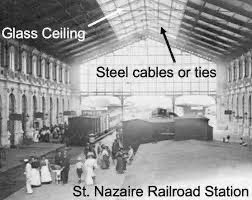
He crashed through the glass roof of the Saint-Nazaire railroad station, smashing through steel girders before coming to rest on the station floor. The structure absorbed enough of the impact to keep him alive, though barely.
His injuries were catastrophic. He suffered 28 shrapnel wounds, multiple broken bones, severe internal injuries, lung and kidney damage, a crushed nose, a damaged left eye, and a right arm that was nearly severed.
German civilians and soldiers pulled his body from the wreckage. Many assumed he was already dead.
He was not.
Nose Art panel from crashed B-17 “Snap! Crackle! Pop!” at St. Nazaire, France, January 3, 1943. Image Credit: 303rdbg.com
Magee was captured and treated by German doctors. Despite being an enemy airman, he received extensive medical care. Once stable, he was sent to Stalag 17B at Braunau-Gneikendorf, near Krems an der Donau, Austria.
Recovery was slow and painful. Survival itself was the victory. Magee endured captivity and became a prisoner of war from then on until Allied forces liberated the camp in May 1945.
Recognition and Memory
For his service, Magee received the Air Medal for meritorious conduct and the Purple Heart for his wounds. His story became one of the most improbable survival accounts of the air war over Europe.
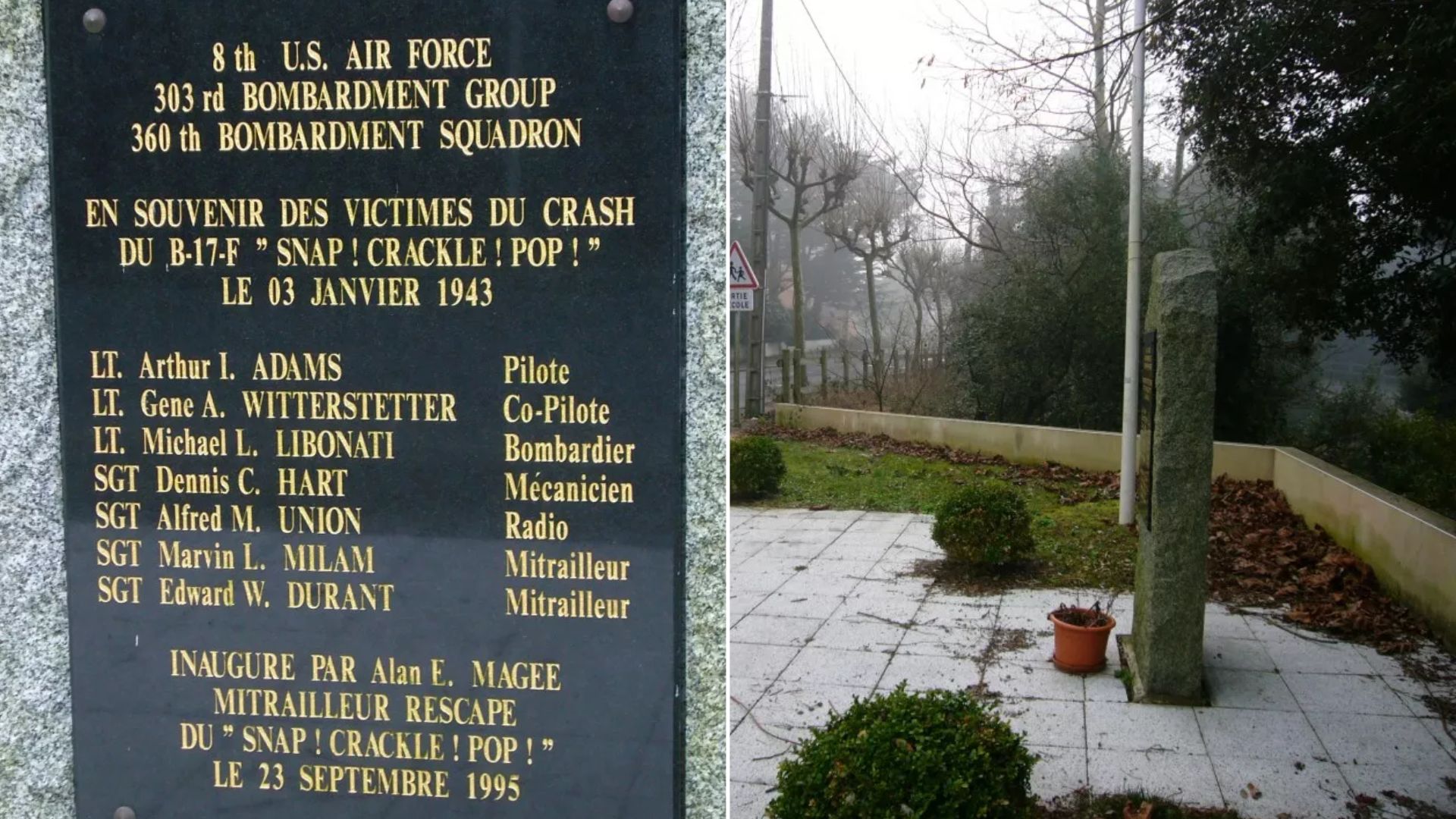
In 1993, the city of Saint-Nazaire erected a six-foot memorial honoring Magee and his crew on the 50th anniversary of the mission. It stands where his fall ended, and his survival began.
B-17 (41-24620) Snap! Crackle! Pop! Memorial located western side of the Boulevard de Cocqueray, 2009. Image Credit: Aérosteles
Magee returned home, married, and refused to let the war define the rest of his life. He earned a pilot’s license and worked in the aviation and airline industry until retiring in 1979. He later settled in New Mexico.
He died on December 20, 2003, at age 84.
Why His Story Endures
Magee’s survival resists clear explanation. No training, no courage, no equipment accounts for falling 22,000 feet without a parachute and living. Chance played its role, but so did human restraint, medical skill, and a structure that broke just enough to save a life.
When he returned to France in the 1990s, he stood beneath the glass-roofed railroad station where his fall ended. Looking up, he offered a quiet, disarming assessment of the place that should have killed him: “I thought it was much smaller.”
St. Nazaire railway station circa 1940s where Magee fell. Image Credit: via X
That line endures because it fits the man and the moment. No exaggeration. No mythology. Just a survivor measuring distance, time, and fate long after gravity had already taken its shot.
Advertisement
What readers are saying
Generating a quick summary of the conversation...
This summary is AI-generated. AI can make mistakes and this summary is not a replacement for reading the comments.










COMMENTS