

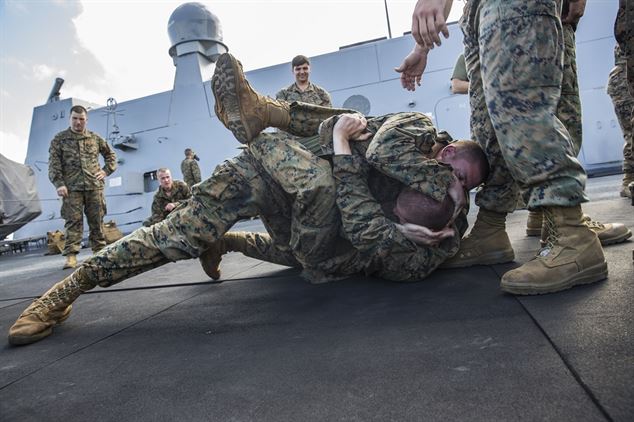
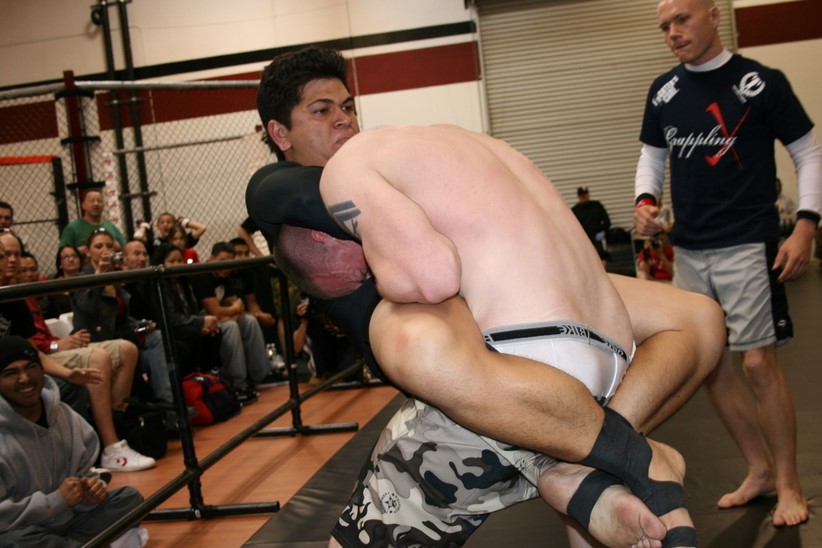
It’s human nature to try to resist any kind of pressure put on you by your enemy. Maybe it’s a drive to show you’re stronger than him, or perhaps it’s because your body inherently understands his goal is to hurt you, but in some instances, you should stop yourself from allowing your body to do so. In one situation I found myself in, I had a guy try to subdue me by going to his back (in a bar, no less) and attempt to squeeze the life out of me with his legs. It would have taken a lot out of me to try to break the grip his legs and intertwined ankles at my back provided, so instead, I just kept my grip on the wrist lock I’d put him in, waited for him to tucker himself out, and rolled him over into an arm-bar.
You don’t need to out-strong your opponent when ground fighting, you need to outthink him. If I had exhausted myself by trying to overpower his legs with my arms, I could have opened myself up to striking (which is why the wrist lock was important) or having the life actually choked out of me because I was too tired to stop him. Instead, I recognized that his attack offered very little chance of actually doing me real harm, and opted to just weather the discomfort until he effectively beat himself.
3. Control their hands and head.
While struggling on the ground with an opponent, consider the weapons they can employ. Their hands can be used to strike as well as to grab, pull, or push. The head can be used to strike as well, but don’t forget about the mouth. Trust me when I tell you that you only need to get bitten really hard in a fight once to learn that a desperate man isn’t above trying to take a bit of you home with him along with all the beer sloshing around in his stomach.
Whether your intent is to subdue or to kill, you need to neutralize your opponent’s offensive weapons. You can do this by closing the gap between the two of you so as to prevent your opponent from getting enough room to strike you with his head or hands with any real force, but be aware that this could open you up to biting. Try to gain control of your opponent’s hands while keeping your face out of head-butt range and your skin out of his mouth.
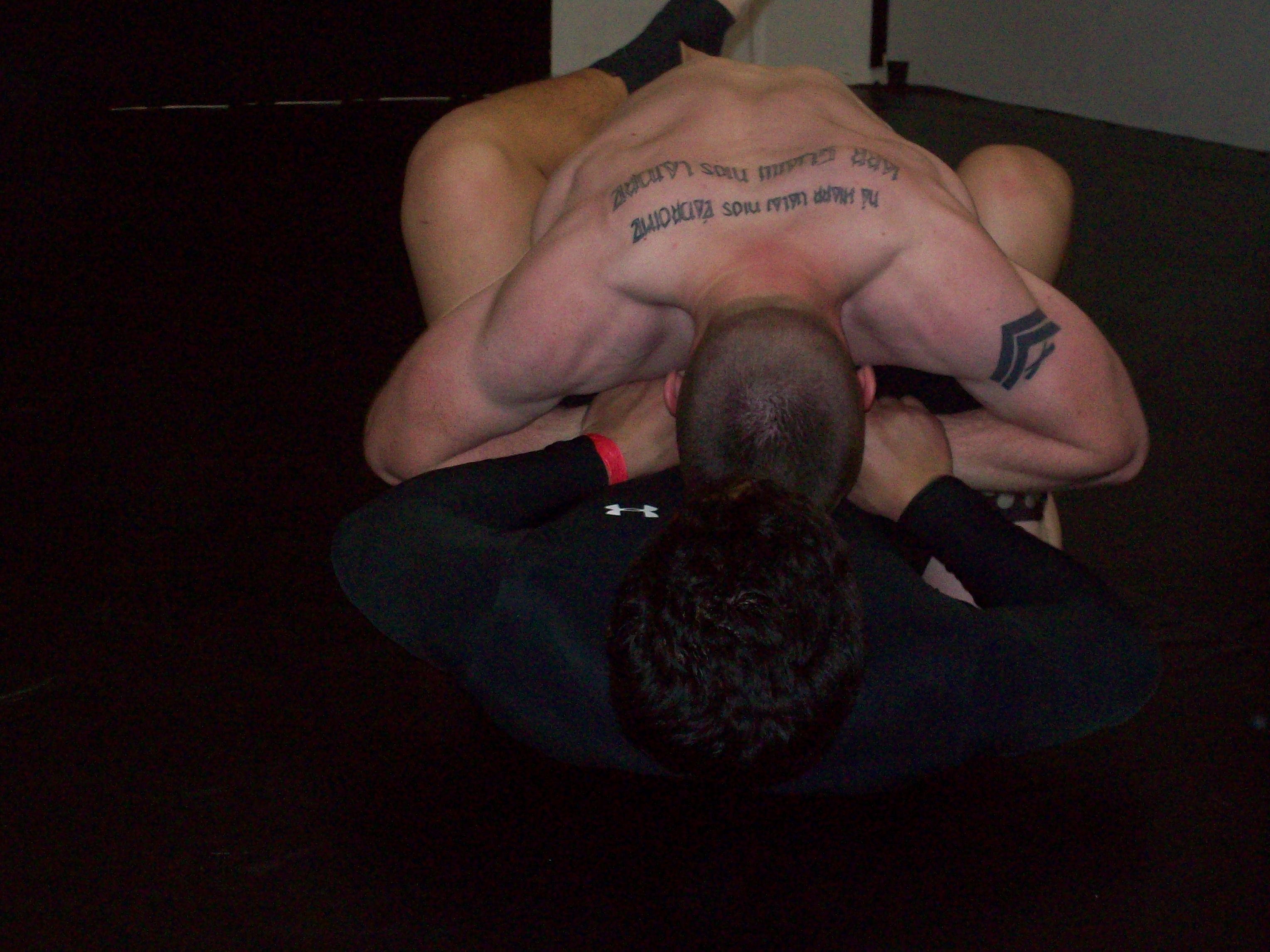
Often, placing your forehead on your opponent’s chest (particularly while in his guard) will give you a means to apply weight to keep him on his back while keeping your hands free to manage his. If he’s taken one of his hands out of the fight himself (by keeping a grip on your shirt or landing with it under his body, for instance), all the better.
4. Think about your own body when looking for submissions.
Submissions are a great way to get and maintain control over an opponent. We tend not to like to have our bones broken, so if you can put your enemy in a position where you get to decide if his bones stay intact, he’ll likely friendly up in a hurry. So what do you do if you’ve never gotten around to learning any good submissions?
I’ve spent a lot of time teaching people to grapple, and a common concern I have presented by beginners is a lack of offensive weaponry. Submissions can be complex, so when you’ve only been taught one or two, you tend to feel limited in your options. My advice to them is the same as my advice to you: Don’t get too hung up in trying to execute the triangle choke you saw on TV. Instead, think of what your body is capable of doing, and try to make his do the opposite of that.
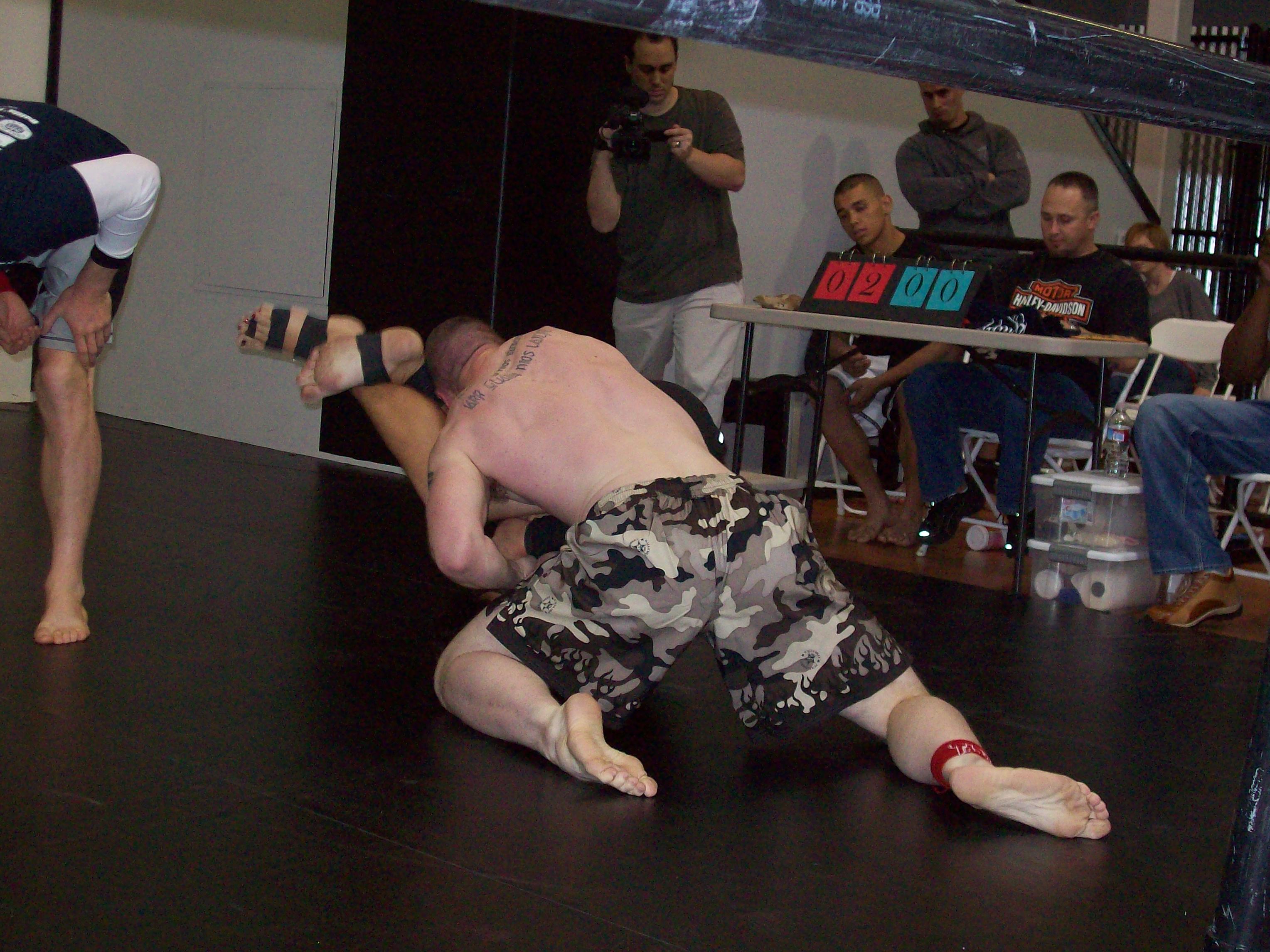
Do you think you can bend your wrist far enough backward to touch your middle finger to your forearm. His probably can’t either. Does your elbow have 200 degrees or more of flexion? His doesn’t either. Do your knuckles work bending left to right as well as they do front to back? You get my drift.
You don’t need to be a submissions expert to land a good submission, you just need to understand how joints move, and move them in a way they aren’t built to handle.
5. Keep moving.
Grappling is like chess in that you need to look for opportunities and try to take advantage of them. But perhaps a better comparison might be working on your car. If you turn the key and your car won’t start, you begin diagnosing potential problems until you find a solution. Is the battery dead? No, then check to see if it’s a fuel issue. Fuel not the problem? Maybe there’s an issue with the MAF sensor, and so forth. Grappling is no different. Can you land a wrist lock? Nope, he slipped out of it. OK, then let’s try a key lock. That didn’t work. All right, then what’s next?
Don’t hang yourself up on trying to land a specific submission, or you’ll miss opportunities for other offensive movements, particularly if you’re too concerned with that last one that didn’t work. If you lose your grip and take a good shot to the face, focus on getting control back, then on finding your next submission or striking opportunity. Try something, see if it works, and if it doesn’t, try something else.
Remember, ground fighting should be considered a last resort in nearly any dangerous situation, but if you find yourself on the ground, you can win the fight simply by keeping calm, conserving your energy, thinking through your submissions, and trying one thing after another until your opponent gives up fighting or gives up breathing.
In either event, you’ll live to ground fight another day.
Featured image courtesy of the U.S. Marines








COMMENTS