
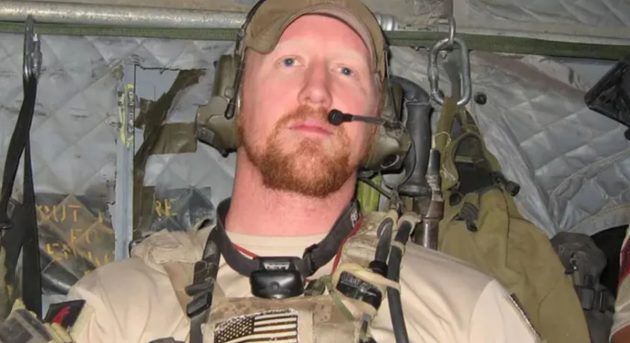
When news broke that Osama bin Laden had been killed, I was still in uniform and two months from my ETS date. The details were spare: a raid in Abbottabad, a brief firefight, a confirmed kill, and a burial at sea from the deck of the USS Carl Vinson. I believed the part that mattered. A team of SEALs had located and eliminated the man responsible for September 11. Still, like many soldiers, I had questions. It was 2011, and the internet was already a swamp of speculation. Some insisted bin Laden had been captured alive and interrogated. Others claimed the burial was a cover for something stranger. I didn’t buy any of it, but after a decade of war, America no longer trusted simple narratives.
For me, the moment carried a personal charge. I had been in middle school on the morning nearly three thousand Americans were murdered on live television. The attacks defined my generation and shaped my decision to enlist: a path that eventually led me to Iraq. Hearing that the architect of that day was dead brought a muted sense of closure. Not triumph, but a final bracket on a long sentence. My first enlistment would end with the knowledge that the nation had found and killed the man who set these wars in motion.
The Man Behind the Shot
Two years later, in 2013, Esquire published Phil Bronstein’s profile of the man they called “the Shooter.” The piece was not a celebration of violence. It opened instead with the problems most Americans recognize: a veteran leaving service with a battered body, a young family, and no guarantee of health care or steady income. Only after grounding the reader in the ordinary did the article trace his path into the Navy, his ambition to become a sniper, and the long ascent that eventually placed him inside Naval Special Warfare’s most selective ranks.
The portrait was clear. This was not a drifter chasing attention but a trained SEAL sniper forged under the old curriculum: someone who had passed through the narrowest gates the community offers and carried the record to match. The anonymity Esquire granted him mattered. It shielded his family and, in a quiet way, underscored the cost of the work. The profile did not mythologize the raid or inflate his role. It presented the man behind the shot in plain view, stripped of theatrics. Bronstein drew on multiple sources inside the community to corroborate the Shooter’s account, a quiet nod to the magazine’s due diligence.
Breaking the Code of Silence
The bin Laden raid had already entered public consciousness by then. Matt Bissonnette’s No Easy Day, published in 2012 under the pseudonym “Mark Owen,” had been the first detailed account from inside the operation. His identity became public almost immediately.
Inside the Teams, that book was viewed as a breach of the code: no names, no stories, especially not about a mission of that magnitude. It was the most consequential kill-or-capture operation since the Second World War, and it had been carried out by operators who had spent a decade rotating through Iraq, Afghanistan, and the Horn of Africa. Bissonnette described the approach up the stairs but did not identify who fired the final shots. That omission, deliberate or not, left space for Esquire’s profile to land not as a rival narrative, but as the first to place a human being behind a moment the world thought it already understood.
Rob O’Neill’s anonymity did not endure. The Esquire profile moved through the veteran community, then the broader public, and the circle around the unnamed “Shooter” tightened with each retelling. O’Neill himself stayed quiet. He neither sought attention nor tried to steer the narrative. But identities in small worlds rarely stay hidden, and a mission of that scale created its own gravitational pull.
A family member, proud and unguarded, mentioned his role in a local Montana gathering; amid grumbles from old peers over the code, the information climbed the ladders of national media. When his name finally surfaced, it did not feel like a deliberate unveiling. It was simply the moment when the pressure around the story outgrew his ability to stay in the background. O’Neill had tried to keep faith with the community’s silence, but the world had already begun assembling the pieces.
People often cheapen what it means when a single name becomes tied to an event of this magnitude. O’Neill never sought that position. Once his identity slipped into public view, the risks were immediate and permanent. It becomes the practical question of where he can go, who knows his face, and how he keeps his family safe in a world where some people still want him dead.
The first wave of pressure did not come from jihadists. It came from home. Long before the Anti-Hero crowd found a market in attacking his reputation, parts of the SEAL community had already voiced their discomfort with anyone speaking publicly about the raid. For them, the code of silence was the only acceptable posture, and any deviation—no matter how involuntary—was treated as a breach. A handful of commentators outside the military echoed that sentiment, painting O’Neill as a man seeking attention rather than someone trying to navigate an unwanted spotlight.
The Rise of a Cottage Industry
That discomfort found fresh amplifiers in 2023, when the Antihero Podcast—hosted by Brent Tucker, a measured ex-Delta voice, and Tyler Hoover, his sharper-edged co-host—arrived as a self-appointed corrective. From brews over bad calls, it veered to public audits, with O’Neill as its prime exhibit. His clips were dissected for tells. A body-language consultant was brought on to flag “deception” in old interviews. None of the hosts had been on the raid or even inside the unit, yet they claimed the referee’s whistle.
The actual debate, among those qualified to have one, is narrow. It concerns the order of fire in a small, dark stairwell: whether O’Neill was the first to shoot, or the second. Some accounts suggest the point man fired first; others say O’Neill’s rounds were the first to strike. But no credible account disputes that he entered the room and fired. That bin Laden was killed at close range. That the mission succeeded.
Among his peers, the greater discomfort stemmed not from the act, but from what followed: namely, going public. That line, however, had already been crossed. Bissonnette had published No Easy Day while still in uniform, without command approval, and with a clear profit motive. O’Neill remained anonymous for years. He didn’t seek the spotlight. It found him.
The podcast’s reach grew—tens of thousands of subscribers, segments tuned for outrage, a rhythm built on doubt. Tucker, drawing on Delta’s shadows, leaned on second-hand whispers from raid-adjacent circles. Hoover amplified from the producer’s chair, stitching clips into episodes designed to unsettle. Fair questions exist in any retelling of combat. But Antihero packaged them for an audience hungry for spectacle rather than clarity. The result was a cycle where doubt became the draw, and the man who pulled the trigger became raw material.
When the Referees Falter
In 2025, O’Neill filed a defamation suit against both hosts, citing a two-year cascade of innuendo and edited clips that damaged his reputation and cost him professional work. The complaint hit Westchester Supreme Court in November. But even before the filing, the show itself had begun to fracture. By early fall, Brent Tucker had quietly stepped away from Anti-Hero and launched his own Tier 1 show, offering no real explanation to listeners. What lingered was Hoover: still behind the mic, still framing himself as the last honest man in a corrupted brotherhood, still asking for donations. He audits the truth in others. His own ledger sits in internal-affairs files and old reports that most of his audience will never read.
Tyler Hoover, the podcast’s co-host and a former sheriff’s deputy, resigned from the Orange County Sheriff’s Office in 2025 following an internal affairs investigation into a series of serious allegations. The most severe involved a pattern of domestic abuse reported by his ex-wife, a former deputy, who described multiple instances of physical violence—chokeholds, threats, door-kicking confrontations—that left her hiding in fear. These episodes, she said, marked their relationship for years. The same investigation documented communications with known escorts, including a Venmo payment labeled “massage,” and a series of text exchanges arranging paid sexual encounters while he was in uniform. Investigators concluded that department policies had been violated. No criminal charges were filed; the statute of limitations had expired. But the findings were clear.
Hoover publicly denied he was ever under investigation. That denial did not hold up.
This is the man who had spent years branding himself as a truth-teller. Who called out fellow veterans for exaggeration, for monetizing valor, for violating a brotherhood’s unspoken codes. Who positioned himself as a moral referee in a community that often struggles to police its own narratives. And yet, when placed under the same scrutiny he demanded of others, his own record buckled. The judgment he dispensed so freely never turned inward.
The Weight of Carrying a Story
I’ve been through it myself. Since coming back from Ukraine, I’ve dealt with people online who’ve attacked my name, twisted facts, and tried to discredit my service. Most of them didn’t know me. They weren’t there. But they branded themselves as experts anyway—using my story for clicks and pushing their version of the truth because it fed their platform.
So I understand what Rob O’Neill is up against. Not the headlines or the lawsuits, but the way your story gets taken from you. The way strangers claim authority over your experience, talk like they were in the room, and get rewarded for the doubt they spread. I don’t know the exact sequence of shots in Abbottabad. I wasn’t there. But I know the type of man who signs up for that kind of mission. And I know what it’s like when the war follows you home, long after the last patrol or deployment is over.
It is an absolute disgrace that veteran-influencers such as Brent Tucker have turned their elite military pedigree into a license to act as scandal merchants.
The kind of men who spent years demanding discipline from others, treating silence as a virtue, now trade on controversy like it’s just another form of currency. It cheapens their acumen. It hollows out the authority they claim to defend.
And in the end, it says less about the man they’re attacking than it does about the industry they’ve chosen to build: a place where doubt pays better than truth, and where tearing down another veteran is easier than living up to the standard they insist on for everyone else.








COMMENTS