

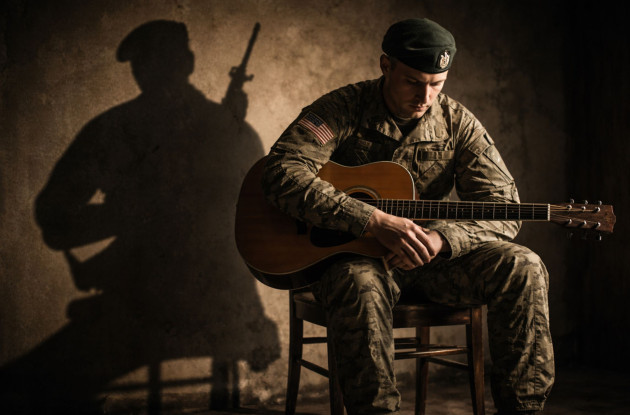
People look at that résumé and don’t know where to put me. Musician or cop? Artist or operator? A tactically-sound creative…? As if I must pick a lane.
But those worlds aren’t as far apart as people think. The discipline required to master an instrument, the hours, the focus, determination, and the ability to read a room and adjust in real time. It’s the same discipline that kept me alive hanging out in gang dens. The emotional depth that lets you feel music deeply enough to actually play it with soul is the same depth that helped me build rapport with killers who would’ve buried me if they’d sensed a fake.
So, the capacity to feel and leverage emotion isn’t a liability. It’s an asset…Well, if you can control it.
That’s the part Sadler lost.
It is common knowledge that special ops generally don’t select robots. It selects for adaptable, emotionally intelligent, creative problem-solvers. Perhaps guys who can read a room in a foreign language, build rapport with village elders one hour, and conduct a raid the next. Guys who feel things deeply, and leverage that depth to connect, to lead, to accomplish missions that require balance and discretion…Certainly more than just pulling triggers.
That emotional reservoir can be a weapon that separates a technician from a strategic asset.
But… reservoirs need self-management, discipline, and a controlled outlet.
Emotion plus discipline equals creativity, which equals controlled violence applied precisely and when necessary, which equals mission success.
But emotion minus discipline? That’s a flood. And floods destroy everything in their path.
In 1978, Barry Sadler shot a man named Lee Emory Bellamy in a Nashville parking lot.
The story varies depending on who tells it. An argument over a woman. A confrontation that escalated. Sadler claimed self-defense. The courts called it second-degree murder, later reduced to voluntary manslaughter. He served less than two years.
But what sticks out to me is this: Here’s a guy who had the discipline to complete Special Forces training, survive Vietnam, and channel whatever was inside him into a #1 record. Yet he pulled a trigger over some jackass harassing his girl in a parking lot.
The fire was still there. The hearth was gone.
After Nashville, Sadler drifted. He moved to Guatemala in the early ’80s, reportedly training Contra guerrillas. He ran with mercenaries. Drank heavily. Brawled often. He wrote pulp novels about a character called Casca, an immortal Roman soldier cursed to wander the earth fighting in every war until the second coming.
I can’t help but note the irony. A man who couldn’t stop fighting, writing about a man who couldn’t stop fighting.
The art is telling.
In 1988, Sadler was found in a cab in Guatemala City with a bullet in his head.
The official story was that it was a robbery gone wrong. Others whispered it was self-inflicted. Some said it was connected to a woman (please, not again). But no one really knows.
He survived… technically. But the brain damage was catastrophic. They flew him back to the States, where he lingered for over a year before dying in 1989. He was only 49.
The song outlived him, as is the beauty of sharing art. It still plays at military funerals. It still brings grown men to tears. It still captures something true about sacrifice and service that transcends politics and time.
The man who wrote it? He’s a cautionary tale whispered into the liner notes.
We should all remember Sadler when considering what separates the guys who land the plane from the ones who crash.
It’s not an absence of intensity or numbing yourself into a functional robot. The best operators I’ve known (the best musicians, too) both accomplished their missions and felt. That depth made them exceptional, self-regulating even.
The difference is the hearth. Fire, without that containment, doesn’t care whether it’s warming your family or consuming your house.
The world needs warrior-poets. It always has. The men who can fight and feel, who can destroy and create, move history.
Barry Sadler moved history. For five weeks in 1966, he was the voice of American sacrifice.
Then he burned it all down.
—
Tegan Broadwater spent 13 years with the Fort Worth Police Department, including two years assigned to the FBI working deep undercover inside a violent Crip organization. That operation, detailed in his book Life in the Fishbowl, resulted in 51 convictions. He has since founded Tactical Systems Network, an armed security & protection firm primarily staffed by veterans, is a creative writer and musician, and hosts The Tegan Broadwater Podcast. All book profits benefit children of incarcerated parents. Learn more at TeganBroadwater.com








COMMENTS