

Then I took a gig with a Vegas-style show band in Atlantic City. The bandleader was a wannabe mobster named Vinnie Romano who introduced me to John Gotti, drunkenly screamed about respect while sporting an open bathrobe, and eventually pointed a .45 at my back as I walked away from his cabin after quitting and asking for my last paycheck.
I didn’t turn around. I just kept walking. Waited for the round that never came.
That night broke something in my peace-loving musician persona and rebuilt it differently. My nightmares that followed weren’t about fear. They were about strangling him with my bare hands… an intimate violence I’d never imagined before. I started training in street combatives. Even competed a little. I sought a way to positively channel what was building inside me.
A few years later, my brother and I got jumped leaving a nightclub. Ten guys. Two of us. Fists, kicks, shattered car windows. The last of the ten assholes stood in the road blocking our exit as we jumped into my car, screaming with hands raised in victory like he’d won something. I floored it. His knees came through my windshield.
My human-trusting, blissfully peaceful era had come to an end.
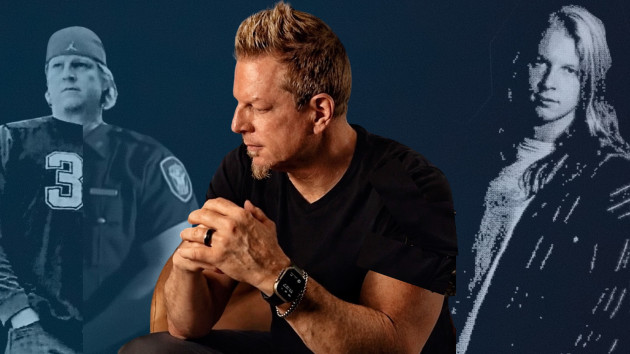
In 1996, I cut my hair and applied to the Fort Worth Police Department. I had one goal: work undercover and kick in doors. Every move I made as a rookie was calculated toward that.
By the time I pitched Operation Fishbowl, I’d written and executed nearly 500 dynamic search warrants. I’d kicked enough doors that the streets learned to predict the two days per week I ran papers, and coined them “Task Force days,” shutting down business while I was at work. But Fishbowl was different. I’d bought dope in places I had no business surviving. This was deep cover. No backup. No recording devices. Just me, a seized Mercedes, a .38 Smith & Wesson in my waistband, and a persona I had to believe in more than they did.
The rare cats who do this high-risk work, whether SOF, CIA, or law enforcement, know what I’m talking about. You don’t pretend to be someone else. You become them. You stop code-switching because there’s no switch. There’s just the mission and the version of you that can complete it.
I sat in trap houses while guns got pulled. Talked my way out of rooms that had no exit. Watched a cartel-connected killer shove a pistol into a man’s mouth over a perceived slight and had to keep my cover while blood hit the floor. I bought cocaine from killers who would’ve put me in a ditch if they’d known who I was. And I did it for two years straight, off the books, navigating a network that had murdered at least nine people and terrorized an entire neighborhood.
X-Man was my kingpin. The head of the snake. A multi-millionaire. A quiet, intelligent sociopath who ran the Crip network like a franchise and ordered hits like takeout. I’d been chasing him for years before I ever got inside. But when Fishbowl ended, we’d finally snagged him. He’d be convicted alongside 50 other gangbangers, totaling over 650 years of prison time… saving a poor, struggling neighborhood from paralyzing gang violence.
Mission accomplished?
“How does a 6’1”, 225-pound, blonde, white dude, infiltrate a violent Crip street gang?” That’s the question I always get.
But here’s the one I never do:
“What did it cost?”
Operation Fishbowl left 104 children without a parent.
I didn’t put them there. Their fathers did. They chose the game. They made the moves. I was just the key that locked them away.
But keys unlock doors as well as they lock them.
Those kids didn’t choose anything. They didn’t join the gang. They didn’t run dope. They didn’t shoot anybody. They just had the wrong dad. And now they were forced to grow up trying to figure out who they are without the one person who was supposed to show them.
Some of them will break the cycle of violence, but statistically, most won’t. Some of them are already in the game right now because nobody unlocked another door.
I think about that… a lot.
This is what inspired me to become a writer. Every dollar I make from my book, Life in the Fishbowl, goes to organizations that serve children of incarcerated parents. Not because I feel guilty. I did my job. I’d do it again.
But I realized that locking the violent criminals up was only half the battle when it comes to stopping the cycle of violence in these poor hoods. The kids left fatherless now need mentorship, coaching, and a lesson on eye contact with every handshake. Things that allow them to function enough to realize their ceiling of potential is much higher than they ever dreamed.
Those 51 convictions were necessary. That neighborhood deserved freedom from flying bullets. The innocent people who’d been trapped there, elderly, families, kids trying to walk to school through a war zone, couldn’t afford to just up and move, and deserved to have their streets back.
And now 104 kids left behind have a shot.
People always ask how I got in.
Nobody asks what I brought back out.
Now you know both.
Tegan Broadwater spent 13 years with the Fort Worth Police Department, including two years assigned to the FBI working deep undercover inside a violent Crip organization. That operation—detailed in his book Life in the Fishbowl—resulted in 51 convictions. He now runs Tactical Systems Network, an armed security & protection firm primarily staffed by veterans, and hosts The Tegan Broadwater Podcast. All book profits benefit children of incarcerated parents. Learn more at TeganBroadwater.com








COMMENTS