

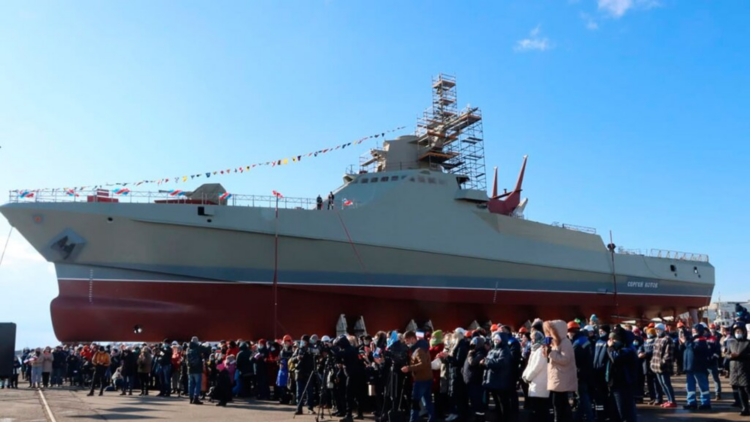
They unleashed these Magura V5 unmanned sea demons to do the job, and if the tales hold true, the Sergey Kotov went down, possibly taking part of its crew with it.
Strategic Implications of the Sinking
Knocking the Sergey Kotov off the chessboard is a hefty feather in Ukraine’s cap, dealing a sharp jab to Moscow’s sway over the Black Sea’s strategic dance floor.
With a knack for turning Russian warships into underwater relics, Ukraine’s playing a tough game, pushing the enemy fleet back and carving out a lane for grain exports—a lifeline for Kyiv and a slap to Moscow’s maritime face.
Ukraine’s been singing this tune before, boasting about sending other Russian vessels to sleep with the fishes, like the Ivanovets and the Caesar Kunikov, courtesy of their drone fleet.
Yet, these tales float in murky waters, with the fog of war and disinformation thickening the air.
The Russian Response and Tensions with NATO
On the other side, Russia’s keeping its cards close, not yet spilling the beans on the Sergey Kotov’s fate.
But they’ve been busy pointing fingers at NATO, claiming the alliance’s eyes and ears are helping Ukraine land these punches.
The recent tango between a Russian Su-27 and a French spy plane over the Black Sea just adds more spice to the pot, showing just how hot this cold war is getting.
As this chess game between Ukraine and Russia drags on, the sinking of the Sergey Kotov puts a spotlight on the slick moves and counter-moves rippling through this conflict.
With the Black Sea turning into a frontline, the stakes for both regional peace and global stability are sky-high.








COMMENTS