



The Village Stability Operations program that Bolduc helped get off the ground was working but the Obama administration shut it down and turned over the responsibility to the Afghan Army.
“This is going to be a disaster in the rural areas, and we need to do a couple more years,” Bolduc said at a meeting at the time attended by General Milley, Obama’s chief of staff Denis McDonough, and NATO commander General Joseph Dunford. They did not take his assessment particularly well. Soon afterward, Bolduc was re-assigned to Special Operations Command Africa (SOCAFRICA). Bolduc penned a column for SOFREP back in February highlighting the flawed strategy and spoke on the SOFREP podcast about this as well.
In the end, the Afghan army didn’t fight at all. It either surrendered to the Taliban or just fled leaving behind hundreds of millions of dollars of U.S. equipment. But the indications were certainly there.
US ‘Incapable’ of Evacuating American Civilians to Kabul Airport
On Wednesday, Defense Secretary Austin acknowledged that the U.S. does not currently have the capability to safely escort Americans in Kabul to the city’s airport for evacuation.
“I don’t have the capability to go out and extend operations currently into Kabul,” Austin said, in a rather stunning admission. Rather, the State Department said that it is relying on the agreement with the Taliban to safely withdraw Americans.
General Milley said that “we’re going to work that 24 hours a day, seven days a week, and we’re gonna get everyone that we can possibly evacuate — evacuated. And I’ll do that as long as we possibly can — until the clock runs out or we run out of capability.”
That italicized portion of his statement has ominous connotations; perhaps he just misspoke.
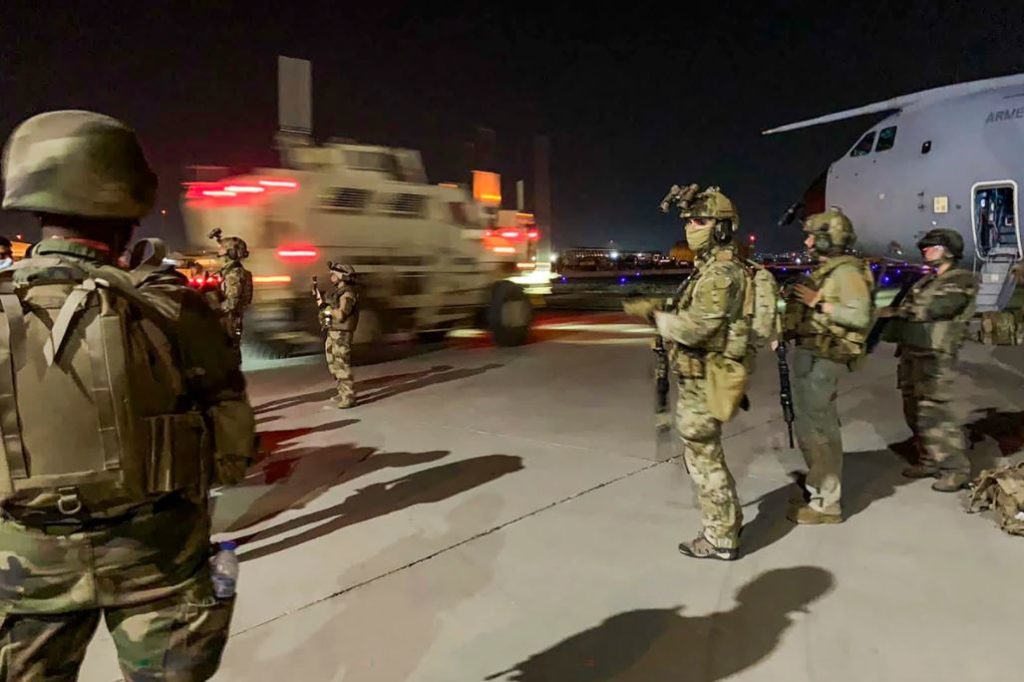
But while the 5,000 American troops remain rooted at the airport, French, British, Canadian, and Australian special operations troops were going into Kabul and evacuating their citizens and in some cases Americans.
While President Biden doubled down on the assertation that the American government and military had “prepared for every scenario,” the fact remains that the administration was ill-prepared for this. Knowing that the State Department’s vetting for Afghans who worked for the U.S. takes a year or more, why didn’t the administration intensify efforts to get them and U.S. diplomats out quicker?
Milley said that the time for after-action reviews would come later and their focus now is getting everyone out safely. But the question now is will those after-action reviews consist of more gaslighting from the administration?
Trump Administration’s Plan
Another interesting story surfaced on Thursday as Defenseone spoke with former Acting Defense Secretary Chris Miller. told Patrick Tucker that the U.S. never saw a total withdrawal as inevitable and that the Trump administration planned on leaving behind a special operations counter-terrorist contingent.
In the Defense One article, Miller said that “The whole policy strategy going forward was ‘Ghani is going to have to deal with the Taliban.’ And it wasn’t going to be a 50-50 split between the Afghan government and Taliban. We knew that. It was going to be 75-25 [majority Taliban], and then you flip this thing into an interim government,” he said.
Why wasn’t this discussed with the incoming administration? And if it was, why are we now hearing about this for the first time?
The situation in Afghanistan continues to be a monumental disaster and General Milley is correct in saying that the focus has to be getting everyone out quickly.








COMMENTS