

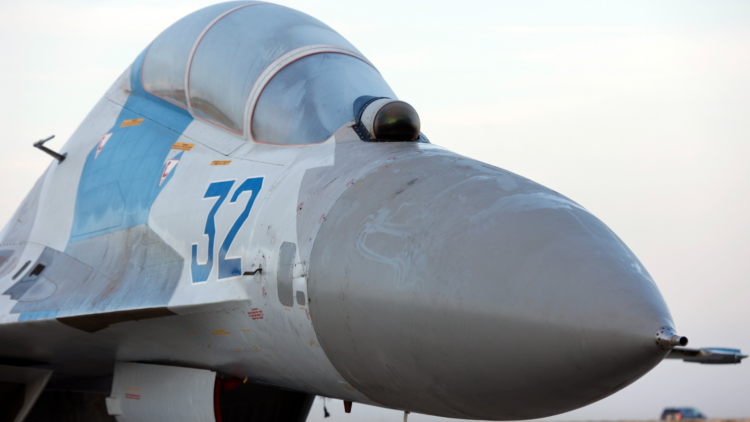
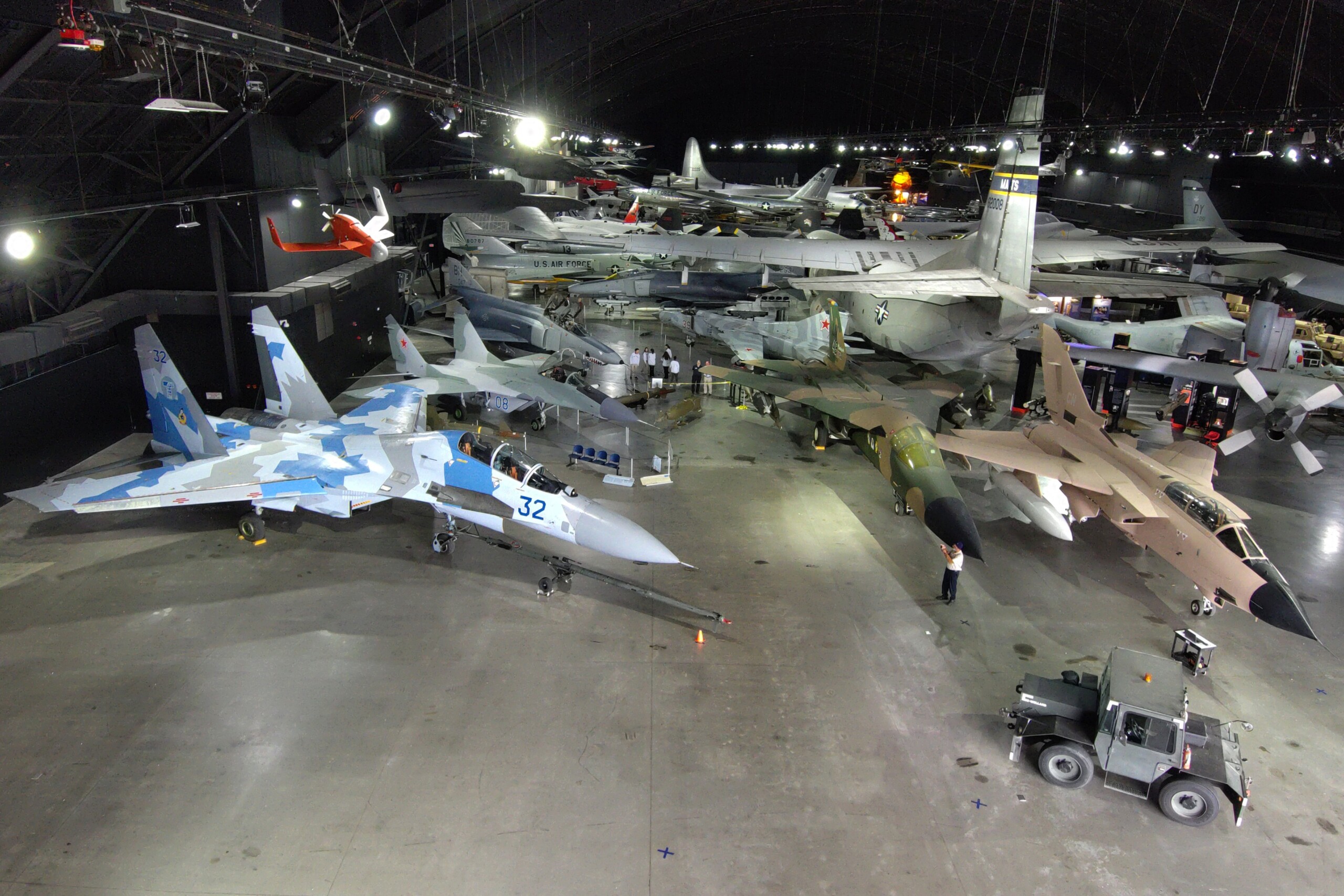
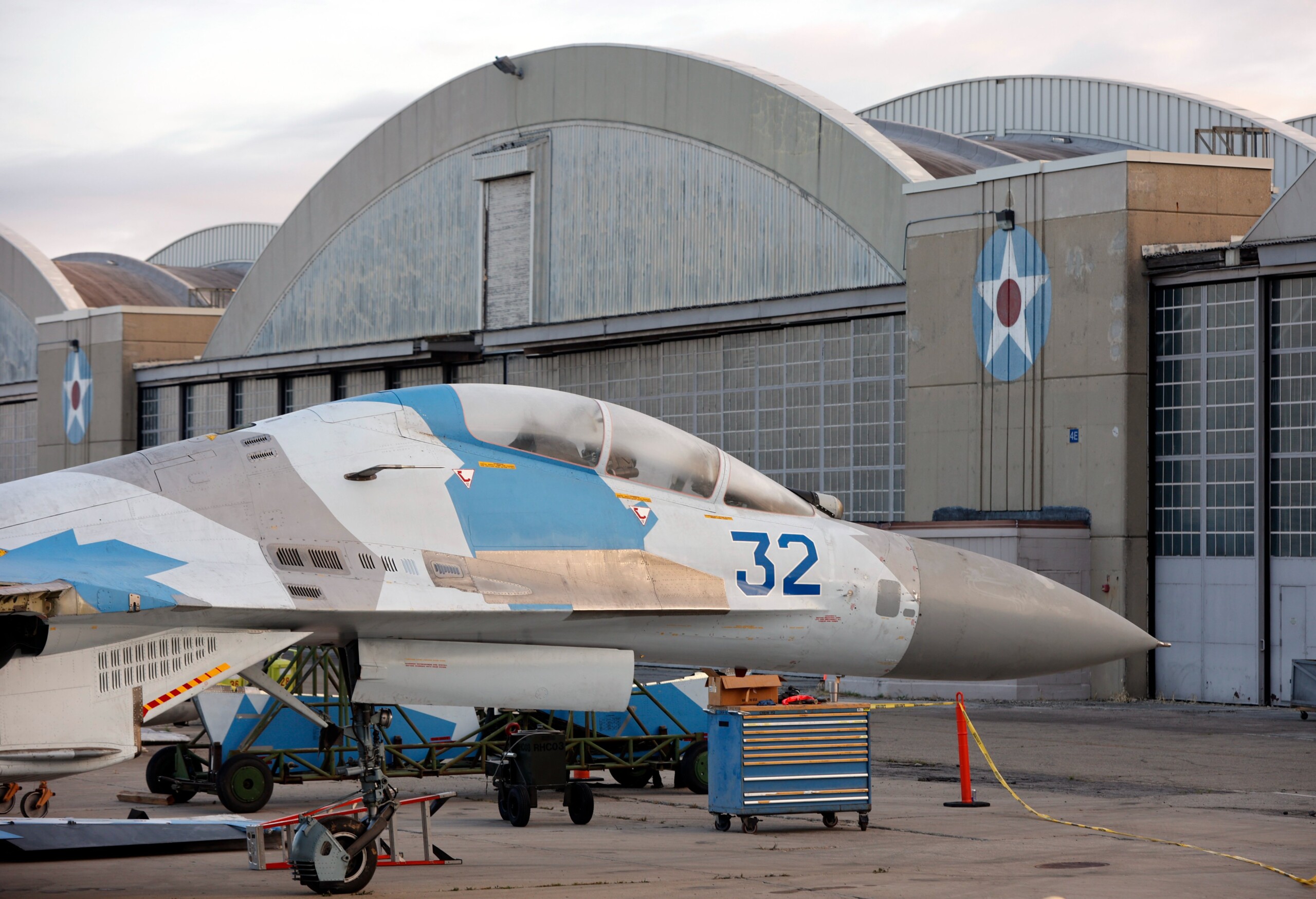
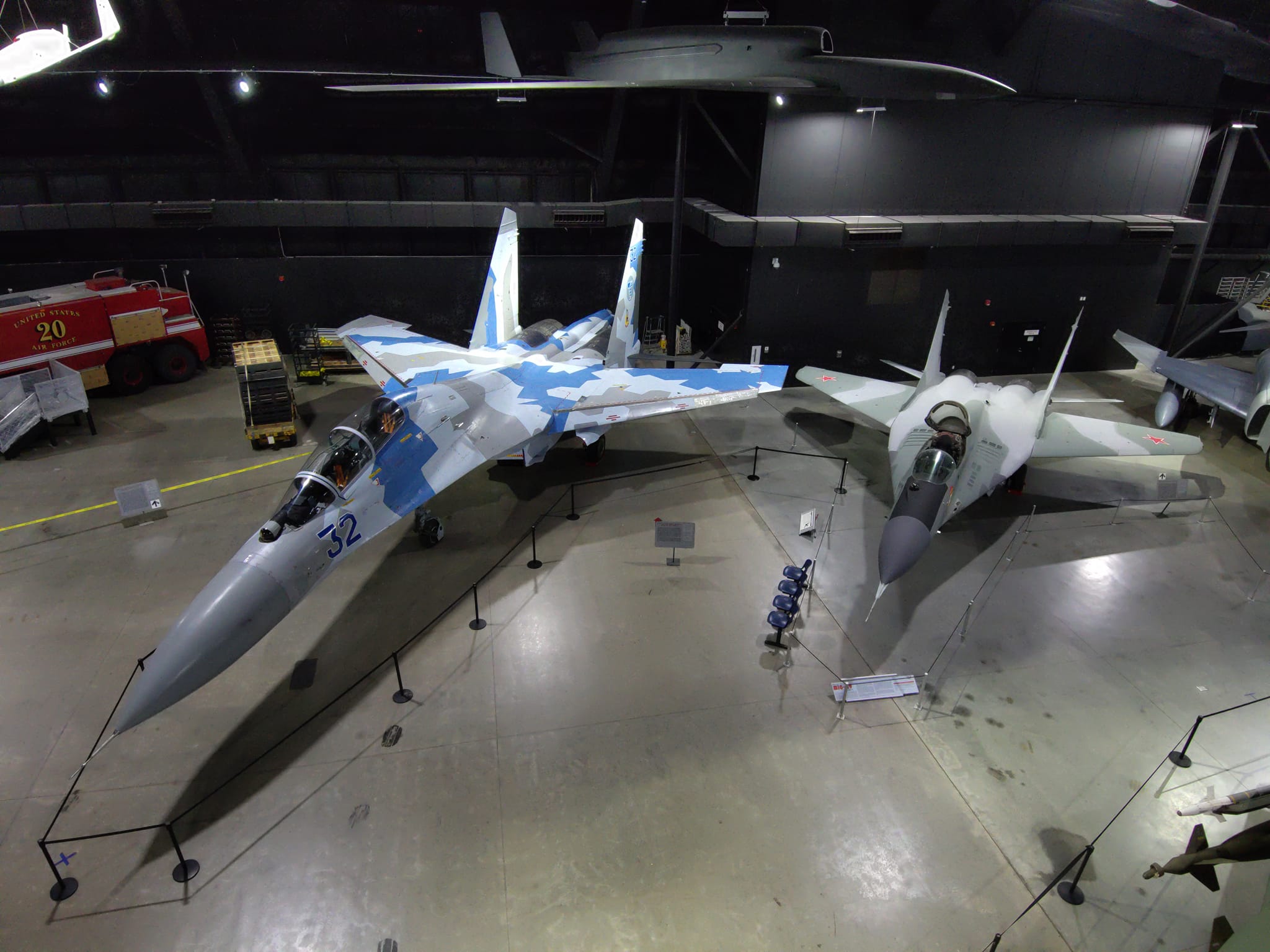
In contrast, the MiG-29 is 57 feet long, 15 feet tall, and has a wingspan of 37 feet.
The Su-27’s twin-seat configuration can sometimes lead to confusion, as it may be initially mistaken for a Su-30. However, the absence of the front swept-back canards is a clear distinguishing feature.
The Flanker’s Journey to the US
A report by The Drive sheds light on the Su-27UB’s unique journey to the United States.
It was acquired nearly a decade ago from Ukraine by a private aviation company known as Pride Aircraft. The aircraft was then registered in the US Federal Aviation Authority’s civil register with the number NS132S.
Subsequently, it was sold to another unidentified buyer, leading to the aircraft’s disappearance from the public eye.
The Su-27 resurfaced in September when the NMUSAF announced its acquisition for its exhibit.
Here's a first look at the museum's recent acquisition of the Sukhoi Su-27. Plans call for this aircraft to join the Cold War Gallery this fall. #avgeek pic.twitter.com/804C28vp18
— National Museum USAF (@AFmuseum) September 26, 2023
This journey underscores the complex world of international arms trade and the repurposing of military technology for historical and educational purposes.
Ukraine’s Role as a Source of Soviet-Era Military Technology
Interestingly, Ukraine has long played a significant role as a source of Soviet-era military technology for the United States.
Several MiG-29s found their way into American inventories following the collapse of the Soviet Union.
This exchange of military hardware between former Cold War adversaries reflects the changing dynamics of the post-Cold War era and the importance of cooperation in military technology.
Other Instances of Outsized Sukhoi Su-27/30 Series Aircraft
The NMUSAF’s photo is not the only one that highlights the colossal size of the Sukhoi Su-27 and Su-30 series of fighters.
Another image from 2021 went viral for the same reason.
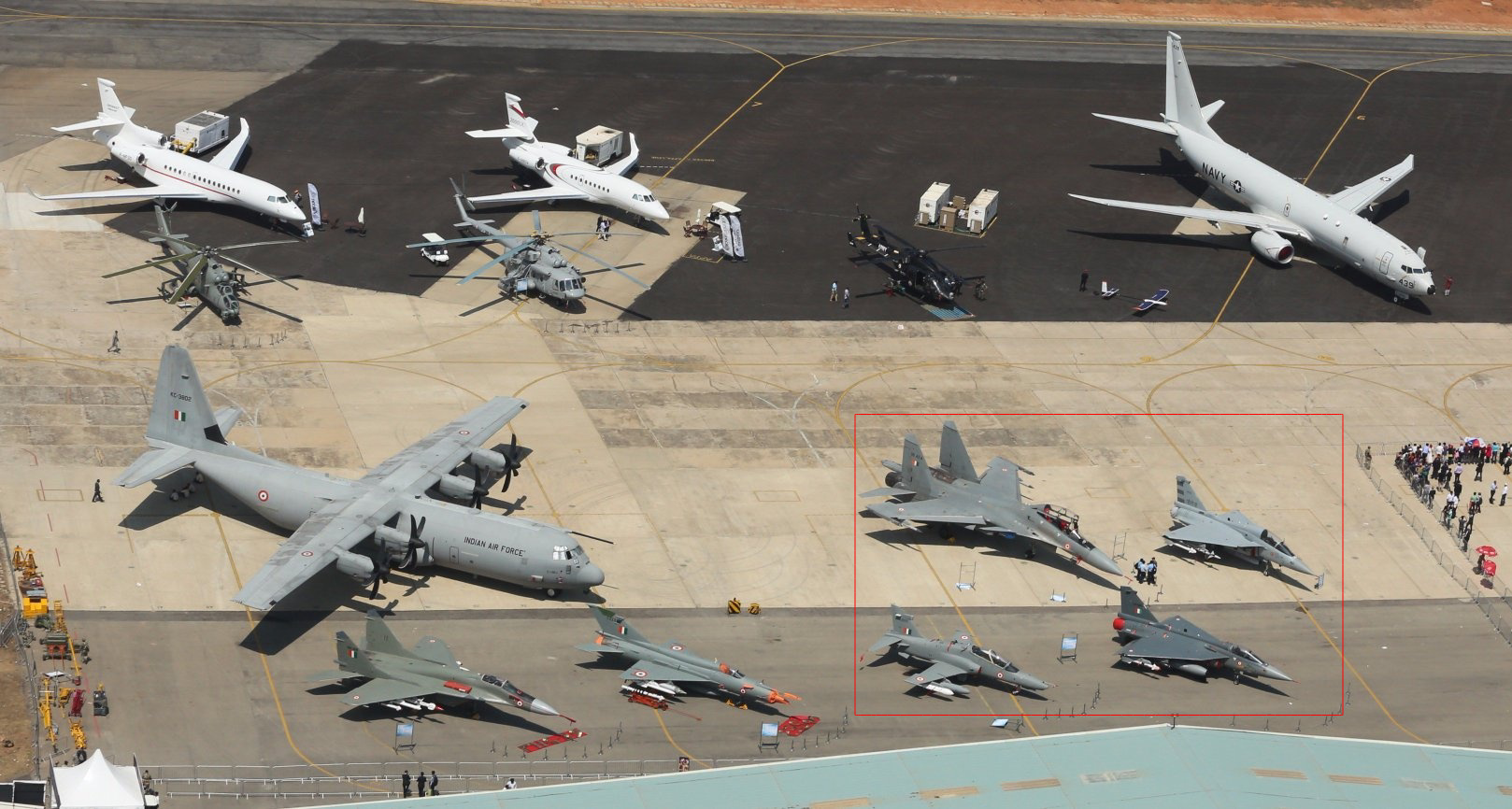
It depicts an Indian Air Force Su-30MKI alongside the Light Combat Aircraft Tejas, providing a striking size comparison. The Su-30MKI’s vastness is evident as it dwarfs the Tejas and the BAE Hawk aircraft beside it.
In another undated image, the Su-30 is shown to be larger than the Dassault Rafale, the Indian Air Force’s frontline fighter aircraft today.
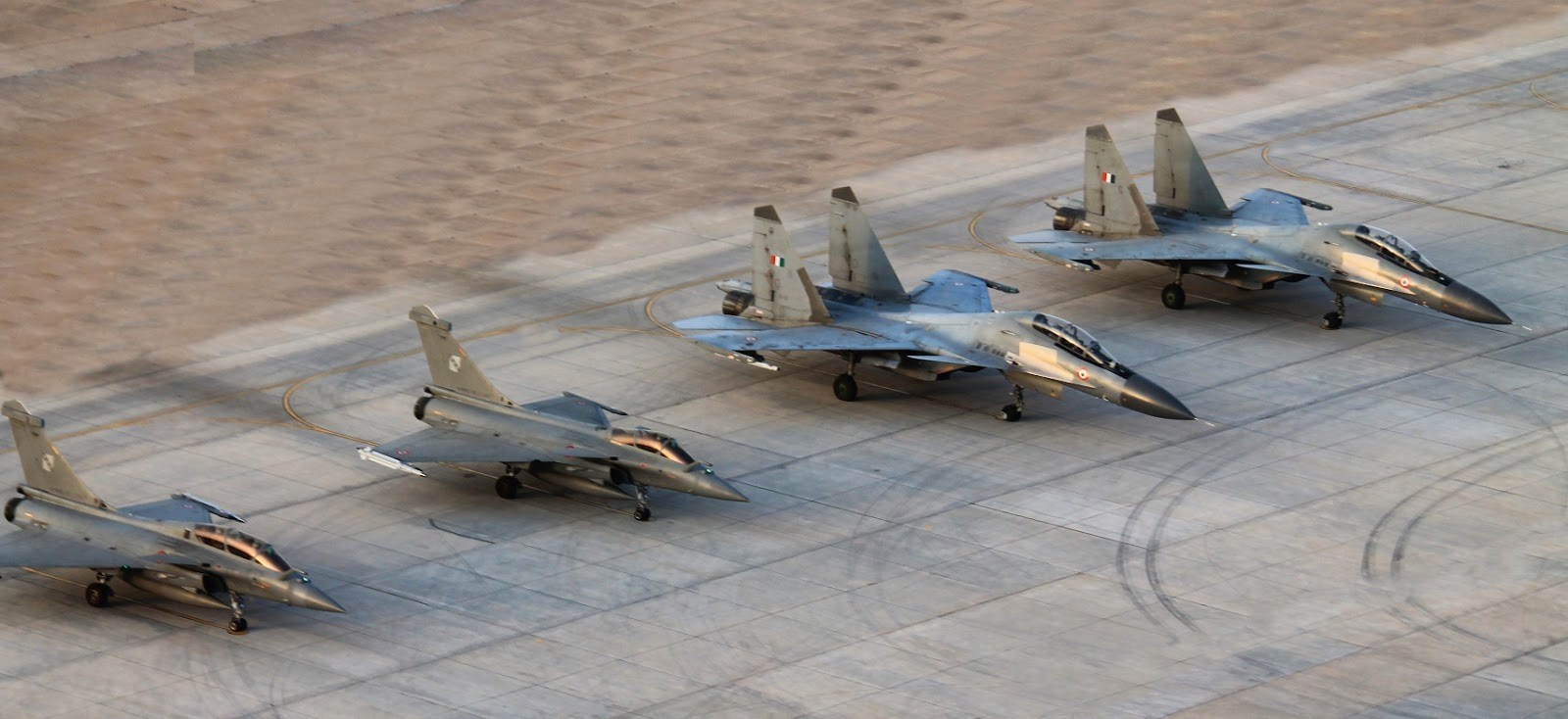
These photographs not only emphasize the Su-27 and Su-30’s remarkable size but also underline their continued relevance in the modern aviation landscape.
~
The Sukhoi Su-27 and Su-30 fighters have long been admired for their impressive size and capabilities.
The recent photographs from the NMUSAF and the Indian Air Force offer a fresh perspective on the immense stature of these aircraft. They serve as a testament to the evolution of military technology, the importance of international cooperation, and the enduring legacy of these Russian-origin fighter planes. As the aviation world continues to advance, the Su-27 and Su-30 remind us of the giants that once ruled the skies and continue to captivate aviation enthusiasts to this day.








COMMENTS