Sanctuary is a shabby myth in the Golis, where satellite eyes, patient ISR, and surgical fire are turning those wadis into dead ends for ISIS-Somalia.
Read the full article for more on:
Important insights and detailed analysis
Expert commentary on current events
Breaking developments and updates
Updating summary...
US Africa Command’s Golis Mountain Strike Was A Message, And ISIS-Somalia Heard It
Guy D. McCardle
Speed
1x
Listen
COMMENTS
Sanctuary is a shabby myth in the Golis, where satellite eyes, patient ISR, and surgical fire are turning those wadis into dead ends for ISIS-Somalia.
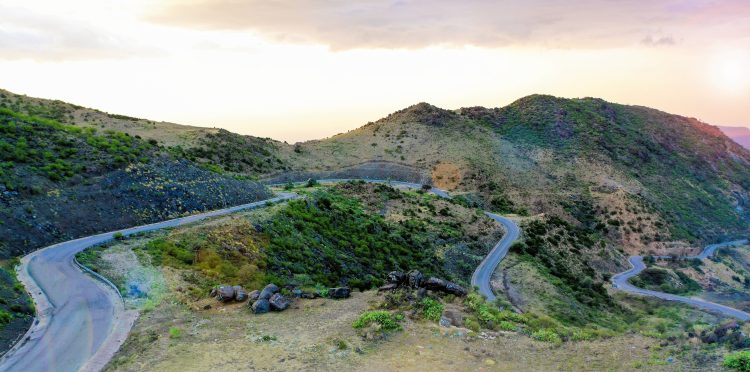
Here we see a road through the Golis Mountains in Somaliland about 6 km north of Sheikh. Image Credit: Wikimedia Commons
U.S. Africa Command confirmed an airstrike on ISIS-Somalia in the Golis Mountains earlier this month, with the target area pegged at roughly 85 kilometers southeast of Bosaso. AFRICOM said it acted in coordination with Somalia’s federal government and kept details on units and platforms locked down for operational security. That is classic tight-lipped operational discipline. The location tells its own story. The rugged Bari highlands have sheltered ISIS cells for years, and hitting there signals that U.S. reach and Somali cooperation remain aligned where it counts.
Advertisement
Why This Matters To U.S. Interests
This is a hedge against three overlapping risks.
First, external plotting that could touch Americans and embassies across East Africa or aim at U.S. personnel and aircraft transiting regional hubs, with Camp Lemonnier in Djibouti always on the threat planner’s whiteboard.
Second, maritime harassment in the Gulf of Aden artery that moves oil, aid, and commercial shipping in and out of Red Sea choke points.
Advertisement
Third, rear-area sanctuaries for financiers and facilitators who move people, parts, and propaganda between Somalia, Yemen, and farther afield.
AFRICOM’s own language on degrading ISIS-Somalia’s ability to threaten the U.S. homeland, U.S. forces, and citizens abroad is the doctrinal backbone for all three.
Advertisement
The Target Set: ISIS-Somalia’s Mountain Redoubts
ISIS-Somalia remains smaller than al-Shabaab but punches above its weight because it carved out a logistical and financial niche in the Bari region’s caves and wadis. Analysts have tracked how the group leveraged weak governance and harsh terrain in the Cal Miskaad range to stage, tax, and recruit. A February 2025 assessment flagged the Bari corridor as a critical operational and money hub for the Islamic State network. That is why strikes in these ridgelines matter more than raw body counts. They disrupt supply lines, fracture local intimidation networks, and squeeze the foreign fighter pipeline that Puntland officials say has trickled in to backfill losses.
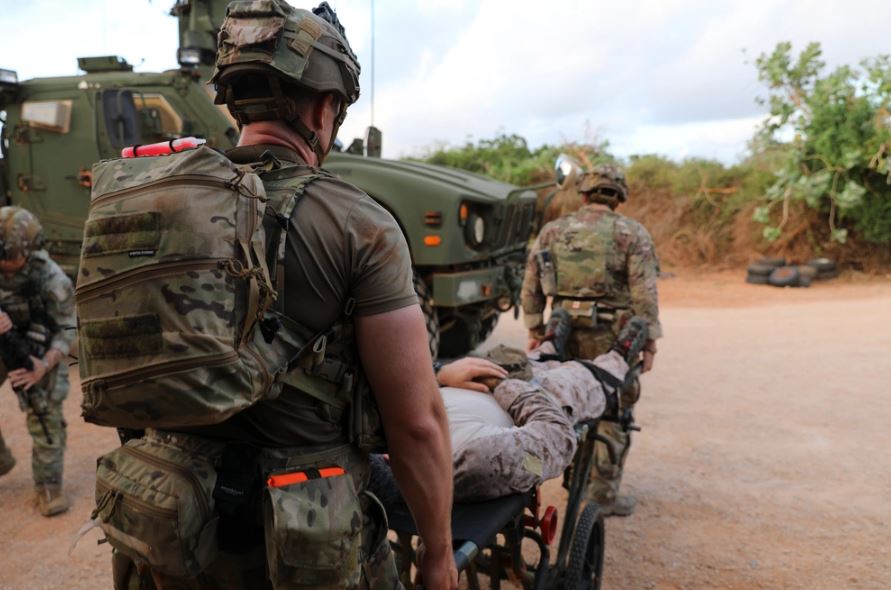
Here we see soldiers from US Task Force Bataan transport a simulated casualty during an Outstation Crisis Response Exercise at Cooperative Security Location Kismayo, Somalia. August 28th, 2025, US Army photograph by SGT Juan Peralta.
A Tactical Read: ISR, Fix, Finish
AFRICOM rarely publishes its playbook, but the pattern here is familiar: long dwell intelligence, surveillance, and reconnaissance to fix a target or a moving cell. Somali sources and partner units are used to confirm identities and deconflict civilians. A precision strike that finishes the job before the target walks off the grid or melts into a village. Reporting this year shows a renewed operational tempo against ISIS nodes in Puntland that tracks with an uptick in air operations in 2025. Stars and Stripes documented multi-target strikes in late March, consistent with a campaign approach rather than one-off raids. It is reasonable to assess that U.S. special operations forces, Somali partner spotters, and national-level collectors collaborated to generate the coordinates that Golis ridges demand.
CJTF-HOA And The Grind Between Strikes
This is the part that rarely makes headlines. Combined Joint Task Force–Horn of Africa keeps the machine turning forward of the trigger pull. The task force’s mission set includes building partner capacity, protecting U.S. and coalition interests, and creating the connective tissue that lets Somali units like Danab fight, move, and sustain. Recent CJTF-HOA updates show forward presence in Somalia, from Kismayo to Baledogle, including medical and engineering support that keeps partner forces in the fight and improves casualty survival. That is the invisible scaffolding for a sustained counterterror push.
Advertisement
Drones Cut Both Ways
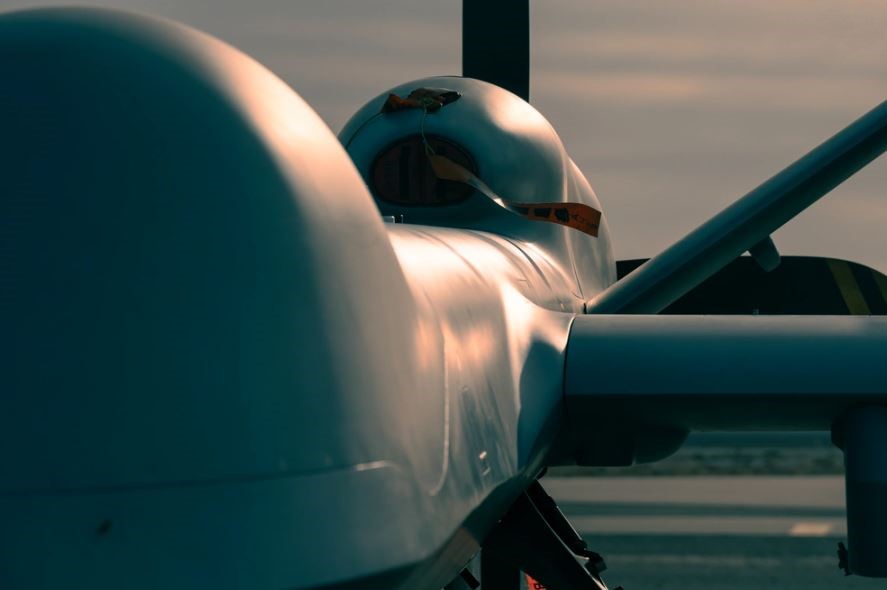
A US Air Force MQ-9 Reaper Drone. The entire system consists of the aircraft (equipped with weapons and sensors) a ground control station, Predator Primary Satellite Link Link and spare equipment and operations and maintenance crews.
Drones enable the kind of patient manhunt that mountain warfare demands. They also democratize airpower for the other side. ACLED (the independent, non-governmental data organization that tracks and analyzes political violence and protest events worldwide) flagged the first recorded use of drones by ISIS-Somalia in January, part of a wider trend of nonstate actors using off-the-shelf systems for reconnaissance and attack. Regional defense reporting has cataloged how militants across Africa are adapting commercial platforms for lethal and psychological effect. That means U.S. and Somali forces must harden bases, patrols, and logistics against buzzing cameras and small munitions, even while leveraging higher-end ISR to hunt.
Policy Weather And Operational Latitude
Legal and policy guardrails on counterterror strikes have shifted across administrations. Current analysis suggests the White House has loosened approvals to give commanders more latitude for time-sensitive targets in Somalia this year, a change visible in the pace of operations.The exact rules are classified, but credible open sources argue that authorities now look closer to the permissive posture that previously empowered speed at the theater level. That is one reason why ISIS-Somalia is feeling pressure in its mountain pockets.
Bottom Line: Pressure In The Hills, Signals In The Strategy
A precision hit 85 kilometers southeast of Bosaso is not a silver bullet. It is a switch flipped to “on” for a broader campaign that blends intelligence, partner force muscle and surgical airpower against a network that survives by hiding in rough country.
For ISIS-Somalia, the message is clear. Sanctuary is shrinking. For CJTF-HOA and Somali units, the work now is to keep closing the gaps between strikes. That means more human sources, more patrol pressure in the wadis, more interdictions on the coastal roads, and consistent follow-up where the recent blast left a hole.
Done right, this is how you neuter a persistent threat to U.S. interests without overextending ground forces.
The Golis ridges are unforgiving, but they are not invincible.
Advertisement
What readers are saying
Generating a quick summary of the conversation...
This summary is AI-generated. AI can make mistakes and this summary is not a replacement for reading the comments.










COMMENTS