In case you missed it…yes, Rocket Man has been around for many years. Question: How many hours of actual flight time do you guess the Bell rocket belt flew? Answer below…
Check out a more modern version of the jet pack!
The man behind the flying machine was Wendell Moore, a Bell Aerospace engineer who came up with the idea to place rocket thrusters on the nose and wings of the Bell X-1 airplane, which Chuck Yeager flew to break the sound barrier.
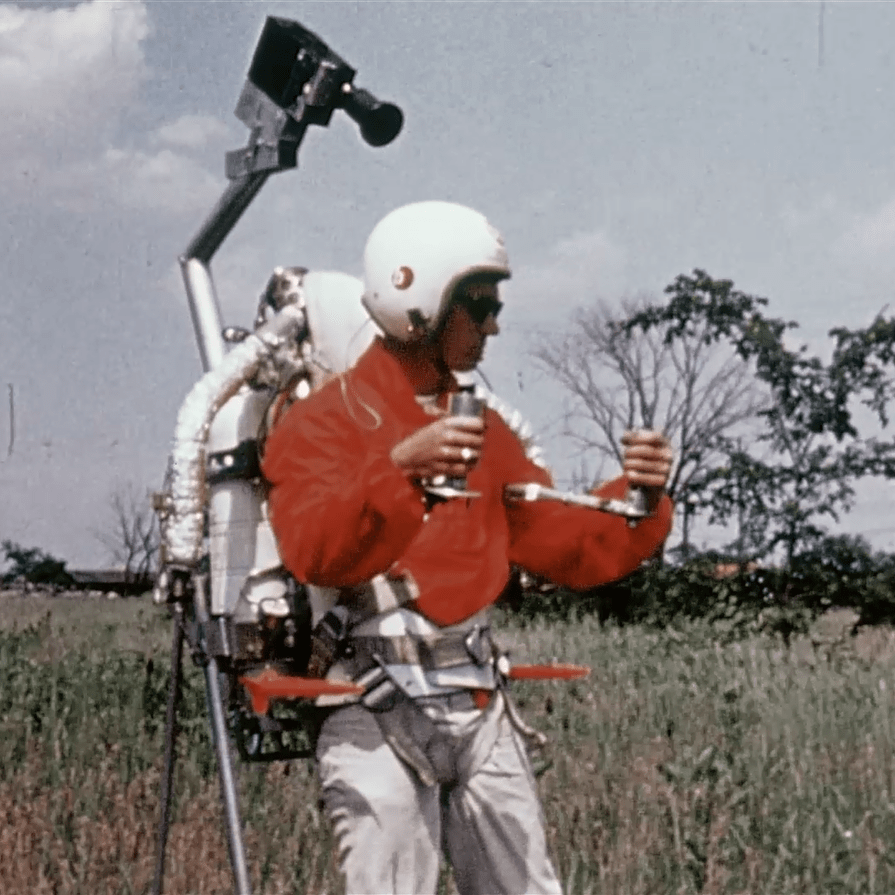
The belt Moore designed resembled a backpack, carrying two tanks of hydrogen peroxide and nitrogen and weighing 120 pounds. According to science reporter Brian Malow, “The nitrogen pushes the hydrogen peroxide propellant into a chamber where it mixes violently with a catalyst, producing a high-pressure steam that flows out the twin nozzles to provide thrust.” The average flight of the jet pack allows passengers to float in the air for 21 seconds. – Bell Textron
Answer to the question above: The Bell jetpack had about 1,200 flights in 35 years, adding up to six and a half hours of total flight time. (Source Bell Textron)
Featured image courtesy of Bell Textron
This article is courtesy of Fighter Sweep.
Already have an account? Sign In
Two ways to continue to read this article.
Subscribe
$1.99
every 4 weeks
- Unlimited access to all articles
- Support independent journalism
- Ad-free reading experience
Subscribe Now
Recurring Monthly. Cancel Anytime.
In case you missed it…yes, Rocket Man has been around for many years. Question: How many hours of actual flight time do you guess the Bell rocket belt flew? Answer below…
Check out a more modern version of the jet pack!
The man behind the flying machine was Wendell Moore, a Bell Aerospace engineer who came up with the idea to place rocket thrusters on the nose and wings of the Bell X-1 airplane, which Chuck Yeager flew to break the sound barrier.
The belt Moore designed resembled a backpack, carrying two tanks of hydrogen peroxide and nitrogen and weighing 120 pounds. According to science reporter Brian Malow, “The nitrogen pushes the hydrogen peroxide propellant into a chamber where it mixes violently with a catalyst, producing a high-pressure steam that flows out the twin nozzles to provide thrust.” The average flight of the jet pack allows passengers to float in the air for 21 seconds. – Bell Textron
Answer to the question above: The Bell jetpack had about 1,200 flights in 35 years, adding up to six and a half hours of total flight time. (Source Bell Textron)
Featured image courtesy of Bell Textron
This article is courtesy of Fighter Sweep.










COMMENTS