An inside account of its 2025 dissolution—and where foreign fighters are heading now
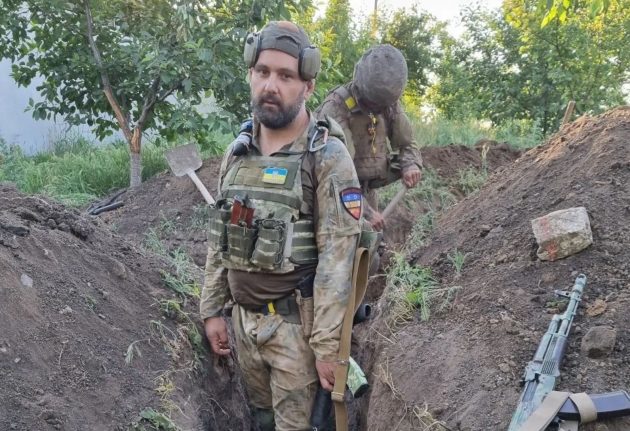
We were setting up for a drone operation when the sun rose over the Severodonetsk River and turned the surface into a sheet of white glare. A Polish volunteer stood beside me, pulling security with the slow patience of someone who had lived through too many static weeks. Across the bank, Khotomlia sat quiet—small dachas and birch lines, a place meant for fishing, not for adjusting fire. By July 2022, the front had stopped breathing. Nothing moved unless a Russian tube forced it.
While we waited, we talked about the Legion—its confusion, its improvisation, the strange rotation of men who showed up wanting to fight. None of us believed it would ever resemble a functioning battalion. A Ukrainian battalion fields several hundred troops; an American one approaches a thousand with staff, communications, and logistics. The Legion rarely mustered the strength of two American line companies. It ran on necessity, anger, and whatever equipment neighboring brigades could spare. Standing up a foreign volunteer unit in the middle of a war is the hardest bureaucratic task imaginable. Ukraine never had the time or institutional space to do it well.
So when the Ground Forces confirmed this November that the Legion’s independent command would be dissolved and its fighters reassigned, I didn’t feel surprise. I felt what I’d felt on that riverbank: this unit was never built to endure.
A Beginning Shaped by a Strike
The Legion began under fire. At Yavoriv, where thousands of volunteers gathered in the opening weeks, Russian missiles hit the base before most had even unpacked. Ukraine reported thirty-five killed among staff and instructors. Volunteers insisted the foreign toll was higher. The truth remains unclear. The message did not: this formation would live under strain from its first hour.
Information for incoming volunteers came almost entirely from social media. TikTok turned into a crude PR front, filled with half-truths and panic. I remember a volunteer complaining he had been issued three magazines en route to the line—he would have received more once he linked up, but that nuance didn’t matter. Rumor-shaped expectations because no formal structure existed to correct it.
There was no doctrine, no vetting pipeline, no internal fire support. In early 2022, the Legion had no mortar teams. Radios were a mix of civilian walkie-talkies and personal phones. Fire missions required begging Ukrainian brigades already trying to survive their own sectors. Logistics weren’t dysfunctional so much as improvised; volunteers built their own grassroots systems simply to keep moving. The only reliable force holding anything together was individual will.
Every battalion carried the same story: hard fighting, limited preparation, and a multinational mix that could turn a trench into either a competent platoon or a sociological experiment. Foreigners walked off contract whenever they wished. Turnover became its own enemy. Even so, the Legion became a global symbol, and symbols matter. But symbols don’t build stable units.
The Darkness No One Discussed Publicly
Foreign volunteers arrive with tidy myths about unity. The Legion stripped those away quickly. It held good men—professionals, idealists, and those tired of watching Ukraine bleed—but it also absorbed the drifters, the unstable, and those running from their own pasts. I probably sat somewhere in that mix myself.
The worst incident I know of was the killing of Taras, commander of 1st Battalion’s Charlie Company. Every account I trust says he was killed by his own men. They believed he endangered their survival. He was inexperienced and overwhelmed, and his decisions had already put people at risk. They removed him. The Legion officially recorded his death as the result of a Russian strike so his family could receive benefits. Everyone understood the arrangement.
There were others. British volunteer Daniel Burke was found dead in 2023; a UK inquest later ruled his death an unlawful killing. In another unit, I survived a fratricide attempt sparked by something petty—a moment of rage from a man whose TBIs had hollowed out his restraint.
One of the more disturbing cases was “Horse,” who styled himself the new commander of the Norman Brigade after Hrulf’s death. His criminal record—including the sexual assault and murder of his great-grandmother—surfaced only after pro-Russian channels leaked it, and reputable outlets confirmed it. Others with violent histories entered just as easily.
Already have an account? Sign In
Two ways to continue to read this article.
Subscribe
$1.99
every 4 weeks
- Unlimited access to all articles
- Support independent journalism
- Ad-free reading experience
Subscribe Now
Recurring Monthly. Cancel Anytime.
Even the Legion’s public face became a liability. Its spokesperson, “Mockingjay,” left a trail of alleged fraud, inconsistencies and self-promotion that eroded trust among volunteers and Ukrainians alike. And in the summer of 2022, even Craig Lang, a (then) wanted murder managed to walk into 1st Battalion before being removed once the issue was made public by myself. These were not aberrations; they were the natural consequence of a unit with no filtration system at all.
None of this was uniquely Ukrainian. They simply weren’t prepared for the human material that would wash in.
The Restructuring — Three Years Too Late
On 21 November 2025, the Ground Forces announced what volunteers had been hearing in rumors: the Legion’s three combat battalions would be dissolved and folded into regular Ukrainian brigades by year’s end. A fourth battalion would be converted into the 157th International Training Center. The only element left intact is Legion-GUR, which answers directly to military intelligence and has always operated on its own track.
The goals—standardization and administrative clarity—sound reasonable. The problem is timing. In early 2022, Ukrainian units still had the bandwidth to absorb foreigners. By late 2025, after years of attrition, most brigades have limited translators, strained mentorship capacity, and no appetite for sorting out multinational platoons.
Foreign volunteers swept into this system will be assigned wherever manpower is needed. In this phase of the war, that usually means assault units—places where long-term survival without an injury is the exception.
Where They Will Go Now
For those determined to stay in the fight, viable ecosystems have narrowed to a few:
- 3rd Assault Brigade, which keeps strict vetting and discipline.
- Azov’s international elements, which provide structured training and clear command.
- Legion-GUR, which continues under intelligence control.
These aren’t alternatives for Ukraine. They are places where foreigners can serve without being fed directly into the grinder.
Before the restructuring, many Latin American volunteers never had even these options. Men from Peru, Colombia, Brazil, and Mexico were rushed through minimal processing and placed in assault groups with little preparation. Their casualty rates remain among the worst of the foreign contingent. The restructuring will not change that. It may deepen it.
What Disappears When a Unit Disappears
I don’t romanticize the Legion. Too much went wrong. Too many good men held it together through force of will rather than structure. But watching a unit disappear still feels strange. It marks a shift in the war’s character. In 2022, foreigners arriving in Ukraine felt like a global response to a global breach. In 2025, the war feels more isolated, more local, and more constrained by exhaustion and limited choices.
Dissolving the Legion won’t fix its failures. It will only close the chapter on a formation born in crisis and never given the tools to grow beyond it.










COMMENTS