


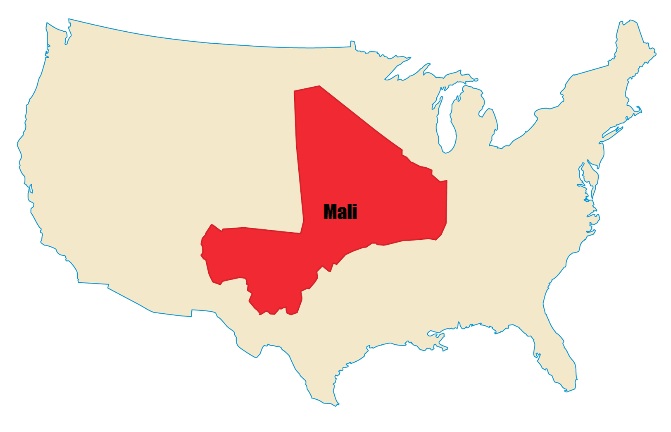
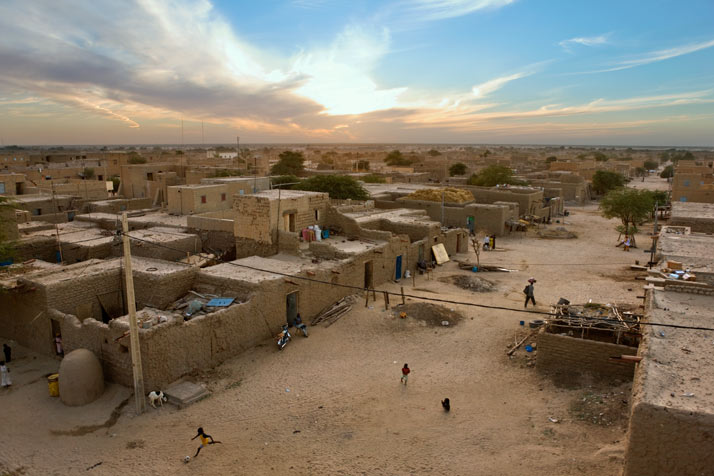
In Mali it’s about 6% of the total population, the majority of these cell phone users would most likely live in the Southern half of the country. The lack of a telecommunications infrastructure would make signals intelligence (SIGINT) very difficult for our intelligence agencies and special operations units.
In terms of human intelligence, the official language in Mali is French, and almost 2 million people speak it, with many more who have a basic grasp of the language. With French troops on the ground, the ability to communicate with the host nation’s own troops in their mother tongue is an operational dream come true! Imagine if Afghans spoke English? Talking to the local populations and reaching out to people who want to help against the Islamists wouldn’t garner the same difficulties we faced in Iraq and Afghanistan.
The Enemy
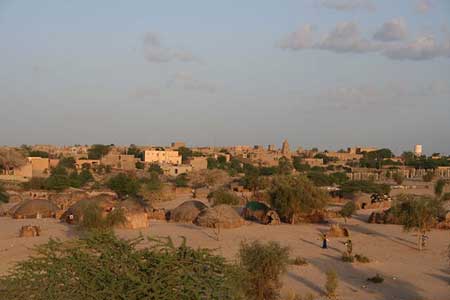
There are quite a few groups operating in Northern Mali that are causing a ruckus. The Islamist groups which include al-Qaeda in the Islamic Maghreb (AQIM), Ansar Dine, and Movement for Oneness and Jihad in West Africa (MOJWA). These three organizations are allied with each other and have been the main targets by the French and Mali government troops.
There is another major player that I feel is prudent to mention: National Movement for the Liberation of Azawad (MNLA). They are a movement for independence led by the Tuareg, a nomadic people who inhabit the Sahara, and who seek to make Azawad (Northern Mali) independent from Mali.
In 2012, the Tuareg managed to drive the Mali government out of the North. It was because of this defeat (and not because of any problems with the Islamists) that the Mali military ousted the president in a coup d’etat in March of 2012, because they felt his handling of the situation is costing the people their country. And it is because of this coup that the U.S. State Department no longer maintains ties with the current government. The military did what was right and I back them 100% but there is also a soft spot in my heart for certain independence movements.
After taking over the North, the MNLA began an armed struggle against the Islamists and lost their hold of Northern Mali. I don’t know what policies the French currently have on the ground in dealing with the MNLA and their remnants, but in my opinion they should take take the phrase “the enemy of my enemy is my friend” to heart. While the MNLA seek only independence of Azawad from the government, the Islamists seek dominant control over Mali to implement Sharia law.
- Ansar Dine – 500 to 1000 members
- AQIM – 800 members
- MOJWA – no good estimations
From all the news reports I’ve been following it seems as if the Islamists are more guerrilla insurgents then they are your typical terrorists and suicide bombers. The force of 1,200 Islamists that left Konna to assault the Mali military garrison in Mopti traveled by mass convoys. Ballsy, in my opinion.
Possible U.S. Combat Involvement
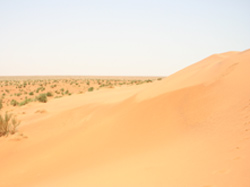
The environment that soldiers will find themselves engaging in will include small urban centers with tiny population densities, as well as training camps throughout the Sahara desert. Light infantry units with ground mobility vehicles (not Strykers or tanks) would do well in this type of environment. So what would U.S. involvement in Mali look like?
A smart combat package of U.S. troops would consist of a battalion from the 75th, which has a sizable fleet of GMVs (a Humvee variant meant for this environment); a fleet of MH-60s and MH-47s from the 160th SOAR; AC-130 gunships; and a contingent of Special Forces ODAs to embed with Mali forces.
JSOC as always would have a role to play in most combat zones, and in Mali it would be no different as there will always be a need to track down and capture the Islamist leadership. The reality is, U.S. combat involvement in the deserts of Northern Mali would consist of a bunch of light infantry units (75th falls under this) driving around the desert engaging Islamists with the help of AC-130 gunships. The need for precise special operations by Delta and Six would be minimal. When your two biggest cities consist of 50,000 and 30,000 people, complicated urban warfare is almost nonexistent.
The current U.S. State Department policy is that we can’t guarantee support to Mali because the government is “illegitimate” due to the coup that took place last year. So my understanding is that we won’t help a country fighting Islamist anti-Western terror groups because they are illegitimate – yet we can support a rebel movement (illegitimate) fighting Qaddafi in Libya by dropping bombs on the Libyan military.








COMMENTS