
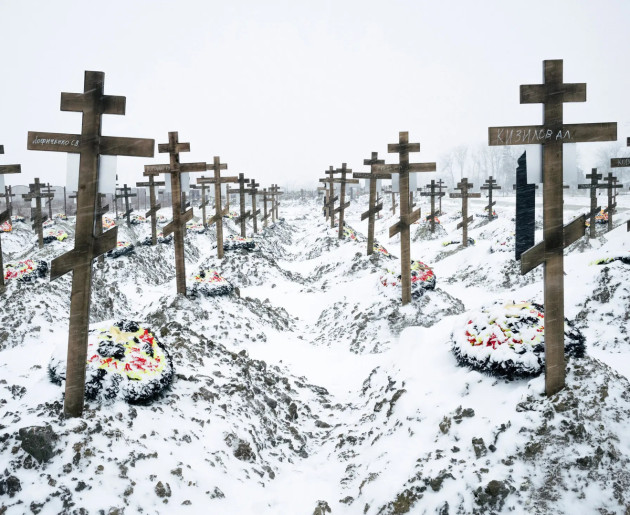
Fatalism, faith, and power in the Putin era: How a nineteenth-century moral vocabulary met a twenty-first-century security state.
“Drone overhead — get inside.”
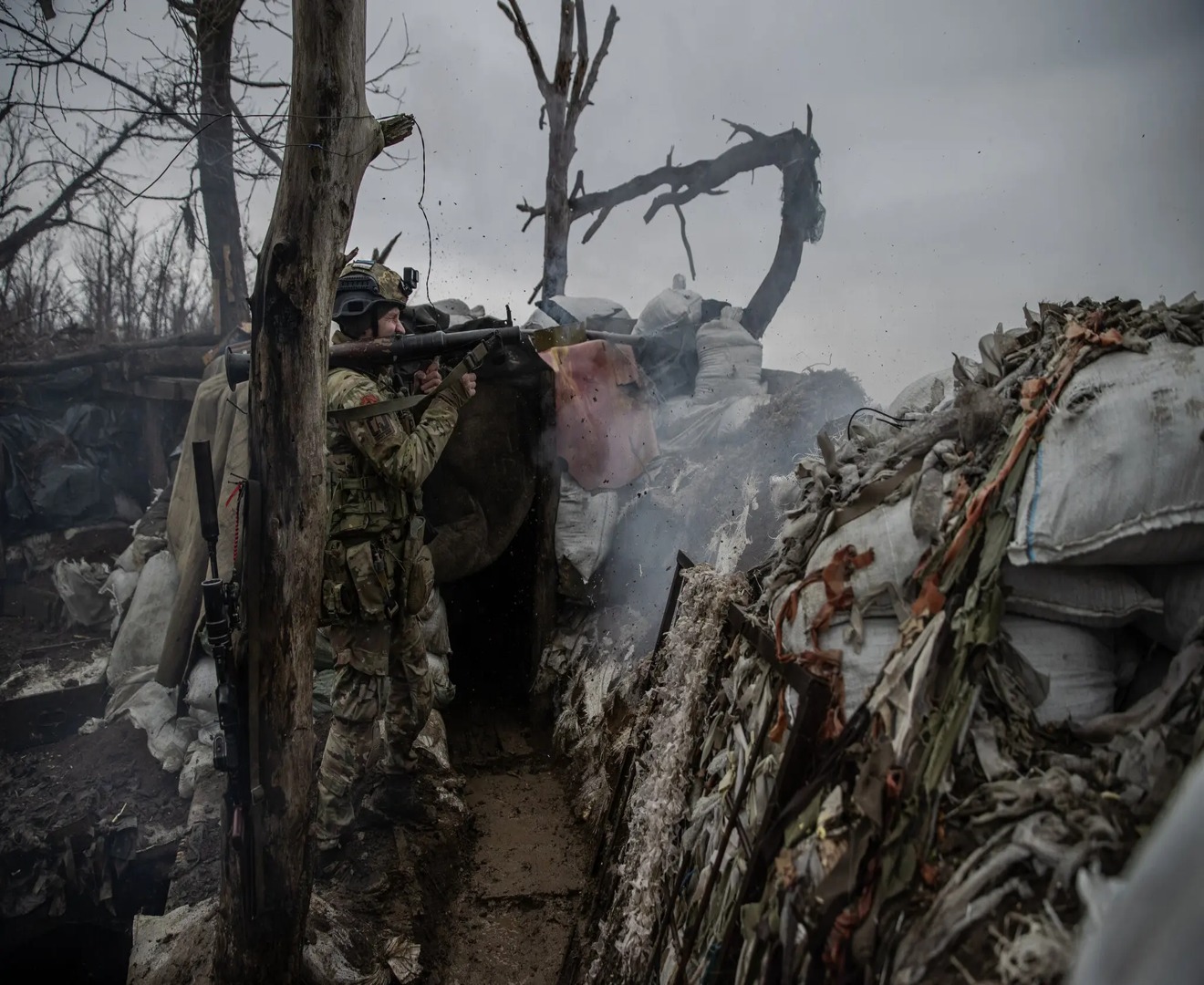
That was the first warning I heard near Velyka Novosilka in 2022. An Orlan reconnaissance drone circled high above us, adjusting artillery in real time. At that stage of the war, commercial quadcopters were only beginning to proliferate. Four years later, drones define the battlefield. The tempo has accelerated; the architecture of the conflict has not.
Russia’s full-scale invasion of Ukraine was not an improvised gamble, nor a sudden rupture in European security. It was the outward expression of a political system that had never reconciled the collapse of its empire and instead reconstituted itself around endurance, grievance, and restoration. The war did not begin at the border. It began in a continuity of ideas.
Four years into the invasion, the central question is no longer why Russia attacked in February 2022. The deeper question is why the regime believes war sustains its legitimacy at home and its leverage abroad. The answer lies in the convergence of imperial memory, post-Soviet humiliation, and a modern security state that treats instability not as hazard, but as instrument.
Understanding that convergence is essential. The invasion was not improvisation. It preceded the 2014 seizure of Crimea, the war in the Donbas, and the 2008 invasion of Georgia. It was the consolidation of a doctrine decades in formation.
As the historian Geoffrey Hosking observed, “Britain had an empire; Russia was an empire.” When the Soviet Union dissolved, Britain had long since shed colonies. Russia, by contrast, experienced contraction as internal amputation. The imperial structure through which it had understood itself collapsed in a single generation.
What endured was not simply grievance. It was the institutional reflex of expansion.
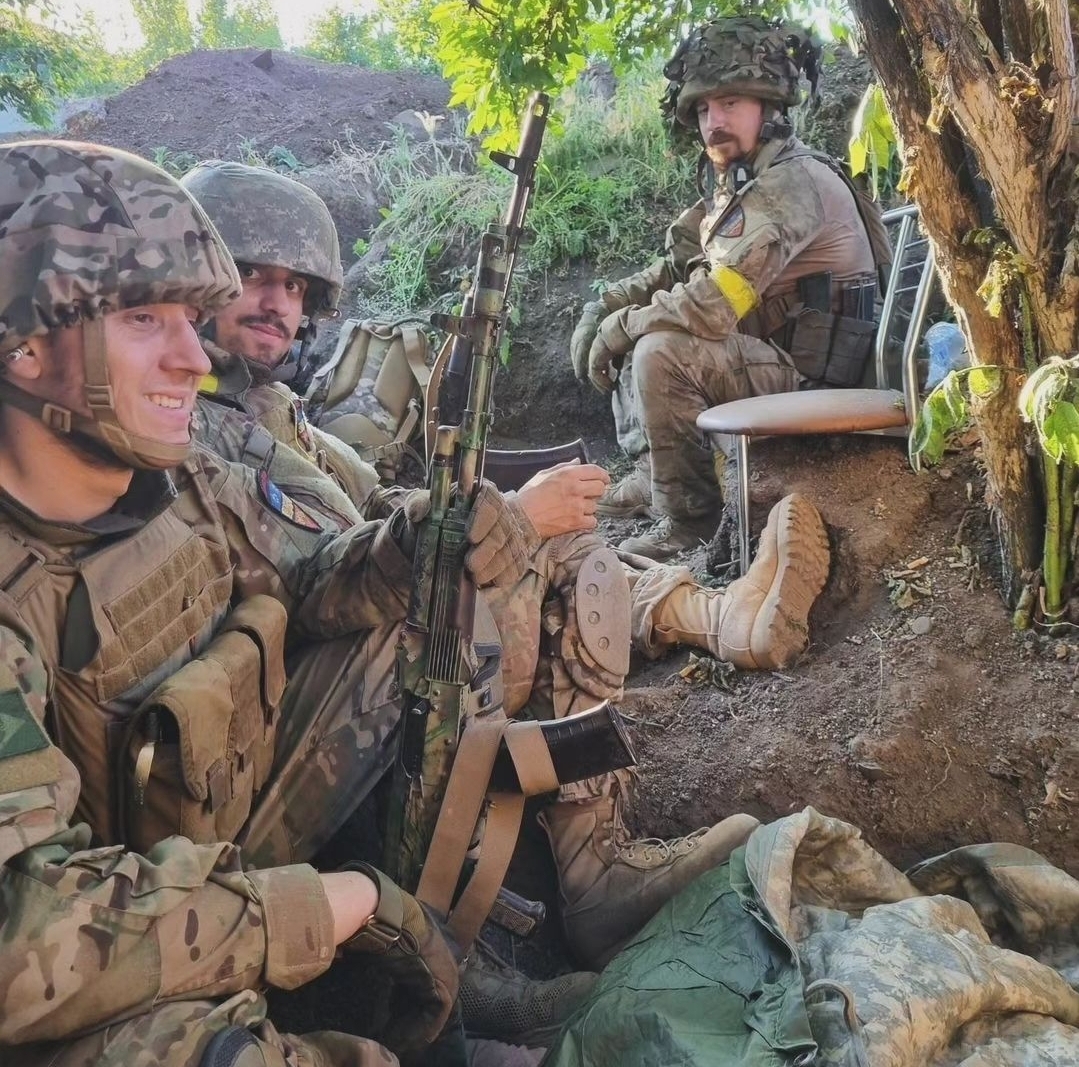
I. The Afterlife of Empire
Russia’s political culture has long been shaped by endurance. From the Mongol period through Napoleon’s invasion and the Second World War, survival itself acquired moral dimension. Fyodor Dostoevsky wrote that “suffering is the sole origin of consciousness.” That sentiment, while literary, became political grammar. Pain conferred authenticity. Endurance signaled depth.
The Soviet Union secularized that inheritance. Where Orthodoxy once sanctified suffering, Marxism-Leninism collectivized it. Victory in 1945 sealed the fusion: sacrifice became proof of righteousness. The state did not merely endure history; it redeemed it.
The collapse of 1991 disrupted that continuity but did not extinguish it. The 1990s were experienced less as democratic awakening than as humiliation. Savings evaporated under hyperinflation. State authority weakened. NATO expanded eastward. The bombing of Yugoslavia reinforced the perception that Western power operated without restraint.
In 2005, Vladimir Putin described the Soviet collapse as “the greatest geopolitical catastrophe of the century.” The phrasing was deliberate. The catastrophe was not ideological defeat; it was territorial and psychological contraction.
Ukraine stood at the center of that rupture. Unlike distant republics, it was woven into imperial memory. In Russian historical imagination, Ukraine has oscillated between fraternal kinship and hierarchical subordination. Its westward drift was not processed merely as geopolitical realignment. It was processed as defection.
In his 2021 essay “On the Historical Unity of Russians and Ukrainians,” Putin advanced the argument that modern Ukraine was an artificial construct, a byproduct of Soviet administrative choices rather than an expression of distinct nationhood. Statehood became conditional. History became reversible.
That essay did not announce war. It rationalized it.
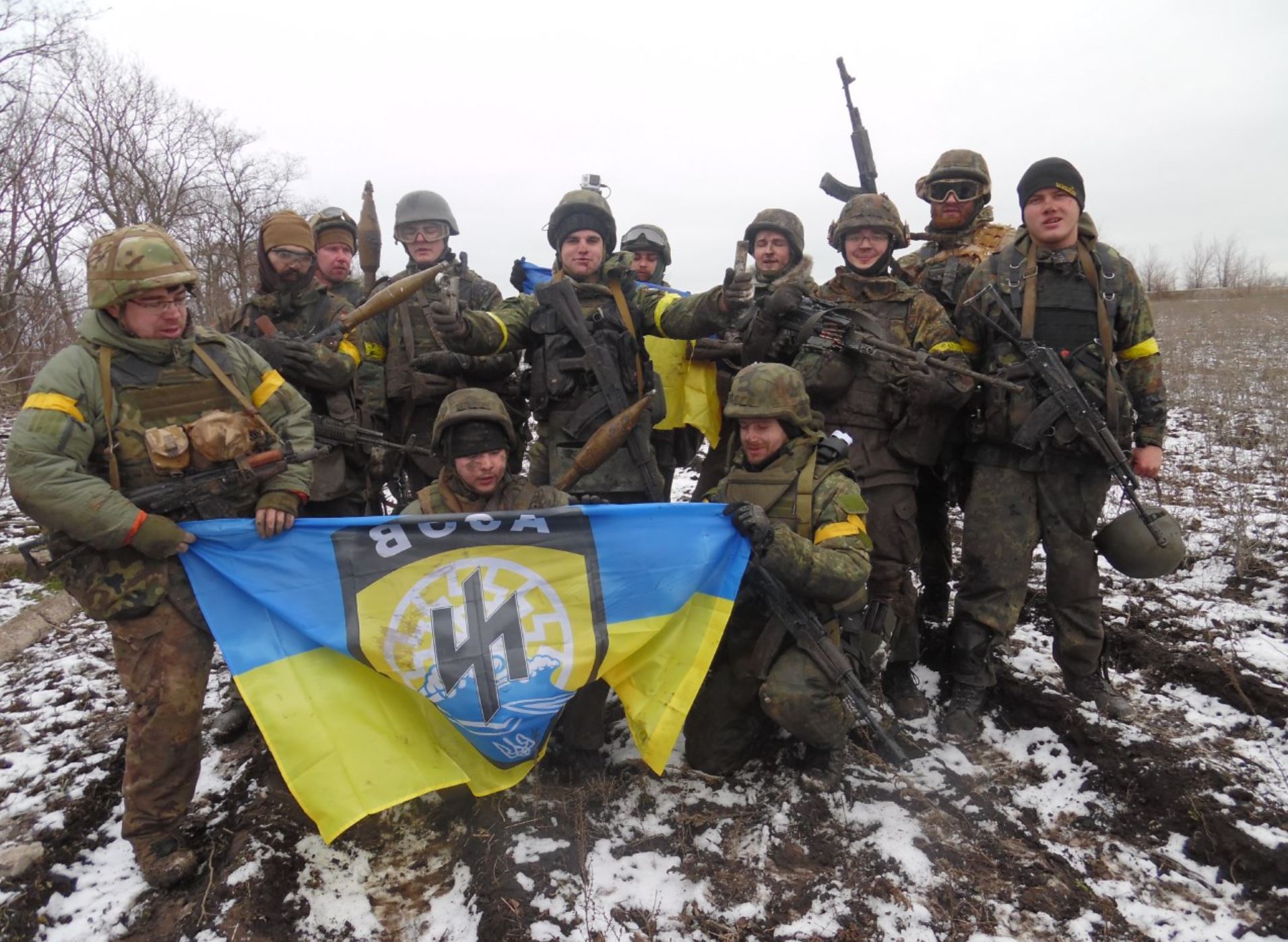
II. From Grievance to Doctrine
Ideas rarely govern alone. They require institutionalization.
In the 1990s and early 2000s, nationalist rhetoric expanded the boundaries of acceptable discourse. Vladimir Zhirinovsky rehearsed revanchist themes in public life, normalizing territorial reclamation and civilizational struggle long before they became policy. His performances were often theatrical, but they widened ideological space.
Simultaneously, intellectual currents reentered official circulation. Ivan Ilyin’s arguments for moral unity under a strong state were republished and referenced in Kremlin circles. Alexander Dugin framed geopolitics as a struggle between Eurasia and the Atlantic world. These thinkers did not dictate operational decisions, but they supplied vocabulary through which legitimacy could be justified.
When Crimea was annexed in 2014, the regime learned a decisive lesson. Confrontation generates consolidation. Putin’s approval ratings surged above eighty percent. Restoration proved politically stabilizing.
The annexation also demonstrated that sanctions, while costly, were manageable. The Russian economy contracted but did not collapse. Political authority tightened rather than fragmented.
From that point forward, confrontation ceased to be episodic. It became structurally useful.
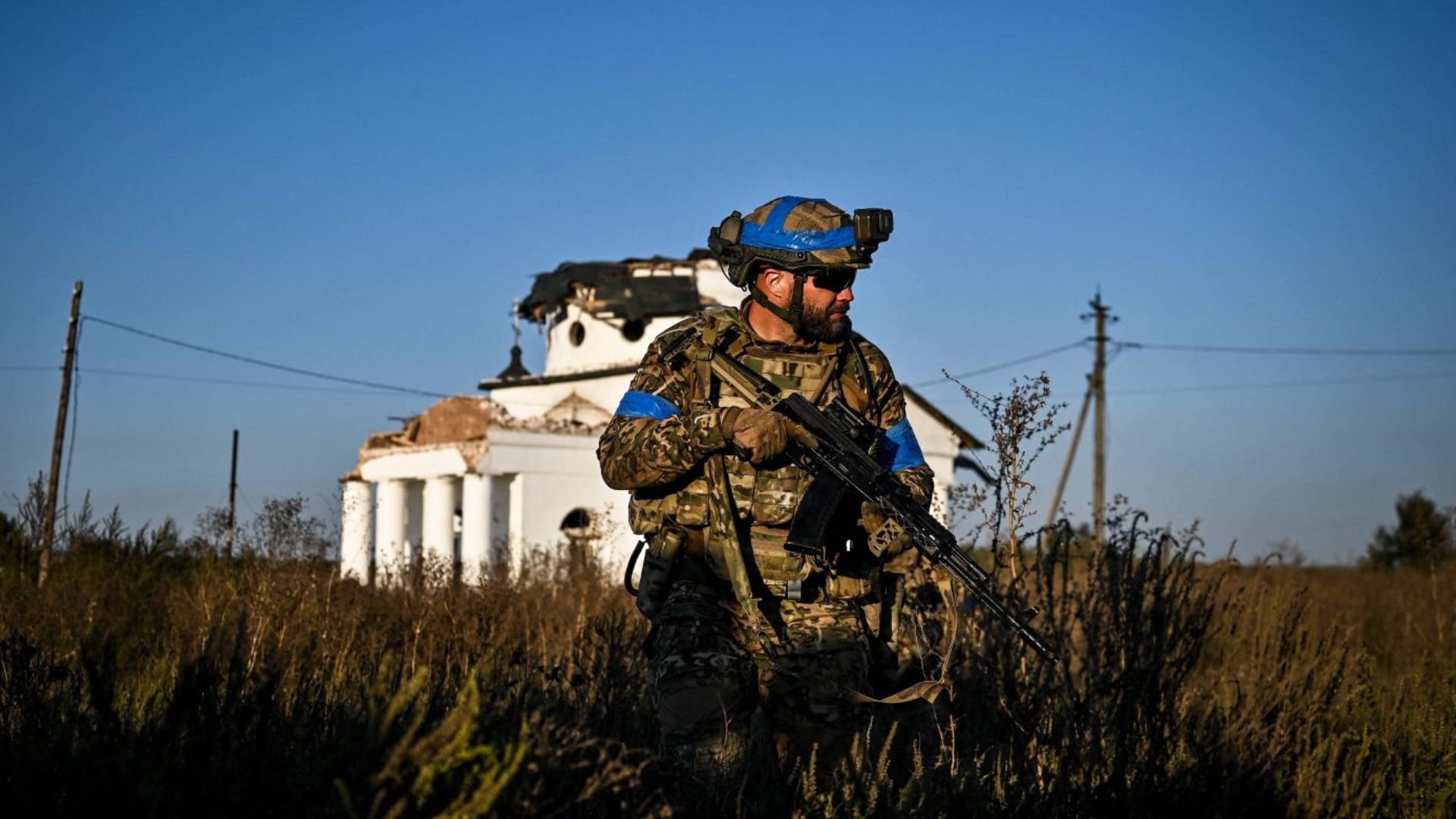
III. Instability as Statecraft
Russia cannot match the aggregate economic weight of NATO or the institutional density of the European Union. It can, however, complicate.
Following 2014, Moscow operated persistently below the threshold of direct war with NATO while expanding its disruptive reach: sustained conflict in eastern Ukraine, intervention in Syria, cyber operations, and influence campaigns across Western democracies. Each move introduced friction without triggering overwhelming retaliation.
This was not improvisation. It reflected a strategic calculation that in a stable, rules-based order, aggregate strength favors the larger coalition. In a fragmented environment, unpredictability becomes leverage.
Russian officials increasingly invoked the language of a “multipolar world.” In this framing, Western liberal hegemony was neither universal nor permanent. Power would disperse. Sovereignty would supersede integration. Russia would occupy one pole among several civilizational centers.
Multipolarity functioned as both belief and instrument. Internationally, it justified revisionism as correction. Domestically, it reframed isolation as autonomy and hardship as resilience.
The full-scale invasion of Ukraine in 2022 did not abandon this logic. It expanded it. Energy markets destabilized. Grain exports halted. Refugee flows strained European systems. Nuclear rhetoric returned to strategic discourse. The war radiated outward, generating volatility beyond the front lines.
The invasion was escalation within an existing strategy, not departure from it.
IV. A War the Regime Cannot Narrate as Defeat
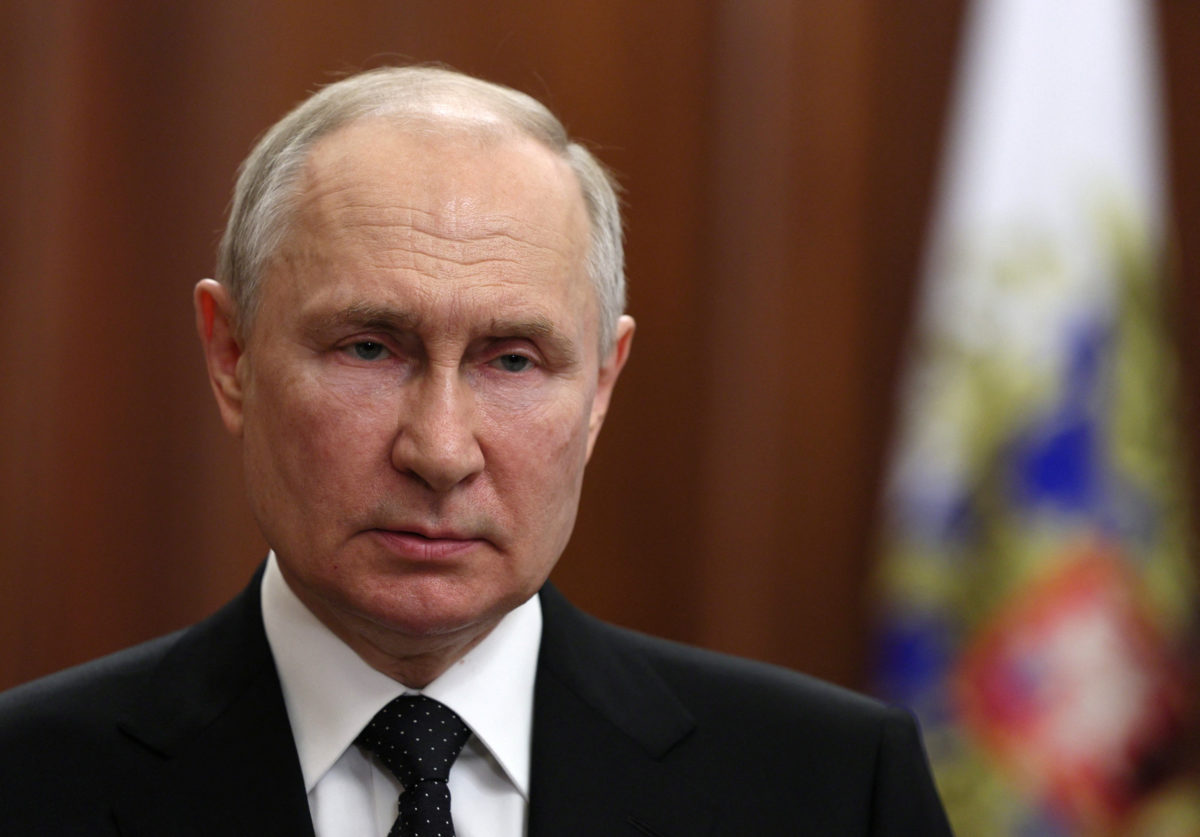
For the Kremlin, Ukraine is not peripheral terrain. It is the symbolic axis of restoration.
If Ukraine consolidates itself as a sovereign, Western-aligned democracy, it undermines the premise that Russia requires centralized authority and civilizational insulation to survive. It demonstrates that an alternative trajectory is viable within the same historical space.
That is intolerable to a regime grounded in restoration.
Loss can be reframed as sacrifice. Hardship can be converted into proof of endurance. Open defeat is more difficult to transmute.
The regime cannot easily narrate retreat without destabilizing the narrative architecture that has sustained it for two decades. Once war is framed as civilizational correction, compromise risks confession.
This is what makes the conflict structurally resistant to resolution. The war is not simply territorial. It is existential in rhetorical framing, even if not in material reality.
V. The Long Contest
This conflict will not conclude with a single battlefield outcome or diplomatic formula. Even a ceasefire will not resolve the structural drivers.
Western policy must assume duration. Military support for Ukraine remains essential, not as symbolic solidarity but as denial of consolidation. A sovereign Ukraine embedded within a durable Western security framework is the most direct refutation of restoration politics.
Alliance cohesion must be preserved, particularly along NATO’s eastern flank. Poland and the Baltic states understand that this war is not episodic. The United States cannot distance itself from Europe without weakening its own strategic position. It remains a transatlantic power.
The contest extends beyond Europe. Russia’s alignment with China provides economic ballast. Its coordination with Iran and outreach to actors in Africa and Latin America expand its operational depth. Engagement with India, Indonesia, Japan, and South Korea must be pragmatic and sustained. Coalition maintenance is structural necessity.
Pressure on Moscow’s aligned regimes constrains maneuvering space. The reduction of Russian leverage in Venezuela, limits on Iranian projection, and vigilance in the Caribbean narrow the ecosystem in which confrontation thrives.
The information domain is equally consequential. Exposure of coordinated influence operations, transparency in digital amplification systems, and support for independent investigative journalism erode narrative insulation. Legitimacy built on inevitability weakens when contradiction becomes visible.
Transformation, if it occurs, will not be dramatic. It will emerge through accumulated constraint. The objective is not collapse. It is the gradual reduction of a system’s capacity to externalize instability for domestic survival.
Four years after the invasion, the decisive variable is endurance. If Ukraine endures as a sovereign state and its partners remain aligned, the restoration project contracts. If that alignment fractures, revisionist statecraft will have demonstrated its efficacy beyond its borders.








COMMENTS