

Secondly, the Somali government is still not in a position to successfully govern the country. Just as recently as about a decade ago, the Somali transitional government was weak and al-Shabaab ruled most of the countryside. Furthermore, the terrorist group had no problem finding recruits among the disenfranchised poor.
Al-Qaeda-aligned terrorists had even set themselves up with a lucrative extortion racket that reached Mogadishu. Their tentacles had reached the port of Mogadishu, the parliament, and the entire government, including the National Intelligence and Security Agency (NISA). Their terror attacks and bombings have killed thousands in the past decade in both Somalia and the surrounding countries. But the group has set its sights on expanding its brand of terror much farther.
General Stephen Townsend, the commander of AFRICOM has called al-Shabaab “the largest and most connectedly violent arm of al-Qaeda.” Secretary of State Mike Pompeo has frequently said the same.
The third reason why the U.S. withdrawal from Somalia was impolitic is reflected in the attention-grabbing comments of Chairman of the Joint Chiefs General Mark Milley. The general had said back in December that al-Shabaab “could if left unattended conduct operations against not only U.S. interests in the region, but also against the homeland.”
After an attack on an American base in Kenya that killed three Americans last January, the government was put on notice. General Milley’s comments weren’t fluffing when in mid-December, the United States extradited an al-Shabaab member from the Philippines, where he was in training “to hijack aircraft in order to conduct a 9/11-style attack in the United States.” This was an operation funded and overseen by al-Shabaab.
Today, al-Qaeda and al-Shabaab are far from defeated and remain entrenched in Somalia. Therefore, to withdraw our troops and support from Somalia at this sensitive juncture could have disastrous results.
By shutting down our operations in Somalia and refocusing on a great power struggle with China and Russia, we are essentially ignoring what is already happening in Africa. With thousands of miles of coastline that run along busy sea lanes, the coasts of Somalia are of strategic importance in the region. China was checked by the large U.S. presence in Somalia and thus built its first overseas base in nearby Djibouti. But with the U.S. withdrawing from the country, the door opens not only for al-Qaeda and al-Shabaab but also for China and Russia to move in and exert their influence.
The small footprint of Special Operations Forces can help the SNA defeat al-Shabaab and al-Qaeda militarily. Nevertheless, simply keeping troops on the ground — while, necessary to ensure the security of the country at the present — cannot be the only answer. Politically, the State Department needs to be proactive and not just throw money straight into the hands of government officials, which only leads to corruption. It needs to set proper goals and ensure that the Somali government is held accountable. Furthermore, SNA and U.S. troops need to work in conjunction with USAID to uproot the causes that cause instability and promote terrorist recruitment in the first place.
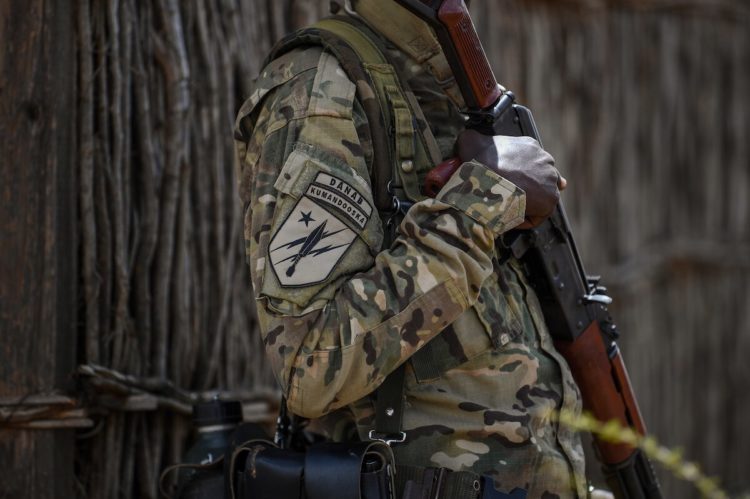
In conclusion, the SNA and the Danab are in need of our help. By helping them we will be helping ourselves — and it won’t require massive numbers of conventional boots on the ground.
The great power competition isn’t thousands of miles away, it is already right there on the African doorstep.








COMMENTS